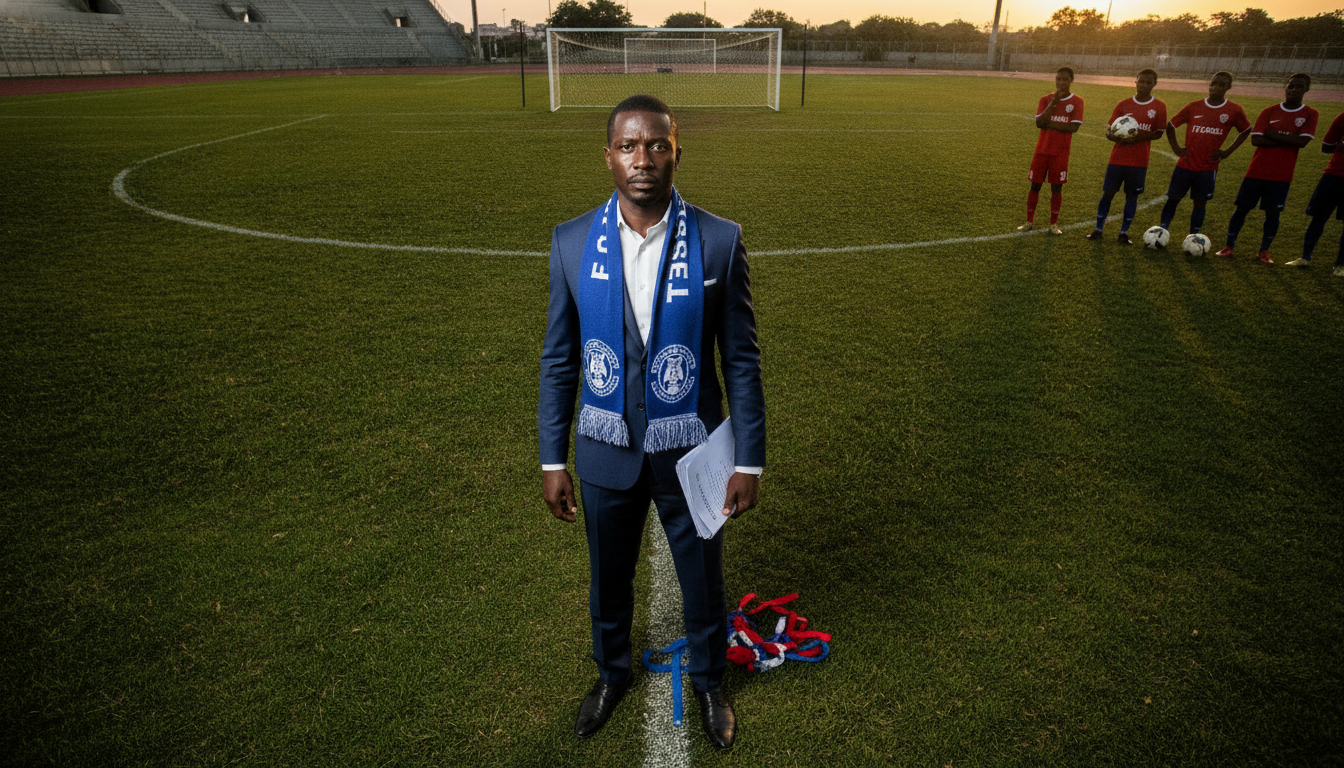
Cassell Kuoh Expelled by LFA, FC Fassell President Weighs Withdrawal and Legal Options
Cassell Kuoh expulsion: FC Fassell president disputes LFA disciplinary process, questions a one-signature ruling, and says he is considering withdrawing his clubs from competitions.


Kuoh Responds to LFA Expulsion
Monrovia — FC Fassell president Cassell Kuoh has publicly challenged the Liberia Football Association’s decision to expel him and ban him from football activities, saying he is still deciding how to respond to the ruling. The announcement, issued by the LFA Grievance and Disciplinary Committee, prompted Kuoh to immediately review the procedural basis and consult with stakeholders before committing to any action.
Kuoh told reporters he needed time to process the committee’s determination and had not yet settled on pursuing an appeal or legal challenge. He emphasized that his initial reaction is one of careful consideration rather than immediate confrontation, citing a desire to consult club partners and other football stakeholders.
The club president also suggested that the manner and timing of the ruling raise substantive questions about governance and the effect on his long-term investment in Liberian football. He said those concerns will shape whatever decision he ultimately makes about FC Fassell and its sister club, Determine Girls.
Statutory Grounds Under Scrutiny
Kuoh has argued the disciplinary body exceeded its authority by issuing an expulsion, saying the LFA statutes reserve expulsion powers for the association’s congress. He asserted that only the congress, and not the Grievance and Disciplinary Committee, has the legal competence to remove a member.
Legal experts and governance observers will likely be asked to interpret the statutes if Kuoh decides to pursue formal remedies. That debate centers on whether the committee’s mandate includes summary sanctions or whether expulsion requires a higher procedural threshold and approval by broader LFA bodies.
The question of statutory interpretation is central because it determines available remedies and the proper forum for contesting the ruling. If an administrative misstep is found, any sanction may be subject to reversal or suspension through internal appeals or civil proceedings.
Signature and Notification Dispute
A focal point of Kuoh’s objection is the authenticity and form of the committee’s ruling, which he said bears the signature of only one member of a three-person panel. He asked why the chairman and the other panelist did not sign the document and whether a recusal or procedural irregularity occurred.
The LFA has responded by explaining that the single signature reflects a recusal process, with the presiding member authorized to adjudicate the matter alone. The association also insists that official correspondence was dispatched through the club’s established digital channels, including addresses used in prior communications.
Kuoh maintains he did not receive a formal notice by email and first learned of the decision from the LFA’s social media post, a claim the LFA disputes. The discrepancy over how and when Kuoh received the ruling could have implications for deadlines to lodge appeals and for the perceived fairness of the process.
Financial and Sporting Impact on FC Fassell
FC Fassell is one of Liberia’s most prominent clubs and has invested in both men’s and women’s teams, including preparations for continental competition. Kuoh disclosed the club planned to spend about US$162,000 on a preseason training camp in Egypt ahead of international fixtures, underscoring the financial stakes tied to the organization’s continued participation.
If Kuoh follows through on suggestions to withdraw FC Fassell and Determine Girls from LFA competitions, the move would remove a major investor and competitive force from domestic football. That potential withdrawal raises immediate questions about fixture integrity, continental qualification slots, and the broader ecosystem that depends on club investment.
Club officials and sponsors will face short-term logistical and contractual challenges if competition entries are rescinded. The financial consequences could extend beyond the club, affecting local vendors, coaching staff, and players who rely on competition-related income.
Accusations of Political Motive
Kuoh has described the expulsion as politically motivated, contending the action is linked to internal contests for leadership positions within the LFA. He suggested the timing — months after post-election reconciliation meetings with the association’s president — casts doubt on the impartiality of the disciplinary move.
Those alleging political targeting point to the recent governance dynamics inside the LFA and argue that sanctions issued near leadership transitions can be perceived as tools to sideline rivals. Kuoh has characterized the ruling as a targeted campaign intended to block his future ambitions within the association.
The LFA’s leadership rejects that framing, stressing that disciplinary measures are taken independently and in line with regulatory standards. The competing narratives now risk deepening factional divides if not resolved through transparent legal or institutional channels.
LFA’s Rebuttal and Procedural Defense
The LFA media office has defended the committee’s action, saying it operated within the regulatory framework and that stakeholders have access to the statutes governing discipline and appeals. The association also highlighted that the single signature on the ruling followed a recusal request, which permitted the presiding member to decide the matter.
LFA officials maintain that communication protocols were followed and that the ruling was circulated to the club’s known email addresses and active digital accounts. The association’s public statements also pointed to FC Fassell’s recent on-field success as evidence that the decision was not intended to undermine the club’s achievements.
LFA representatives have urged Kuoh to use the formal remedies available under football’s judicial system should he contest the ruling. They emphasized that adherence to governance rules is essential to preserve competitive integrity and that any stakeholder may challenge perceived errors through prescribed channels.
Potential Next Steps for Kuoh and FC Fassell
Kuoh’s immediate options include filing an internal appeal under LFA procedures, seeking interim relief from regional or continental football bodies, or initiating civil litigation to question the legality of the expulsion. He said he was resisting external pressure to take swift action and was weighing the strategic consequences of each route.
An internal appeal would hinge on statute timelines and the availability of full procedural records, including the rationale supplied by the committee for the sanction. Seeking redress through continental judicial mechanisms could provide an independent review but often entails stricter admissibility standards and longer timelines.
Withdrawing the club from competitions would be a more drastic step with instant sporting and financial repercussions, but it would also be a powerful public statement about Kuoh’s view of the association’s governance. Any decision to step away would likely trigger responses from sponsors, players, and continental organizers regarding fixtures and eligibility.
Kuoh has indicated he is consulting with stakeholders and considering both the legal merits and the wider impact of his choices before announcing a final course of action. That deliberation period will be closely watched by clubs, fans, and governance monitors across Liberian football.
The coming days and weeks will determine whether the dispute moves through the LFA’s internal appeals system, into external judicial venues, or toward a negotiated settlement that preserves FC Fassell’s participation in domestic and continental competitions.