England v Argentina World Cup semi-final: Tuchel’s ice-cream ritual and Falklands echoes in Atlanta
England v Argentina World Cup semi-final coverage: Tuchel’s calming ice-cream ritual, England’s 15,000-mile schedule and Scaloni’s response to Falklands references ahead of kickoff.


England arrive in Atlanta for the England v Argentina World Cup semi-final after a marathon schedule that has taken them roughly 15,000 miles across two countries and six host cities. The squad’s delayed arrival from its Kansas City training base underlined the physical and logistical strain that has accompanied England’s run to the last four. Head coach Thomas Tuchel offered an unusually personal glimpse into his tactics for managing pressure, describing a short ritual he says helps reset his mood before big matches.
Travel Toll on England’s Squad
England’s itinerary has been relentless, with long flights and back-to-back fixtures compounding the physical demands on players and staff. Moving between training bases and match venues across the United States required careful planning from the medical and logistics teams to limit fatigue and preserve match sharpness. The team’s late arrival in Atlanta was a visible sign of that strain, but officials insisted the delay would not affect match preparation.
Knockout matches tested depth and recovery systems as England navigated two high-intensity elimination games to reach the semi-final. Coaching staff leaned on rotation, cryotherapy and monitored workloads to keep key players available. Sources close to the camp say travel management has been treated like another tactical challenge in this tournament.
Tuchel’s Low-Key Routine Calms Dressing Room
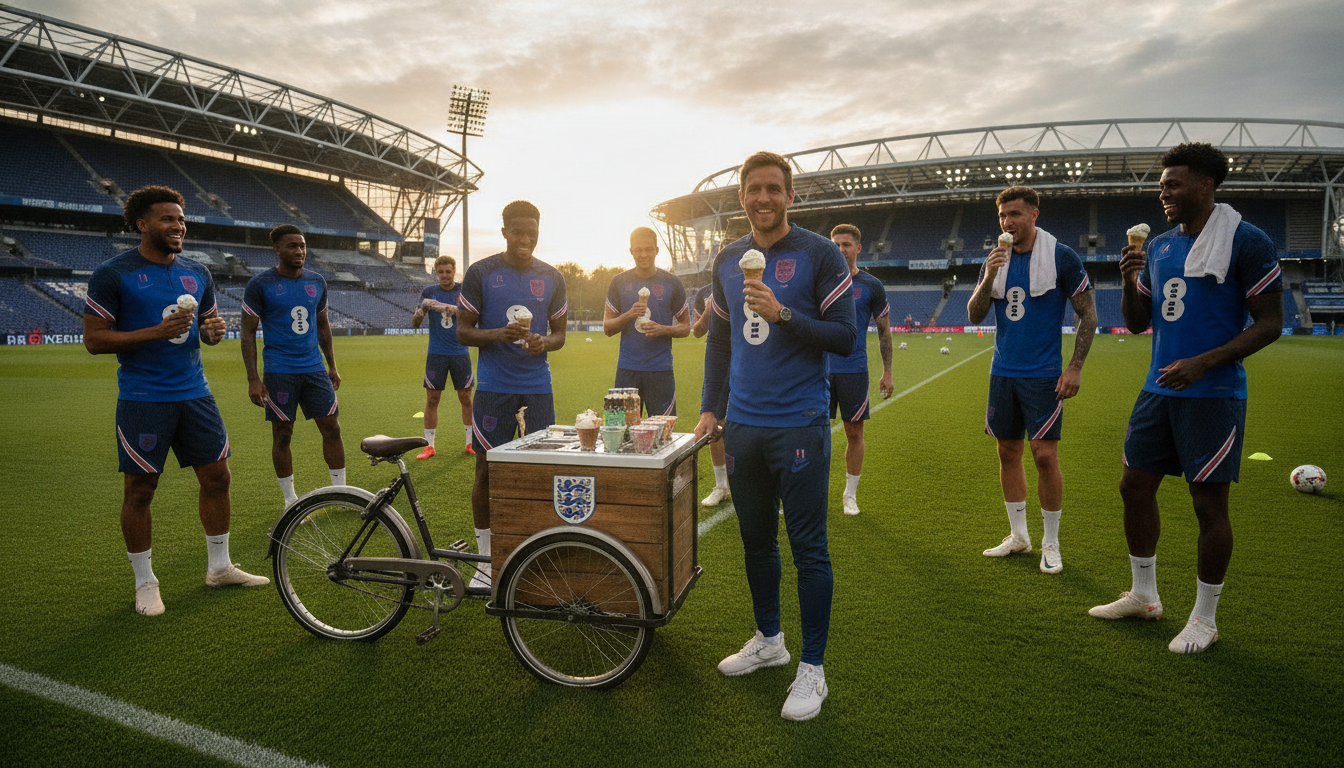
At a crowded press conference inside Mercedes-Benz Stadium, Tuchel described a simple personal routine that he uses to break the intensity of a tournament. He said a short bike ride and a brief moment to enjoy an ice cream are enough to shift perspective and reconnect with the joy of football. That anecdote was offered as a counterpoint to the relentless discussion about pressure and expectation surrounding England’s campaign.
Inside the dressing room, Tuchel’s understated approach is being framed as part of a broader attempt to normalise matchday tension. Players have responded to small, deliberate rituals that aim to reduce cortisol levels and sharpen focus, according to staff familiar with the squad’s routines. The coach’s anecdote about reclaiming a youthful feeling for a few minutes serves as a reminder of the psychological work that complements physical training at this stage.
Falklands References Addressed by Scaloni
The semi-final has been accompanied by references to the 1982 Falklands War, a historical event that continues to cast a long shadow in discussions between the two nations. Argentina head coach Lionel Scaloni acknowledged the sadness tied to that history while drawing a clear line between past conflict and the players on the pitch. He emphasised that those losses are remembered but stressed that the match itself is football, saying simply, "It’s just a game of football."
Scaloni’s remarks were made to defuse any suggestion that historical grievance should inflame the fixture or the atmosphere in the stadium. Organisers and both teams have urged fans and media to keep attention on sporting competition rather than geopolitical history. Stadium security and event officials have also reiterated protocols designed to prevent off-field tensions from affecting matchday safety and experience.
Preparation and Recovery Strategies
England’s backroom staff have prioritised sleep, nutrition and incremental training loads to cope with the tournament’s travel-heavy schedule. Sports scientists in the camp have tracked biometric data to inform who trains and who rests, aiming to present the freshest possible XI on matchday. Recovery modalities such as contrast baths, compression therapy and personalised refeeding plans have become routine between sessions.
Coaching conversations have also focused on mental recovery and maintaining simple processes under pressure. Staff have encouraged players to compartmentalise the tournament’s wider noise and focus on immediate tasks, from set-piece execution to defensive organization. Those small, repeatable habits can become performance multipliers in a knockout game where margins are fine.
Logistics at Mercedes-Benz Stadium and Media Demand
The media operation at Mercedes-Benz Stadium reflected the scale of the occasion, with a packed press room and extended schedules for interviews and duties. England’s delayed arrival pushed back media events by more than an hour, compressing time for formalities and tactical briefings. The venue’s infrastructure handled the surge, but the scramble highlighted how global tournaments put additional strain on team operations.
For players and coaches, the media cycle is both a platform and a distraction, requiring careful management by communications staff. Briefing windows are scheduled tightly around training and recovery, and public-facing comments are coordinated to protect tactical confidentiality. The balancing act between transparency and operational security is particularly acute in a semi-final with worldwide attention.
Match Stakes and Historical Context for England and Argentina
England enter the semi-final still chasing a second World Cup title, a run of 60 years since their sole triumph in 1966. That historical weight is part of the narrative in the build-up, but the team has repeatedly framed its focus on the immediate match rather than legacy. Argentina, by contrast, brings its own pedigree and recent success into the contest, ensuring the fixture pits two footballing traditions against each other at a decisive moment.
Beyond trophies and records, the semi-final represents a crucible for individual careers and managerial reputations. A win in Atlanta would put either nation one match away from football’s ultimate prize and reshape public and media narratives for months to come. Both squads have insisted their preparation is narrowly targeted at tactics, roles and match execution rather than external storylines.
The two teams will step onto the field knowing the broader context, yet intent on keeping the contest to 90 minutes of football and, if necessary, whatever comes after.