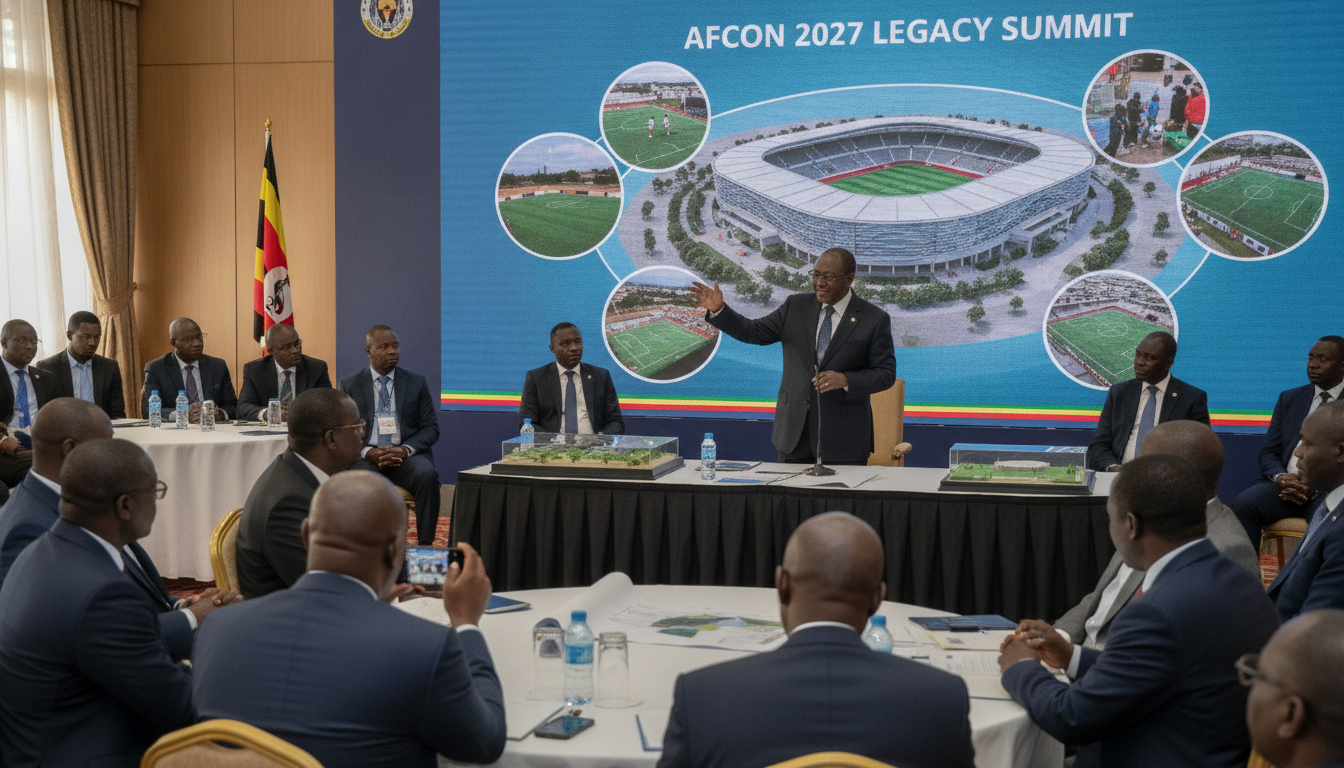
Zambaali urges AFCON 2027 legacy beyond stadiums as Uganda speeds up co-host preparations
MP Zambaali calls for AFCON 2027 to deliver lasting sports development—urging investment in grassroots facilities, stronger institutions and youth programmes across Uganda.


Uganda must measure success in co-hosting AFCON 2027 by the structures and programmes left behind, Nansana Municipality MP and Shadow Minister for Sports Zambaali Bulasio Mukasa told Parliament on Tuesday.
Speaking during a sitting chaired by Deputy Speaker Thomas Tayebwa, Zambaali said the tournament offers a rare chance to transform the country’s sports ecosystem if authorities widen their focus beyond marquee venues.
Parliament is now scrutinizing government preparations as Uganda moves ahead with stadium projects and wider refurbishment ahead of the joint hosting with Kenya and Tanzania.
Parliament presses for a legacy-focused approach
Zambaali told lawmakers that a successful AFCON 2027 must be judged on more than match days and ticket sales.
He urged Parliament and the executive to prioritise durable outcomes: improved governance for sports bodies, sustained youth participation, and community-level facilities that nurture future talent.
The deputy speaker presided over the session as MPs reviewed plans and funding, underlining parliamentary oversight of the hosting programme.
Lawmakers signalled they will track both construction milestones and the policies intended to convert event spending into long-term development.
Recent stadium projects and national upgrades
Uganda has accelerated infrastructure work as part of the East African co-hosting bid.
Authorities have completed the 20,000-seat Hoima City Stadium and moved ahead with a major redevelopment of the Akii-Bua Stadium in Lira.
At the same time, the government has directed significant funds to refurbish Mandela National Stadium, Namboole, to meet continental standards.
These projects are visible markers of progress, but MPs and officials alike note that stadiums are only one element of a broader legacy strategy.
Grassroots facilities and school sports underlined
Zambaali warned against concentrating resources on high-profile venues while neglecting district pitches, school programmes and community centres.
He argued that cultivating talent requires regular competition, qualified coaches and accessible facilities in every region.
Reviving school leagues and district tournaments was presented as a necessary complement to stadium construction, helping to sustain interest and participation after the tournament.
Investment in grassroots sport was framed as both a social good and a pipeline for future national team players.
Institutional strengthening and federation reform
Beyond bricks and mortar, lawmakers pressed for stronger institutions that can manage and sustain sports programmes.
Zambaali called for reforms to sports federations, enhanced administrative capacity and clear accountability mechanisms to ensure funds translate into development.
Parliamentarians highlighted the need for long-term strategic plans, professional management of facilities and transparent procurement to avoid waste.
The objective is to leave behind federations and bodies capable of developing talent and maintaining venues without perpetual state bailouts.
Economic and social opportunities linked to AFCON 2027
MPs and officials say the tournament could generate jobs, boost tourism and spur local businesses if managed with a legacy focus.
Construction and stadium operations already create short-term employment, while improved transport and hospitality infrastructure can deliver longer-term gains.
Zambaali and other legislators also noted the potential for sports programmes to reduce youth unemployment by creating pathways into coaching, event management and sports-related enterprises.
Regional cooperation with Kenya and Tanzania is expected to amplify the economic footprint of hosting across borders.
Risks and readiness: funding, maintenance and timelines
While progress is visible, Parliament identified risks that could undermine the intended legacy.
Sustaining newly built venues requires ongoing maintenance budgets, clear management and community access; otherwise facilities can fall into disrepair.
MPs also flagged potential funding shortfalls, procurement delays and the need to protect projects from mismanagement through robust oversight.
Timely delivery and coordination with regional partners remain essential to meet CAF requirements and to ensure benefits reach local communities.
Uganda’s approach to AFCON 2027 is now being evaluated on both the visible pace of construction and the less visible but critical plans for legacy and inclusion.
Lawmakers asked the executive to present a comprehensive roadmap that links stadium upgrades to district sports development, federations’ capacity building and youth employment initiatives.
They emphasised measurable targets—participation rates, number of community facilities, and sustainability plans—as the benchmarks that will show whether AFCON 2027 delivers beyond the tournament itself.
As Uganda, Kenya and Tanzania prepare to stage the competition together, the parliamentary debate set out a clear expectation: success will be counted in institutions strengthened, opportunities for young people expanded, and facilities that continue to serve communities long after the final whistle.