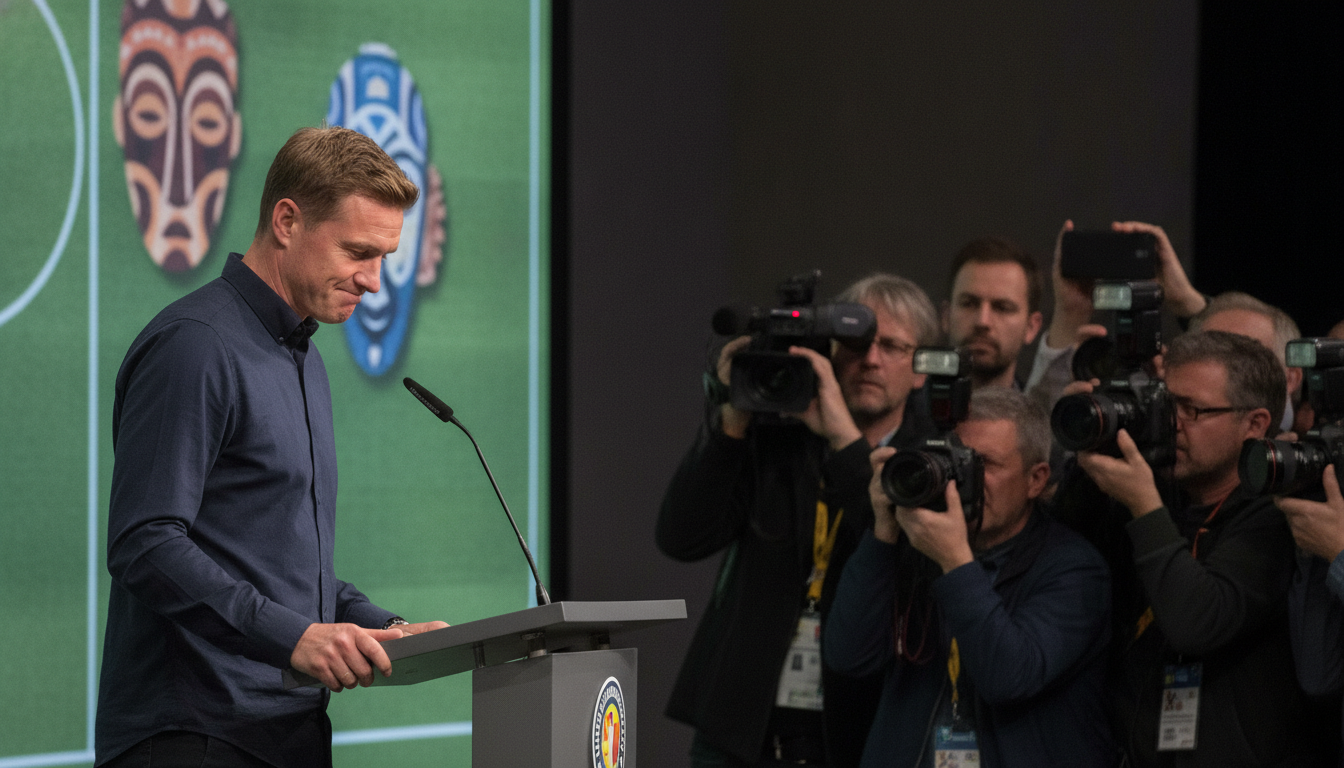
Schweinsteiger comment reignites debate on African football stereotypes
Schweinsteiger’s World Cup remark reignites debate over African football stereotypes and structural racism, prompting responses from Ivory Coast, players and officials.


The debate over African football stereotypes flared after a German television pundit described the style of play he expected from an Ivory Coast side as “unorthodox” and “wild,” drawing accusations of racial stereotyping. The comment came during the 2026 men’s World Cup, a tournament in which no African team advanced beyond the quarter-finals despite moments of tactical discipline and tactical innovation that impressed observers. The exchange has since become a focal point for wider scrutiny of how African teams and players are discussed in European media and the structural inequalities they often face.
Schweinsteiger remark triggers national and media backlash
A veteran German football figure’s characterization of an opposing team’s approach set off immediate debate across social platforms and mainstream outlets. Critics argued the language echoed long-standing tropes that reduce African players to physicality and spontaneity rather than technical or tactical intelligence. Supporters of the pundit defended the comment as a purely sporting observation, while others said that intent does not erase impact.
The controversy intensified because the remark arrived during a high-profile World Cup match and because it invoked broad generalizations about an entire continent’s footballing identity. Ivory Coast’s manager publicly questioned whether the description crossed a line into racial stereotyping, framing the discussion as more than a tactician’s preview. Broadcasters and commentators found themselves drawn into a larger conversation about tone, context, and responsibility when framing analysis for global audiences.
Responses from Ivory Coast, broadcasters and players
Ivory Coast’s coaching staff reacted swiftly, saying the remark was inappropriate and risked reducing a distinct national team to a crude caricature. The manager urged colleagues and commentators to distinguish between tactical unpredictability and sweeping labels that carry historic baggage. Several players and officials from African associations issued statements emphasizing the need to separate sport analysis from cultural stereotyping.
The commentator’s employer publicly defended his right to provide match analysis, while also acknowledging that the comment had caused offense to some viewers. The pundit later framed his words as a description of playing style rather than a judgment of people, but that clarification did little to settle the debate. Sports unions and player advocacy groups called for clearer editorial standards in broadcasters’ football coverage to prevent similar incidents in future.
Social media, public examples and the wider narrative
Social platforms amplified reactions, mixing condemnation, defense and broader reflections on race in football coverage. High-profile episodes during the tournament—ranging from hostile fan messages to derogatory public comments aimed at Black players—were cited by critics as evidence that such punditry does not exist in a vacuum. Comment threads and fan spaces showed how quickly a single remark can be repurposed into narratives about identity, capability and belonging.
The public discourse also referenced more explicit cases of racist language used against players during the same competition, underscoring how subtle stereotypes and overt abuse coexist in the modern landscape. Observers warned that normalized stereo-typing, when repeated across media and fan forums, hardens into common knowledge that shapes how players are scouted, analyzed and remembered. That duality—between isolated remarks and systemic patterns—became central to the conversation.
Colonial histories and the shaping of football perceptions
Scholars and historians consulted in the aftermath emphasized that present-day descriptions of African football are often rooted in colonial-era ideas about race and civilization. During colonization, sport was deployed as a tool for socialization and control, and early European accounts frequently framed African athleticism in reductive terms. Those narratives, critics say, established a cognitive shorthand that persists when commentators seek quick explanations for complex performances.
Academic research was cited to explain how national styles evolved across the continent under diverse cultural and political influences, making any single “African” style a misleading concept. Histories of resistance and creativity on African pitches were highlighted to show how feints, dribbles and improvisation sometimes emerged as expressions of identity, entertainment and defiance against colonial authority. The result is a vibrant and heterogeneous football heritage that cannot be captured by monolithic descriptors.
Structural inequalities: contracts, roles and career trajectories
Beyond language and perception, analysts pointed to measurable structural disadvantages facing many African players in the global game. Studies and player testimonies have documented patterns such as shorter contract lengths, lower wages for comparable roles, and limited access to senior coaching or administrative positions. These disparities, critics argue, are both cause and consequence of the same stereotypes that undercut players’ perceived value off the ball.
Scouting and recruitment practices were also examined for how they can entrench positional stereotyping—pushing Black players into certain roles while denying them pathways to positions associated with tactical leadership. Advocates say these patterns reduce career longevity and post-playing opportunities for many African professionals. The intersection of biased perception and institutional practice, they add, helps explain why allegations of everyday racism persist even where overt hostility is absent.
Calls for editorial standards and institutional reform
In response to the controversy, a range of voices urged broadcasters, federations and clubs to adopt clearer editorial guidelines and educational programs about racialized language. Proposals included mandatory cultural sensitivity training for pundits and journalists, formal review processes for on-air remarks, and stronger penalties for commentary that crosses into discriminatory territory. Supporters of reform argued that responsibility rests not only with individuals but with the institutions that platform them.
Football governing bodies and player unions were encouraged to expand support for players who experience media-driven stereotyping, including legal advice and reputational support. Some clubs were advised to audit scouting reports and development pathways to identify potential bias in selection and role assignment. Across the board, stakeholders called for data-driven approaches to monitor progress and to ensure that reforms address both speech and structural inequality.
Media training for ex-players and pundits was recommended as a practical measure to reduce future incidents. Proponents emphasized that many commentators enter broadcasting with varying degrees of preparation for high-stakes, global commentary and that better briefing on historical context and the consequences of language could prevent harm. Editorial oversight combined with education, they argued, offers a pragmatic route to balance candid game analysis with awareness of broader social implications.
The debate sparked by the remark has crystallized into broader questions about how football is reported, who controls the narrative, and what measures are necessary to ensure respectful, accurate analysis. The exchange exposed the limits of viewing sporting tactics in isolation from cultural and historic context, and it prompted renewed calls for holistic reforms across media and the football industry.
The controversy around this World Cup remark has prompted a wider examination of how language, history and institutional practice intersect in the treatment of African teams and players, and it has pushed broadcasters and governing bodies to reassess both editorial standards and the deeper inequalities that shape the modern game.