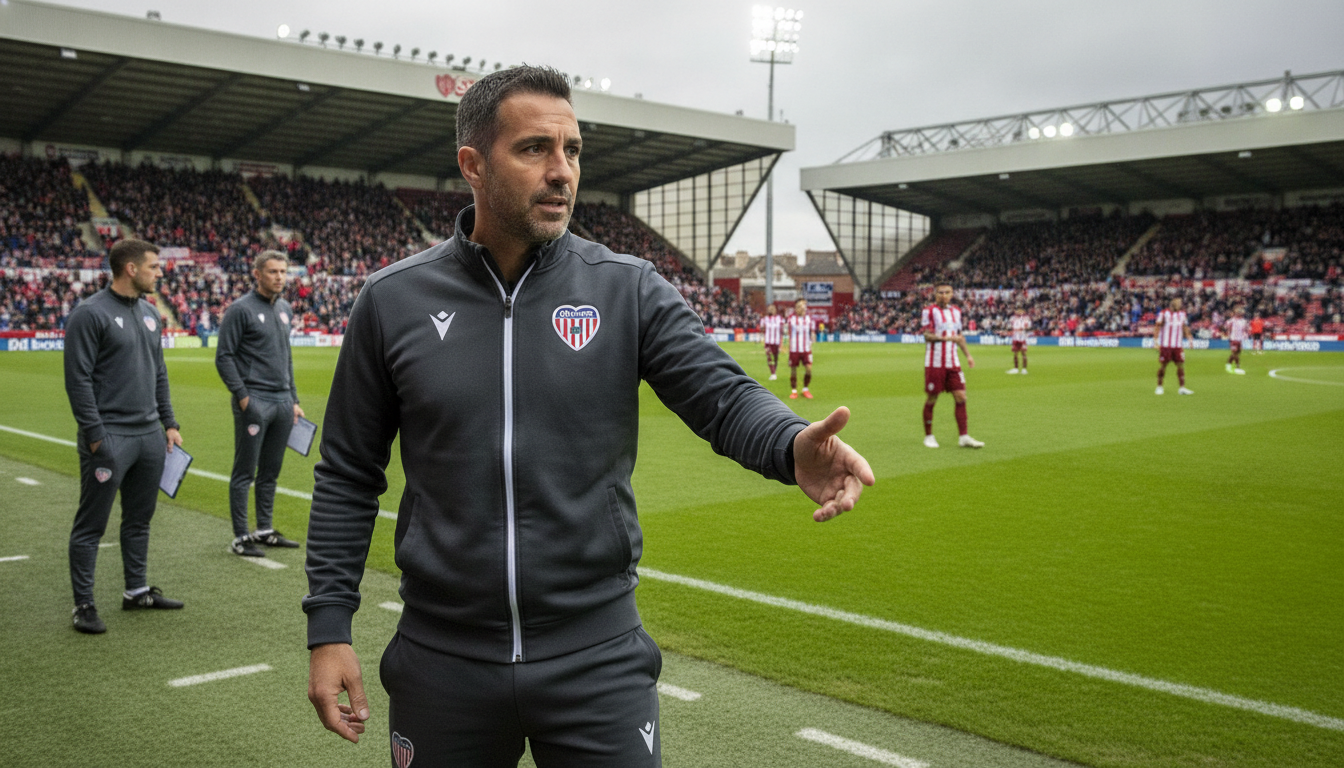
Beñat San José begins Rayo Vallecano era with Tynecastle debut on July 17
Beñat San José begins at Rayo Vallecano and will make his debut at Tynecastle Park vs Heart of Midlothian on July 17, pledging an attacking, high‑press style.


Beñat San José will lead Rayo Vallecano for the first time in a pre-season fixture against Heart of Midlothian at Tynecastle Park on July 17 at 20:45, a match that marks the formal start of his tenure. The appointment signals a clear shift in leadership at Vallecas, with supporters and club officials alike expecting the Basque coach to install a distinct tactical identity. The meeting with Hearts is being treated as both a sporting test and an early indicator of how his ideas will translate to the squad.
Tynecastle debut scheduled for July 17
Beñat San José’s opening match arrives within days of his presentation, offering a quick assessment opportunity ahead of the competitive campaign. The fixture against Heart of Midlothian provides a neutral stage where his preferred style can be trialed against a well‑organised Scottish side. Club sources say the coaching staff will use the game to test defensive shapes, pressing triggers and the vertical transitions that have defined his work elsewhere.
The short turnaround to the friendly also forces a pragmatic selection approach, with minutes to be distributed among senior players and newcomers alike. That balance will be key as the coaching team evaluates fitness levels and tactical familiarity under match conditions. The club’s medical and performance staff are expected to manage playing time carefully to avoid injuries ahead of the season proper.
A résumé built across seven countries and multiple titles
San José arrives with a varied career that spans more than a decade abroad, including spells in Saudi Arabia, Chile, Bolivia, Belgium, Mexico and Spain. He has experience winning domestic silverware and lifting clubs from difficult positions to respectable finishes, achievements that underpin Rayo’s belief in his capacity to deliver. Club officials have cited his track record of adapting to different football cultures as a decisive factor in the hiring process.
His most notable successes include a national cup in Saudi Arabia early in his overseas career and league titles in South America, where he earned recognition for promoting cohesive, disciplined teams. Those results, coupled with a reputation for developing clear tactical frameworks, convinced Rayo’s hierarchy that he can bring structure and identity to a squad that values intensity. Observers point to his ability to manage both established professionals and younger players as a recurring strength.
Tactical approach influenced by high‑press and verticality
San José’s teams have been defined by an emphasis on quick transitions, forward momentum and coordinated pressing higher up the pitch. Drawn from influences such as Marcelo Bielsa and Jorge Sampaoli, his approach prioritises aggressive ball recovery and immediate vertical progression toward goal. The coach favors systems that facilitate wide support and quick combinations, often deploying a 4-2-3-1 formation to ensure central stability and attacking width.
Set-piece work and positional discipline have also been consistent elements in his methodology, with tailored drills aimed at reducing defensive lapses and improving attacking efficiency. Analysts who have followed his work note that he insists on players understanding specific roles in both possession and out of it, and that the collective behaviour often outweighs individual flair. That emphasis on collective principles is intended to make his teams predictable in their strategy but unpredictable in execution.
Player relationships and staff testimony
People who have worked alongside San José describe him as methodical and communicative, combining attention to tactical detail with a personal approach to player management. Former fitness and coaching staff highlight his inclination to involve the entire backroom team in planning and decision‑making, which helps create a cohesive environment. Players who have left his squads emphasize the confidence and clarity he gives to individuals, often citing his habit of explaining decisions and offering targeted feedback.
Several former players have recalled emotionally charged farewells, reflecting a bond developed during his tenures. Those testimonials underline his ability to generate conviction within a squad, with many reporting that the coach’s clarity and consistency strengthened group commitment to shared objectives. Rayo’s recruitment team pointed to those endorsements as evidence that San José can both motivate a dressing room and command respect across a diverse roster.
Immediate objectives and the road ahead at Vallecas
The immediate remit for San José at Rayo will be to stabilise the team defensively while improving its attacking unpredictability, goalscoring consistency and transition speed. The club expects him to refine set-piece defending, increase pressing efficiency and create clearer patterns for penetrating opponents’ defensive lines. Early fixtures, including the Tynecastle friendly, will be treated as practical experiments to align personnel to those tactical standards.
Longer term, the coaching staff will be measured on domestic league performance, cup progress and the development of younger talents through first-team integration. The club leadership has framed the appointment as an investment in a coach capable of delivering short-term competitiveness and building sustainable principles for future seasons. Supporters will be watching how quickly the team assimilates the new demands, and results in the opening weeks of the campaign will shape perceptions of the project’s viability.
San José’s appointment brings both continuity and change: continuity in the club’s appetite for bold, attacking football, and change in the specific tactical vocabulary he intends to implement. His history of working across different continents has given him a varied toolkit and familiarity with mixed squads, traits Rayo believes will suit the club’s multicultural dressing room.
Observers will also track how the existing Rayo personnel fit into his preferred patterns, particularly those players who thrived under the previous regime. Transitional periods often hinge on small tactical tweaks, the repurposing of player roles, and the coach’s ability to communicate expectations plainly and repeatedly. If the early adjustments show coherence, the team could adopt San José’s identity quickly; if not, further refinement and possible recruitment may be necessary.
Pre-season will be crucial not just for tactics but for conditioning, with the coaching and fitness teams collaborating to set an intensity level that the squad can maintain. Rayo’s performance analysts are expected to supply granular data on pressing success, positional compactness and expected goals metrics to inform selection and training priorities. That analytical feedback loop will be central to transforming training designs into matchday behaviours.
The Tynecastle game itself, while a friendly in name, will function as a practical blueprint for the season’s opening weeks. It offers an early chance to see how San José manages in-game adversity, rotates personnel and modifies tactics under pressure. Both the coaching staff and the players will glean actionable insights from the match that should influence training emphases and tactical rehearsals immediately after.
Beñat San José’s arrival at Rayo Vallecano marks the start of a new chapter for a club known for its passionate fanbase and uncompromising style. The coming weeks will reveal how swiftly his principles take hold and whether the squad can translate his high‑energy, vertical approach into consistent results. Supporters and analysts alike will measure progress from the Tynecastle debut onward, looking for signs that Vallecas is prepared to embrace the tactical blueprint he has built abroad.