Arsenal’s Man-to-Man Press Forces Atletico Into Long Balls in 1-0 Semi-Final Win
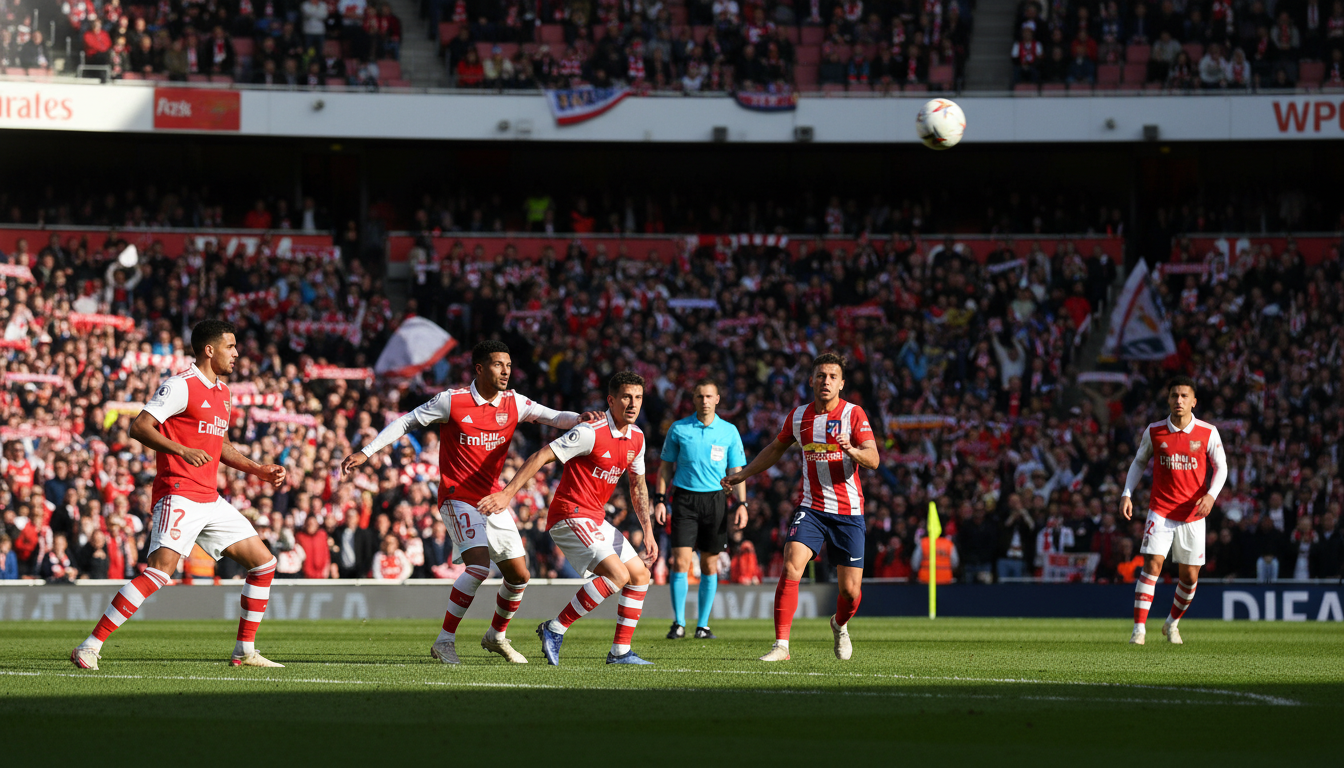
Arsenal’s man-to-man press neutralised Atletico Madrid at the Emirates, forcing a 1-0 win (2-1 agg) that booked their place in the Champions League final. Analysts cited the high, disciplined pressure as the decisive tactical factor in the semi-final second leg.


Arsenal applied consistent pressure high up the pitch from the opening whistle, cutting off Atletico’s preferred passing lanes and pushing hosts and visitors into hurried decisions. The man-to-man press disrupted Atletico’s build-up play and repeatedly compelled long clearances, preventing sustained possession in dangerous areas.
High press pinned Atletico back
Arsenal’s pressing shape was deliberately aggressive, with individual markers tasked to follow Atletico’s ball-carriers into the defensive third. That focus on personal accountability denied Atletico the time on the ball they needed to play through the lines.
By committing players to tight marking in advanced positions, Arsenal forced the visitors to play vertically rather than build patiently through midfield. The consequence was frequent long balls and second-ball scrambles, conditions in which Arsenal were better prepared to dominate.
Long clearances replaced patient circulation
Atletico’s typically compact build-up relied on short passes and movement to escape pressure, but Arsenal’s approach reduced the available passing options. Instead of circulating the ball, Atletico increasingly cleared long from the back, ceding possession and territory.
Those long deliveries failed to unlock Arsenal’s defensive organisation and often allowed the home side to regain control in midfield. The repeated shift to aerial duels prevented Atletico from settling into the tempo that had served them earlier in the tie.
Structure and personnel made the press effective
The press worked because it combined individual marking with collective support; when one player stepped up, teammates covered the vacated spaces. That balance limited the gaps Atletico sought to exploit and smothered pockets of space between the lines.
Champions League analysts Stephen Warnock, Nedum Onuoha and Guillem Balague highlighted how Arsenal’s roles were clearly defined, with forwards and midfielders synchronised in their triggers. Their assessment emphasised discipline and timing as the difference between a good press and one that hands back control.
Turning pressure into a match-winning moment
Arsenal’s dominance in territory and chances culminated in a solitary goal that ultimately decided the tie. The visitors had little room to construct countermeasures once the hosts began to win the second balls and sustain pressure in the final third.
The goal reflected a period of sustained control rather than a single moment of individual brilliance, underlining how the tactical plan translated into a tangible advantage. It also tightened Atletico’s margin for error in the remaining minutes, leaving them with limited avenues to respond.
Atletico’s adjustments were constrained
Atletico attempted to adapt by dropping deeper and relying on long balls to bypass the pressing lines, but that approach played into Arsenal’s hands. With the ball delivered into congested forward areas, Atletico struggled to generate clear-cut chances and were often left chasing possession.
Their usual pragmatic resilience was undermined by the frequency of aerial contests and the inability to find midfielders with space to orchestrate attacks. Those tactical constraints prevented a late surge that might have altered the aggregate scoreline.
Wider implications for Arsenal’s Champions League campaign
The success of the man-to-man press at the Emirates offers a template for Arsenal in high-stakes knockout matches. When executed with organisation and clear role definitions, the tactic can stifle disciplined, defence-first teams that rely on structured build-up play.
That said, the approach demands high energy levels and concentration throughout 90 minutes, and opponents may prepare targeted counters in future rounds. Arsenal will need to manage intensity and rotate intelligently to maintain the pressing standard in the remainder of the Champions League.
This result advances Arsenal to the competition’s final, vindicating a game plan that prioritised proactive disruption and control of space. The tactical lesson from the semi-final second leg is clear: a well-drilled man-to-man press can force even the most methodical opponents into error and shift the balance in knockout football.