Monchi lays out Espanyol blueprint: squad upgrades, salary strategy and close plan with Manolo González
Monchi outlines Espanyol transfer plan as sporting director, detailing squad upgrades, salary strategy, ties with owner Alan Pace and talks with Manolo Gonzalez.

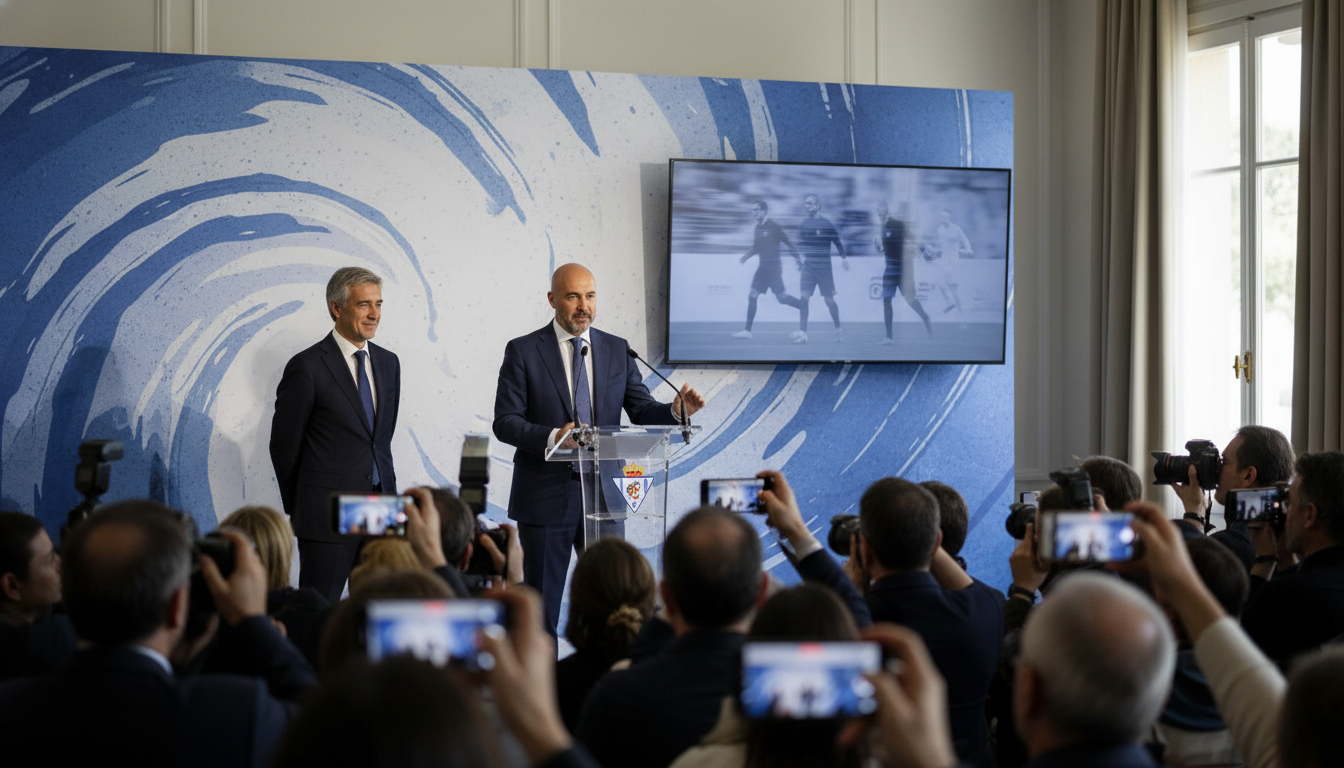
Ramón "Monchi" Rodríguez Verdejo has begun shaping Espanyol’s sporting project after his arrival as the club’s sporting director, setting out a plan to raise the squad’s competitive level within the club’s financial limits. Monchi told La Grada that his priority is to improve the first-team while working closely with president Alan Pace and head coach Manolo González. He signalled a targeted, phased approach to transfers, salary management and the integration of returning loanees to build a more competitive roster for the coming season. The new director stressed that investment will follow a foundation of stability, and that immediate work focuses on creating space and clear player profiles.
Monchi’s mandate and early intervention
Monchi has framed his arrival at Espanyol as a response to both professional duty and the club’s request for clarity in sporting direction. He said he felt compelled to step forward out of respect for the club and for the trust placed in him by Alan Pace, even when personal and sporting circumstances made the decision difficult. That sense of responsibility shaped his first actions, including public support for Manolo González at a time when uncertainty surrounded the coaching position. Monchi’s early agenda shows a willingness to take substantive decisions rather than cosmetic changes.
Monchi described his entrance into the role as hands-on, including attendance at matches and immediate meetings with club executives and players. He emphasized honesty and direct communication as cornerstones of his working relationship with ownership and staff. Those steps were intended to stabilise the environment and to begin mapping the resources and constraints the club will operate under during the transfer window.
Relationship with ownership: clarity with Alan Pace
Monchi has underlined the importance of a frank relationship with the club’s owners, particularly president Alan Pace, as central to implementing a coherent sporting strategy. He praised Pace for straightforward conversations and clear expectations, saying the owner has not made unrealistic promises. That directness gives Monchi the latitude to plan progressively while ensuring any investment aligns with measurable growth of the club.
The sporting director also emphasised that future investment will be linked to the club’s development and financial prudence. Rather than seeking immediate, large-scale spending, Monchi said the priority is to construct stable foundations so that incoming funds generate long-term returns. This approach signals a preference for sustainable growth rather than short-term fixes.
Planning session with Manolo González and defined player profiles
Monchi revealed he has already held an initial planning meeting with head coach Manolo González to define the profiles needed for the squad. The pair agreed on raising the collective level of the group rather than seeking a single "ideal" starting eleven. Their objective is to assemble 20 players of similar competitive quality to foster internal competition and consistent selection dilemmas for the coach.
The planning sequence Monchi described begins with agreeing profiles, reviewing available scouting material and matching potential targets to the club’s budget and tactical demands. He stressed that the aim is to improve both individual quality and the team’s collective output, ensuring that signings contribute to a higher-intensity, more consistent squad.
Squad composition, loanees and the need to free space
Espanyol currently faces a practical constraint: Monchi noted 27 contracted first-team players, which complicates immediate overhaul ambitions. He explained that freeing up roster and wage space will be essential to recruit strategically, and that this process will rely on departures by sale or mutual savings. The sporting director highlighted the dual function of player loans — both as development opportunities and as a means to manage the squad list — and said several of the nine loanees will be evaluated at the start of pre-season.
Monchi was clear that not every loanee will automatically return to the first team; rather their reintegration will depend on performance and the team’s needs. The club will prioritise creating openings that allow targeted additions without destabilising the salary structure or compromising the long-term financial model.
Transfer approach: competitiveness, physicality and measured aggression
Monchi signalled a more assertive transfer policy than the club has shown recently, but framed it as measured and realistic. He said Espanyol must be "a bit more aggressive" in planning to construct the squad they envision, while acknowledging that wholesale change overnight is neither feasible nor necessary. The sporting director emphasised the need to add physical presence and aerial strength, citing set-piece vulnerability and consistency as areas to address.
The recruitment strategy combines clear positional profiles with a focus on players who can raise the team’s collective level. Monchi indicated he already has names and data for each position, but underlined that signings will be phased, negotiated within salary constraints, and conditioned by the ability to create roster space.
Sporting targets: stabilise in the upper half and accelerate youth development
Monchi stated the club’s on-field objective is to consolidate Espanyol in the higher reaches of the table so that seasonal planning looks upward rather than down. He proposed indicators such as league position and the development trajectory of young players to measure progress. The sporting director also wants the club’s young assets to continue their growth, turning youth development into a sustainable sporting and economic pillar.
Developing a competitive, younger nucleus serves two purposes: improving immediate performance and creating assets that can contribute to future reinvestment. Monchi stressed that maintaining youth progression alongside selective reinforcements will be a balancing act central to the club’s medium-term plan.
The club’s brand and recruitment appeal
Monchi said he has been pleasantly surprised by the market’s reception to Espanyol’s brand, describing it as attractive and respected among players and agents. He believes the club’s identity—its city, culture and institutional stability—has helped generate a positive reputation that aids recruitment. That organic appeal, Monchi argued, reduces the need for overstated sales pitches and instead allows the club to attract players who find the project credible.
The sporting director cautioned that public perception must now convert into concrete outcomes. He emphasised that belief in the project must be backed by results and by a clear transfer policy that shows a commitment to competitiveness.
Operational steps and timeline for summer work
Monchi outlined a pragmatic timeline for the coming weeks: finalise player profiles, consult scouts and data analysts, and then move to concrete negotiations while managing wage and roster constraints. He described the process as incremental — plan, define, scout, then negotiate — rather than a rush to immediate headline signings. This sequencing is designed to limit mistakes and ensure acquisitions align with tactical and financial realities.
He also insisted that the club must create the necessary conditions on the payroll front before making significant purchases. The implication is that sales, contract adjustments or loans will be pursued in parallel with scouting to ensure the club can register and fit new additions under the salary cap.
Competition for places and raising internal standards
One clear priority Monchi set is to build a pool of 19–20 players who are of comparable quality so that selection becomes a true competitive choice for the coach. He wants Manolo González to face genuine dilemmas when naming the starting eleven rather than being constrained by lack of options. Elevating the internal competitive standard is intended to raise training intensity and matchday standards across the squad.
The director highlighted that increasing depth does not necessarily mean replacing every player; rather it involves selectively reinforcing areas where physicality, consistency or tactical fit are lacking. The aim is to produce a more robust, more dependable group over the full season.
Communication, trust and performance as the final arbiter
Monchi has prioritised transparent communication with captains, executives and players to align expectations and responsibilities. He said he spoke directly with team leaders and staff to convey a consistent message of trust and accountability. That groundwork is intended to prevent internal misunderstandings and to create a unified direction for the summer rebuild.
Ultimately, Monchi acknowledged that results will be the judge of his decisions and those taken with the coaching staff and ownership. He expressed confidence in the process and the people around him but accepted that sporting success will determine whether the project meets its aims.
Espanyol faces a consequential summer that balances financial prudence with an ambition to close the gap on higher table positions. Monchi’s arrival signals a shift toward a more structured, profile-driven recruitment model that couples selective aggression in the market with strict attention to roster and salary mechanics. The coming weeks will test whether the club can convert scouting plans and transfer negotiations into a squad that lifts collective performance while preserving the club’s financial footing.
The sporting plan Monchi described is intentionally gradual and targeted, seeking to combine improved on-field competitiveness with sustainable investment and a stronger development pathway for young players. If the club can clear roster space, secure the right signings and maintain cohesion between ownership, sporting management and the coaching staff, Espanyol could take meaningful steps toward the higher end of the table.