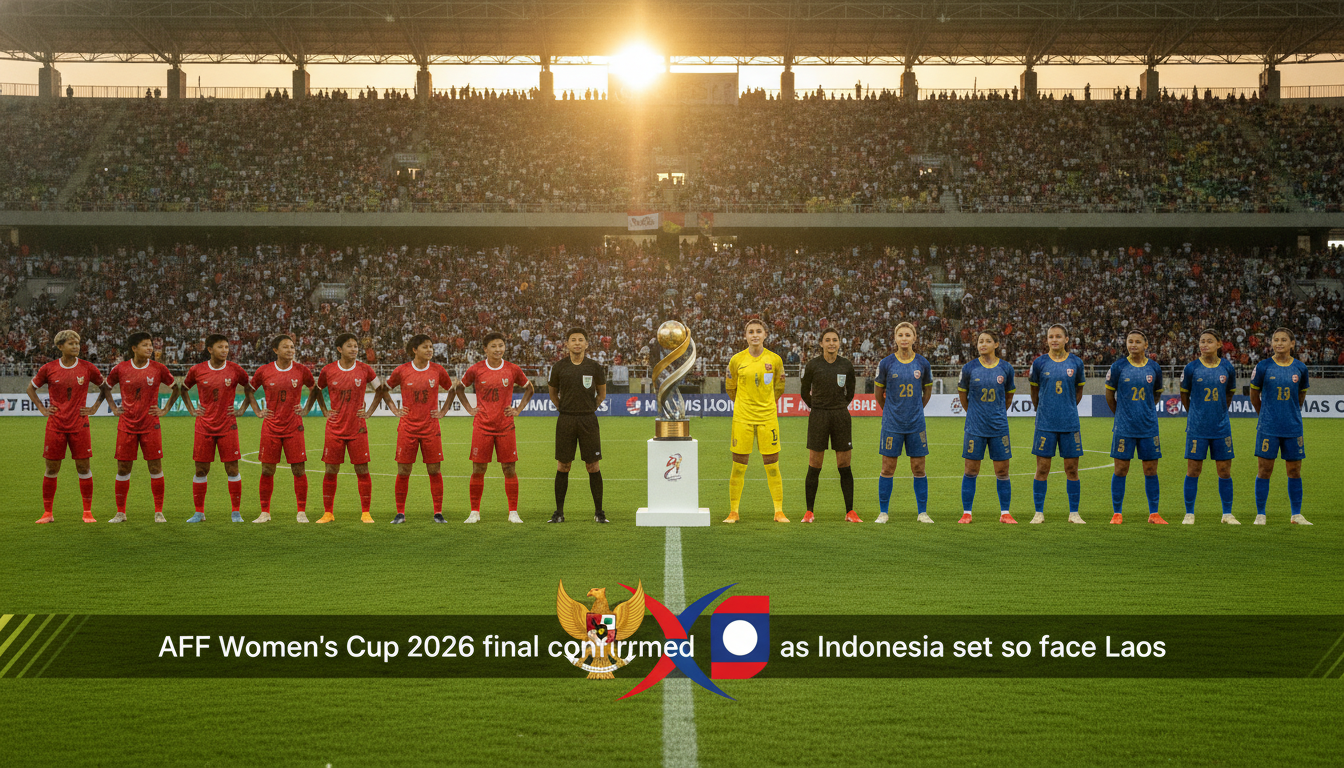
Laos to face Indonesia in AFF Women’s Cup 2026 final after semifinal wins
Laos beat Cambodia and Indonesia overcame Singapore to reach the AFF Women’s Cup 2026 final in Kuala Lumpur; the championship match is set for July 22, 2026.


Laos secured a narrow 1-0 victory over Cambodia while defending champions Indonesia defeated Singapore 2-0 in the semifinals at Kuala Lumpur Football Stadium on July 19, 2026. Anna Onsy’s lightning-quick strike in the opening minute proved decisive for Laos, while Gea Yumanda and Remini Rumbewas struck in the second half to send Indonesia through. The results set up a final between Laos and Indonesia on July 22, with both teams eyeing regional supremacy at the AFF Women’s Cup 2026.
Laos clinch decisive first-minute breakthrough
Anna Onsy produced a moment of brilliance inside the opening minute to give Laos the lead and ultimately the win over Cambodia. The goal arrived so early it forced Cambodia to chase the match from the outset, reshaping both teams’ tactical plans. Laos then adopted a conservative, structure-first approach, protecting the slender margin while looking for counter opportunities. Cambodia responded with sustained pressure but were unable to convert chances or breach a compact Laotian defense.
Defensive organisation became the defining factor as Laos protected their advantage for the remainder of the contest. The Laotian backline and midfield were disciplined in denying clear shooting opportunities and clearing second balls, frustrating Cambodia’s attempts to equalise. Goalkeeper interventions and timely blocks kept the visitors at bay during the critical phases of the match. That discipline, anchored by the early goal, carried Laos into the final where they will face a much different challenge in Indonesia.
Indonesia break down stubborn Singapore in second half
Defending champions Indonesia produced a controlled, effective performance to dispatch Singapore 2-0 and secure their place in the final. Gea Yumanda opened the scoring in the 68th minute after sustained Indonesian pressure had begun to open spaces in Singapore’s defence. Remini Rumbewas sealed the victory with a late strike ten minutes from time, ensuring Indonesia would advance without the need for extra time.
Indonesia’s second-half surge illustrated their capacity to maintain intensity and find decisive moments in attack. Singapore defended stoutly for long stretches but began to tire as the match progressed, allowing Indonesia to exploit lapses in concentration. Set-piece organisation and quick transitions were key ingredients for the winners, who showed why they remain the side to beat at this edition of the AFF Women’s Cup 2026.
Tactical patterns and turning points from the semifinals
Both semifinal matches hinged on moments of execution and tactical adjustments that shifted momentum at crucial times. Laos relied on a shock early goal to force Cambodia from a proactive posture into a search for control, while Indonesia showed patience, waiting to capitalize on openings later in the match. Coaches on both sides made tactical tweaks to protect leads and manage the clock, underlining the strategic depth present at the regional tournament. Physical conditioning and bench management also played a role as the intensity of knockout football demanded fresh legs and disciplined substitutions.
Set pieces, transitions and defensive shape emerged as recurring themes across the evening’s fixtures. Teams that defended compactly and neutralised second-phase attacks imposed their will on opponents, while those that failed to adapt found chances limited. The semifinals highlighted the significance of game management in knockout play, and both winners demonstrated an ability to control tempo when required.
Players who could shape the final
Anna Onsy will enter the final with heightened attention after delivering a match-winning opener in Laos’s semifinal victory. Her early strike underscored her capacity to change a game in an instant and will make her one of the players Indonesia must plan for carefully. For Indonesia, Gea Yumanda and Remini Rumbewas emerged as decisive attacking options, combining timing and composure to finish chances when they mattered most.
Beyond those names, both teams possess supporting players whose roles are likely to be pivotal in the final. Goalkeeping performances, midfield control and defensive organisation will determine which side can impose its preferred style of play. Coaches will be weighing form, fatigue and matchups as they prepare tactical plans tailored to exploit perceived weaknesses in their opponent’s setup.
Path to the final and tournament context
Laos and Indonesia navigated group-stage challenges and knockout tests to reach the championship match in Kuala Lumpur. Both sides showed periods of resilience and attacking intent across earlier rounds, setting the stage for the high-stakes encounters on July 19. The AFF Women’s Cup 2026 has provided a showcase for Southeast Asian women’s football, with matches offering a blend of tactical nuance and raw intensity. With the final scheduled for July 22, teams will have a short turnaround to recover, refine tactics and prepare for a decisive contest.
The setting at Kuala Lumpur Football Stadium offers a neutral but familiar venue for the finalists, who have adapted to conditions and crowd dynamics throughout the tournament. Coaching staffs will focus on recovery protocols, opponent analysis and fine-tuning set-piece routines in the days leading to the final. Both nations are aware that a single performance will decide regional glory, making preparation as much about mental readiness as physical sharpness.
Stakes for regional development and national pride
A victory for Laos in the AFF Women’s Cup 2026 would mark a significant milestone for the nation’s women’s program and could accelerate investment and interest in the sport domestically. For Indonesia, retaining the title would reinforce their regional standing and demonstrate continuity in producing competitive squads at short tournament intervals. Either outcome carries implications for player development pathways, coaching recognition and the broader perception of women’s football across Southeast Asia.
Beyond immediate trophies, the final presents an opportunity to spotlight the growth of the women’s game in ASEAN nations, attract spectatorship and inspire younger players in both countries. Federations, sponsors and regional bodies will be watching not only for the winner but for the quality of play, fan engagement and organisational delivery. The match may influence future planning at national levels, including talent identification and investment priorities aimed at sustaining competitive progress.
The AFF Women’s Cup 2026 final between Laos and Indonesia will be contested on July 22, 2026 at Kuala Lumpur Football Stadium with both teams aiming to convert semifinal momentum into regional silverware. Fans can expect a tactical, closely fought encounter given the contrasting paths and styles of the two sides. The match represents more than a trophy; it is a barometer of progress for women’s football across the ASEAN region and a chance for players to leave a lasting legacy on the tournament stage.