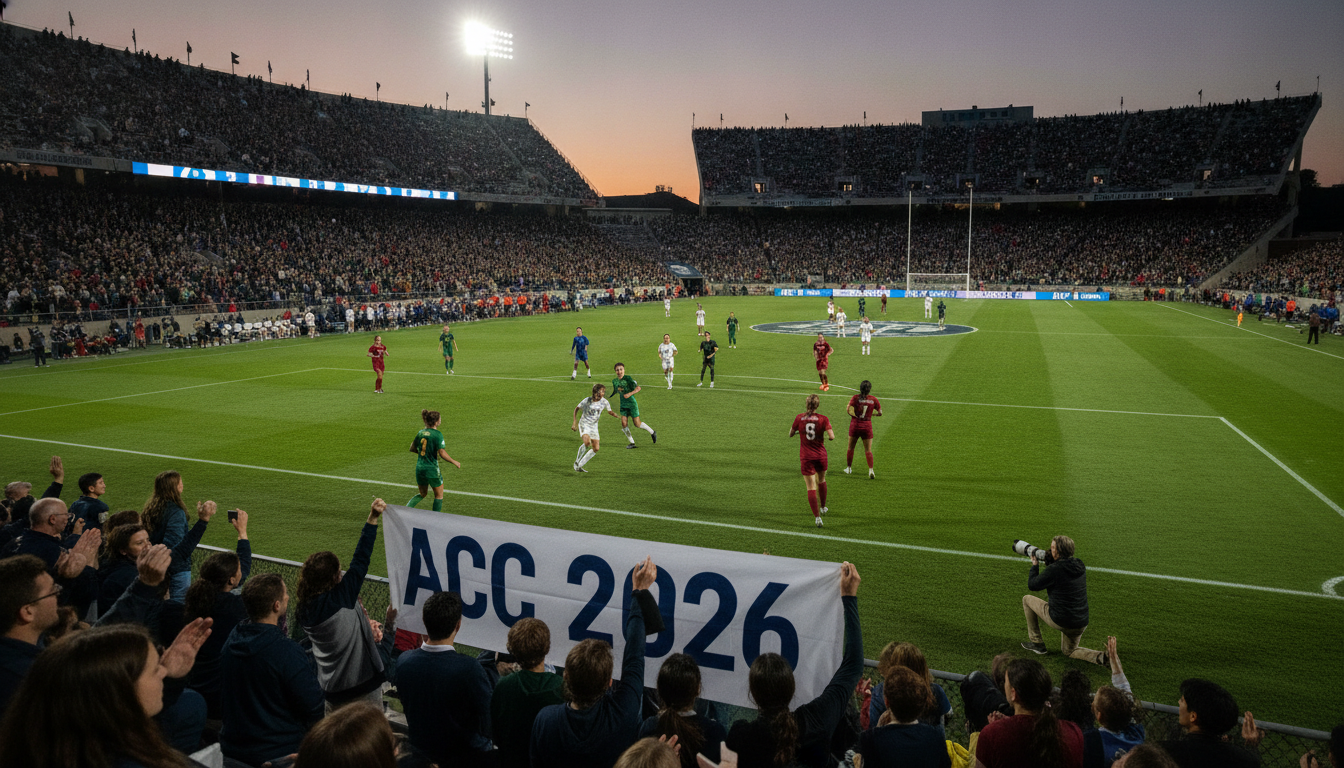
2026 ACC Soccer Preview: Why the Atlantic Coast Conference Remains the Toughest League in College Soccer
ACC soccer 2026 preview: a deep-dive look at why the conference is the most competitive in college soccer, the teams rising and falling, and the players to watch.


Season Snapshot: A Conference Still Stacked
The 2026 ACC soccer preview opens with a simple fact — the league remains the deepest and most unpredictable in college soccer. Long travel, intense intra-conference rivalries and a concentration of elite programs keep national championship contenders scattered across the standings. From established blue-bloods to sudden fallouts, the ACC’s balance means any team can win on any given weekend.
The volatility of recent seasons reinforces that claim and sets the tone for 2026. Programs that reached late NCAA rounds one year can struggle the next, making preseason predictions difficult and match results compelling. That uncertainty is central to this season’s narrative and will drive national attention through the fall.
Conference Depth and National Picture
The ACC’s strength is visible in postseason representation and historical success, and that legacy informs expectations for 2026. Several current and returning programs carry recent national titles and deep tournament pedigrees, which raises the baseline for conference play. This concentration of talent forces teams to be battle-tested before NCAA bracket time arrives.
Parity also shifts the calculus for selection and seeding in the NCAA Tournament. Non-conference schedules are tailored to prepare teams for the ACC gauntlet, and every conference match feels like a postseason preview. For coaches and players, the league’s depth demands consistent high-level preparation from August through December.
From Elite Eights to Rebuilding: Team Trajectories to Watch
Virginia Tech’s rapid descent from an Elite Eight berth to a winless conference slate highlighted how quickly fortunes can change inside the ACC. That swing underscores how injuries, roster turnover and coaching adjustments can alter outcomes dramatically from one season to the next. Watching which programs stabilize after setbacks and which continue to rise is among the season’s key storylines.
Other teams will face the opposite pressure — the expectation to maintain or exceed recent success. Programs that underachieved in 2025 will target strong recruiting classes and transfer additions to climb back into contention. The interplay between established powers and surging challengers will determine who captures the regular-season crown and who merely survives until the conference tournament.
Top Returning Players and Impact Veterans
The 2026 ACC soccer preview points to a core group of returning standouts whose presence will shape results. Established attacking threats, creative midfielders and commanding goalkeepers returning to ACC lineups provide continuity for title contenders. Those veteran leaders will be relied upon not only for production but for tactical discipline during the league’s high-pressure stretches.
Defenders and central midfielders who can control tempo and break up opposition transitions will be particularly valuable in ACC play. Teams that retain such anchors often convert narrow conference matches into critical point hauls. Individual honors and professional prospects will follow players who can perform against the conference’s consistent intensity.
Freshmen, Transfers and the Changing Roster Landscape
The transfer portal and strong recruiting cycles continue to reshape ACC rosters ahead of 2026. Several programs have supplemented graduating classes with experienced transfers who can step into starting roles immediately. Meanwhile, high-end freshmen offer upside and can shift depth charts when integrated thoughtfully into tactical plans.
Coaches adept at blending transfers and incoming freshmen will gain an advantage in a league where small margins decide matches. The ability to replace minutes lost to graduation without disrupting team chemistry is a defining trait of sustained ACC success. Keep an eye on programs that quickly identify portal solutions and accelerate the development curve for younger players.
Schedule, Travel and Tactical Adjustments
Cross-country trips and frequent back-to-back league matches force coaches to prioritize recovery and squad rotation. The 2026 ACC soccer preview emphasizes that managing minutes will be as crucial as tactical innovation. Teams with deeper benches and versatile players can withstand the grind and remain competitive late into the season.
Tactical trends are also likely to evolve as coaches adapt to opponents’ strengths. Expect more flexible formations, situational substitution patterns and an emphasis on transitional play. The teams that adjust fastest to opponent game plans and in-game momentum swings will consistently pick up points in tight contests.
Key Matchups and Turning-Point Weeks
Certain early-season matchups will carry outsized importance, setting narratives that can last the whole fall. High-profile conference clashes and marquee non-conference tests will reveal which contenders are battle-ready and which need midseason recalibration. Fans and analysts will watch these marquee weeks as the first real measure of preseason talk.
Midseason stretches that stack difficult opponents across consecutive weekends will create turning points for many programs. Surviving these windows with a positive return — a win and a draw, for example — can vault a team into serious contention. Conversely, slumping through a tough block of games can force a team into a defensive posture for the remainder of conference play.
The ACC soccer 2026 preview identifies multiple weeks where standings could shift dramatically, and those calendar moments will shape tournament seeding and national perception.
What to Watch for Selection and Professional Pathways
Beyond conference honors, the ACC remains a pipeline to the professional ranks, and performances in 2026 will influence draft stock and pro contracts. Players who deliver consistently against ACC opponents attract the attention of MLS clubs and overseas scouts. High-pressure conference matches thus serve a dual purpose: winning now and building a résumé for the next level.
For teams, NCAA Tournament resumes are scrutinized by selection committees that weigh strength of schedule and quality wins. ACC clubs have an advantage in that they frequently play and beat strong competition, but they also risk accumulating damaging losses. Strategic scheduling and strong conference showings will be central to both team and individual advancement.
Final thoughts on roster management and tactical execution will matter as selection decisions are finalized in late autumn.
The ACC’s landscape for 2026 will be defined by the interplay of returning leadership, roster turnover, and the grueling rhythm of conference play. Teams that combine veteran poise with shrewd roster moves and adaptable tactics will position themselves for both conference and national success. Expect drama, surprise results and intense competition every week.
The 2026 ACC soccer season shapes up as another chapter in the conference’s history of dense competition and national relevance, and observers should prepare for a campaign where the margin between triumph and disappointment is narrow.