Nine African Teams Advance to World Cup 2026 Round of 32 as CAF Praises Historic Showing
CAF President Patrice Motsepe praises nine African teams after a historic group-stage run at the World Cup 2026, with a 90% progression rate for the continent.

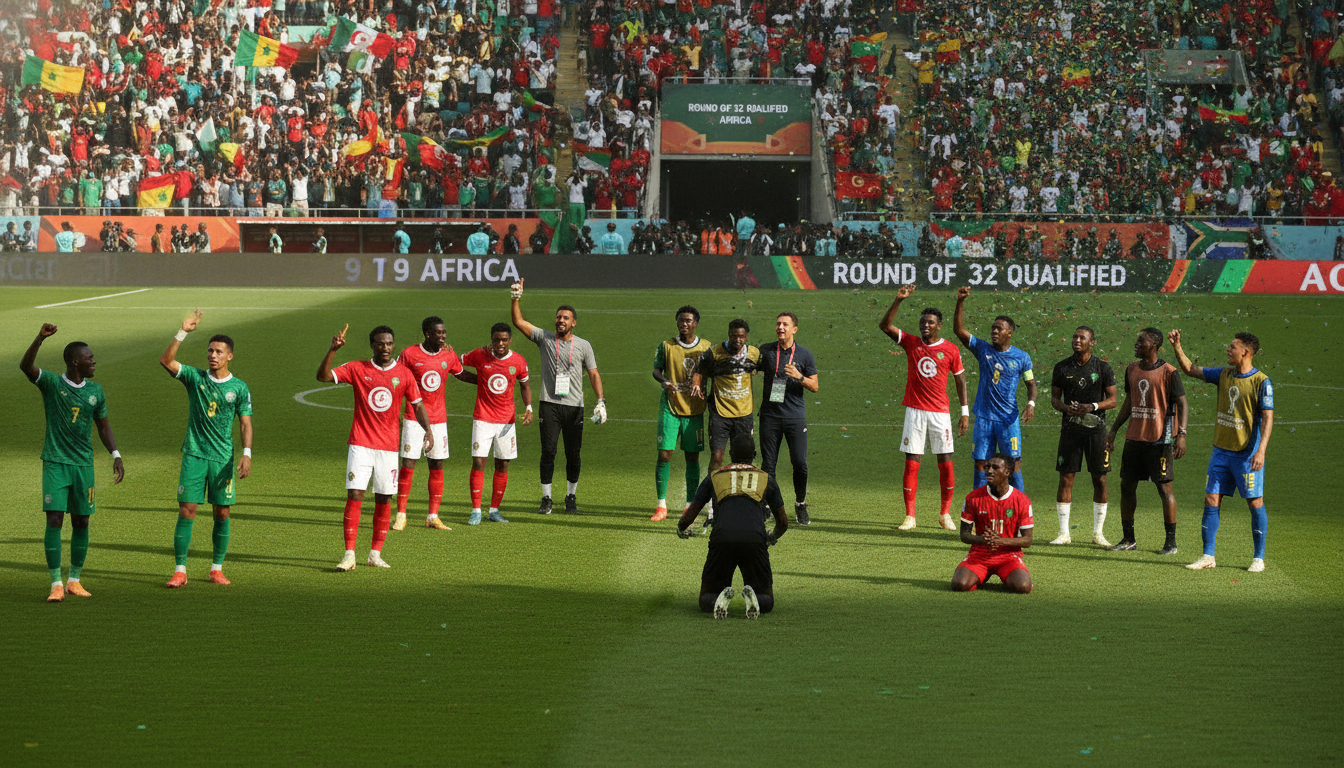
African teams World Cup 2026 delivered a landmark morning for the continent as nine national sides progressed to the Round of 32, prompting an official congratulation from Confédération Africaine de Football president Patrice Motsepe. This result marks the first time that 90% of Africa’s representatives have moved beyond the group stage at a FIFA World Cup, underscoring the continent’s rising competitiveness on football’s biggest stage. Motsepe commended players, coaching staff and national associations for their work, and framed the achievement as the outcome of long-term investments in youth development, coaching and infrastructure.
Motsepe hails historic achievement
The CAF president issued formal congratulations to the squads of Algeria, Cape Verde, Côte d’Ivoire, Democratic Republic of Congo, Egypt, Ghana, Morocco, Senegal and South Africa. He described the qualification as a collective triumph for Africa’s 54 member associations and for the continent’s supporters worldwide.
Motsepe highlighted that the success was not accidental but the result of sustained programmes across domestic leagues, youth academies and coaching education. He said the progress was reflective of improved governance, financial transparency and new partnerships that have bolstered development across member federations.
The nine teams that reached the Round of 32
Algeria, Cape Verde, Côte d’Ivoire, Democratic Republic of Congo, Egypt, Ghana, Morocco, Senegal and South Africa each secured places in the knockout phase at the World Cup 2026. The diversity of that list — spanning North, West, Central and Southern Africa — illustrates the geographic spread of progress across the continent.
Each team arrived in 2026 after different qualifying paths and domestic preparations, but all shared a common outcome: advancement beyond the group stage. The result gives African football a larger presence in the tournament’s knockout rounds than in previous editions.
Drivers behind the breakthrough
Officials point to multiple factors that combined to produce this result, including increased investment in youth systems and a stronger emphasis on domestic coaching pipelines. Federations and leagues have boosted competitive opportunities for young players, translating into better-prepared national squads.
Clubs and national associations also benefited from new commercial partnerships and sponsorships attracted by clearer governance and financial accountability. Those funds have been reinvested in training facilities, scouting networks and support structures that underpin international performance.
CAF governance and funding spotlighted
CAF’s leadership noted improvements in administrative practices that helped unlock external investment and sponsorship deals for African football. Motsepe and other officials credited more stringent financial controls and professionalised management across member associations for creating a stable platform for growth.
Those governance enhancements did not only improve the business side of the sport; officials say they have driven tangible gains on the field, enabling long-term planning rather than short-term fixes. The result at the World Cup 2026 is being used by CAF as evidence that governance reforms are producing measurable sporting returns.
What the Round of 32 means for each nation
For Algeria and Morocco, the knockout phase continues a recent pattern of strong tournament performances and confirms their status among Africa’s leading teams. Both teams enter the Round of 32 with experienced squads and continental pedigree that could carry them deeper into the competition.
Ghana, Egypt and Senegal arrive with a blend of seasoned internationals and emerging talents, offering a balance of leadership and youthful energy. Côte d’Ivoire, the Democratic Republic of Congo and South Africa have used this World Cup to announce the strength of their player development systems, while Cape Verde’s progression highlights the rise of smaller federations on football’s global stage.
Knockout stage challenges and prospects
The Round of 32 presents a step up in intensity and tactical demand, with single-elimination matches placing a premium on discipline and game management. African teams will face a variety of opponents with differing styles, testing their adaptability and squad depth.
Coaches will need to manage fatigue, injuries and mental pressure as they prepare for opponents who often have deep tournament experience. Success in the knockout phase will depend on tactical clarity, set-piece organisation and the ability of leaders on the field to influence high-pressure moments.
The nine-team advance to the Round of 32 at World Cup 2026 is a milestone for African football and a validation of the investments made by federations, clubs and governments across the continent. The achievement has already prompted public celebrations and renewed conversations about further support for grassroots development.
Moving forward, sustaining this level of performance will require continued focus on coaching education, youth competitions and league quality to ensure the next generation can build on this year’s results. The Round of 32 offers African teams an immediate platform to reinforce their progress and to make a stronger case for even greater investment in the years ahead.