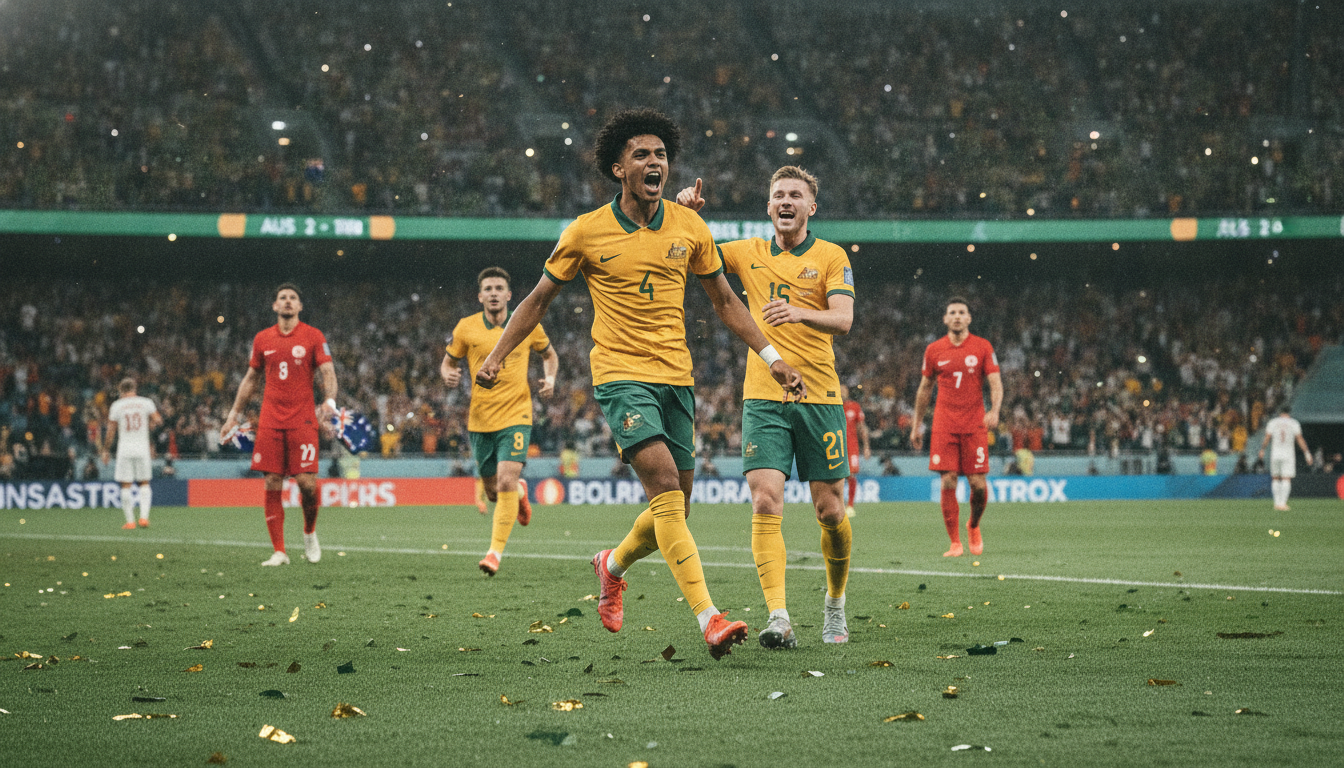
Australia vs Turkey: Irankunda and Metcalfe secure 2-0 World Cup victory for Australia in Vancouver
Australia stunned Turkey 2-0 in Vancouver as Nestory Irankunda and Connor Metcalfe found the net to deliver a crucial World Cup win for the Socceroos.


Match summary and decisive moments
Nestory Irankunda opened the scoring with a composed finish after a perfect long pass from Paul Okon-Engstler, turning a promising counter into a 27th-minute breakthrough.
The goal galvanized the match’s momentum and forced Turkey to reshape their approach as the game progressed.
Connor Metcalfe added a second in the 75th minute, collecting space outside the box and drilling a low shot into the near corner to seal the result.
That finish extinguished Turkey’s hopes of a late comeback and handed Australia a confident, comfortable victory on the night.
Irankunda’s rise and the opening goal
The assist from Paul Okon-Engstler set the move in motion with a pass over the top that split Turkey’s defence.
Watford forward Nestory Irankunda timed his run to perfection, collected the ball under pressure and finished with calm technique to score for Australia.
At 20 years old, Irankunda became the youngest Australian man to score at a World Cup, a milestone that underlines his rapid rise in international football.
He was not guaranteed a starting berth before kick-off, but his impact after coming into the lineup gave the coaching staff and fans immediate reward.
Metcalfe’s composed finish and the second goal
Connor Metcalfe’s goal came from a structured counter at the three-quarter mark of the match, when Australia exploited a moment of space in Turkey’s midfield.
The St. Pauli midfielder picked his spot from just outside the penalty area and curled a precise attempt into the near corner to double the lead.
Metcalfe’s strike demonstrated Australia’s ability to convert transition moments into tangible advantages, and it came after a period in which Turkey had grown into the contest.
The second goal restored control to the Socceroos and removed the urgency from Turkey’s final-quarter surge.
Turkey’s response and missed opportunities
Turkey reacted to falling behind by increasing territorial pressure, particularly after the break, when they had the better of possession and progressed passes into the attacking third.
Despite that control, they struggled to fashion clear-cut chances inside the penalty area and rarely threatened Australia’s goalkeeper with high-quality attempts.
The visitors’ domestic and international attacking talents were kept at arm’s length by disciplined defending and timely clearances from the Australian backline.
Ultimately, Turkey paid for their profligacy in front of goal as counterattacks delivered the decisive moments to the Socceroos.
Tactical shapes and key substitutions
Australia’s set-up was compact and deliberately structured to protect space centrally while allowing width in transition, creating pockets for runners like Irankunda.
Paul Okon-Engstler’s long pass that led to the opener highlighted a planned emphasis on direct vertical play when opportunities presented themselves.
Turkey shifted personnel and shape in search of greater penetration, but changes did not yield the type of service needed to break down Australia’s rearguard.
Substitutions aimed at adding attacking impetus produced possession but not the decisive final pass, leaving the Turks to chase the match as time ran down.
Atmosphere in Vancouver and broader context
The game in Vancouver carried added significance with Turkey returning to the World Cup stage for the first time since their 2002 third-place finish.
Expectations were high among Turkish supporters, who filled sections of the stadium and created a lively, partisan atmosphere throughout the match.
Australian fans and neutrals also made their presence felt, buoyed by the team’s effective counterplay and the emerging talents in the squad.
The setting produced a competitive international fixture that was decided by clinical finishing and defensive organisation rather than prolonged dominance.
What the result means for both teams moving forward
For Australia, the 2-0 victory offers momentum and a tangible example of how transition football and clinical moments can yield three points at a major tournament.
The win will provide confidence to fringe players and starters alike, and it reinforces the depth available to the coaching staff when selection choices are required.
For Turkey, the performance exposed areas requiring refinement, particularly the final pass and composure in front of goal during extended periods of pressure.
Coaches will return to the drawing board with an emphasis on converting possession into quality scoring opportunities while shoring up vulnerabilities on the break.
The result in Vancouver will be dissected by both camps ahead of their next fixtures, with attention on how to translate positive facets of this match into consistency across the tournament.
Australia’s clinical counterattacking and defensive discipline delivered a decisive two-goal margin that Turkey could not overturn despite a sustained second-half effort.
Player availability, team fitness and tactical tweaks are likely to shape the next rounds for each side as they seek to build on the lessons from this meeting.
The match provided a platform for young talents like Irankunda to stake a claim on the international stage and for established players like Metcalfe to influence outcomes with composed contributions.
Coaches and supporters on both sides will now turn their focus to recovery and preparation, knowing that small margins and individual moments can define progress in a tightly contested tournament.
Australia will depart Vancouver with increased belief in their methods, while Turkey must find sharper cutting edge to capitalise on future possession and control in upcoming matches.