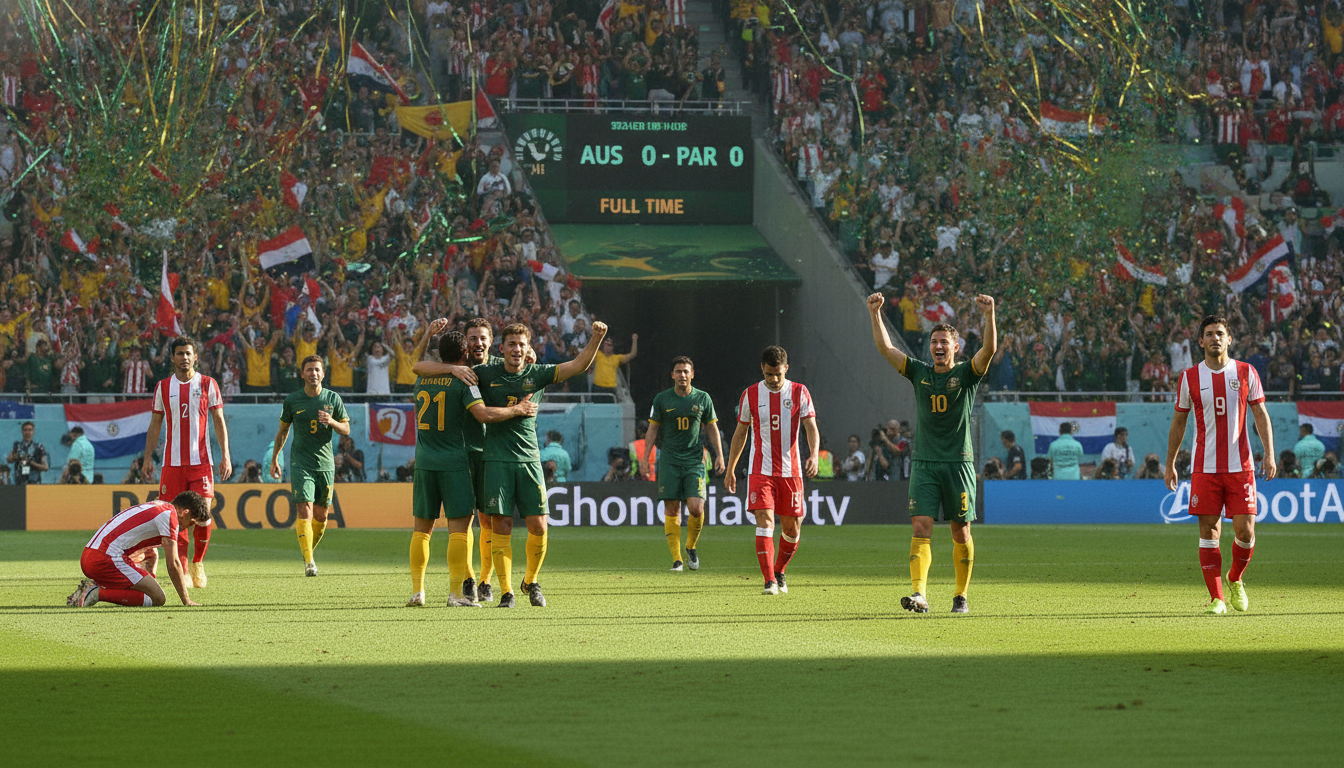
Australia-Paraguay draw sees Socceroos finish second in Group D
Australia-Paraguay draw ends 0-0 as Australia finish second in Group D. Paraguay eye a top-eight third-place spot and a possible Round of 32 tie with Germany.


On June 26, 2026, a defensive 0-0 stalemate between Australia and Paraguay left both teams with their progress at the World Cup largely intact. The Australia Paraguay draw secured second place for the Socceroos in Group D and kept Paraguay in strong contention for one of the best third-place finishes. The match offered few clear chances but significant consequences for the tournament’s knockout picture.
Australia clinch second place after goalless draw with Paraguay
Australia’s point was enough to seal second place in Group D, a position that determines a more favorable route into the knockout phase than finishing third. The Socceroos’ conservative approach prioritized control and minimal risk, ensuring they left the group stage without defeat. Defensive discipline and game management were the hallmarks of their performance as they navigated a match that produced limited goalmouth action.
The draw also illustrated Australia’s pragmatic tournament strategy: secure results and avoid late collapses that could derail progression. Managerial choices in personnel and formation emphasized solidity over flair in a fixture where a single mistake could prove costly. In the context of group calculations, the point preserved the Socceroos’ seeding and set their immediate tournament path.
Paraguay remain poised for best third-place ranking and possible progression
For Paraguay, the point will most likely be sufficient to place them among the top eight third-placed teams across the groups. Their tally means they need to finish with a better record than at least one of the other third-placed sides, having already edged out the records of South Korea, Scotland and the third-placed team from Group I. Should those permutations hold, Paraguay would advance to the Round of 32 and face a seeded opponent as laid out by the tournament bracket.
The Paraguayan approach in the match suggested an acceptance of the minimal result rather than an all-out gamble for three points. That assessment will be confirmed only when the other group matches conclude and the third-place ranking is finalized. For now, Paraguay’s defensive resilience and ability to grind out a draw under pressure have kept their hopes alive.
Tactical setup and key selections that shaped the match
Australia started with Jackson Irvine and Connor Metcalfe in midfield, pairing work-rate and physicality in an attempt to stifle Paraguay’s transitions. The midfield duo focused on protection for the backline and recycling possession to slow the game’s tempo. Ajdin Hrustic, the former Eintracht Frankfurt midfielder, was introduced from the bench, marking his first appearance of the tournament and adding creative options late in the contest.
Paraguay set up compactly and invited Australia to control the ball in less dangerous areas, looking to exploit any turnovers on the counter. Both teams limited space between lines, which contributed to the low number of clear-cut opportunities. Defenders and goalkeepers on both sides completed a disciplined night, with neither keeper facing sustained periods of high-danger attacking play.
Australia’s back-to-back knockout milestone and tournament trajectory
The draw confirmed a milestone for Australia: qualification to the World Cup knockout stages in consecutive tournaments. The Socceroos were also in the Round of 16 in Qatar in 2022, where they were eliminated by the eventual champions. Repeating that achievement underlines a continuity of progress for Australian football and validates the squad-building and coaching direction taken since the previous cycle.
That said, securing second place brings different expectations and matchups than finishing third, and Australia now faces the tactical tests that come with facing higher-ranked or stylistically varied opposition in the knockout rounds. The coaching staff will have to balance squad rotation and injury management with the imperative to prepare for a potentially more difficult opponent than they might have faced as a third-placed qualifier.
Knockout permutations and the prospect of a tie with Germany in Foxborough
If Paraguay advances as one of the best third-placed teams, they would be slated to face Germany in Foxborough, Massachusetts in the Round of 32 under the bracket configurations. That potential matchup underscores the high stakes of finishing positions; the difference between a second-place finish and a third-place result can mean a dramatically different opponent and a different travel or recovery schedule. The possibility of facing a European heavyweight would be a stern test for Paraguay’s squad depth and tactical adaptability.
Australia, as Group D’s second-placed side, will also be monitoring the bracket closely to confirm their opponent and logistics. The location and timing of the next match will shape preparation schedules, recovery routines and tactical planning. Both teams must now switch focus from group housekeeping to the knockout mindset, where single-game margins decide continuation in the tournament.
Immediate areas for improvement ahead of the knockout phase
Although both teams achieved their short-term objectives, the match exposed areas that require urgent attention ahead of the knockouts. Australia will want greater incisiveness in the final third and improved ball progression through tight defensive blocks. Turning possession into sustained pressure and generating higher-quality chances will be key against stronger defensive units.
Paraguay must balance their defensive solidity with a sharper attacking edge if they progress as a third-placed team. Relying primarily on containment is a risky long-term strategy in knockout football, where moments of invention and clinical finishing often determine outcomes. Set-piece organization, transitional speed and decision-making in the final third are all likely focal points in training.
Australia Paraguay draw reverberates beyond a single fixture and informs squad decisions, ranging from potential lineup tweaks to physical recovery plans. Coaching staffs will analyze expected goals, chance creation metrics and individual performances to refine their starting elevens for the next round. Both nations have shown the capacity to be hard to break down, but the ability to create and convert will increasingly define success as the tournament progresses.
The draw delivered the immediate reward of advancement for Australia and a lifeline for Paraguay, but it also raised the bar for tactical and creative improvements in the rounds ahead.