Austria 3-3 Algeria: Kalajdzic’s 96th‑Minute Strike Sends Both Teams Into 2026 World Cup Round of 32
Austria 3-3 Algeria finished as a dramatic Group J draw after Sasa Kalajdzic’s 96th‑minute equaliser secured Austria’s place in the 2026 World Cup Round of 32 and sent Algeria through as one of the best third‑placed teams. The scoreline captured a six‑goal, end‑to‑end contest that produced late twists and decisive moments for both nations. The result leaves Austria set to face Spain while Algeria prepare to meet Switzerland in the knockout phase.


Late drama sends both teams through
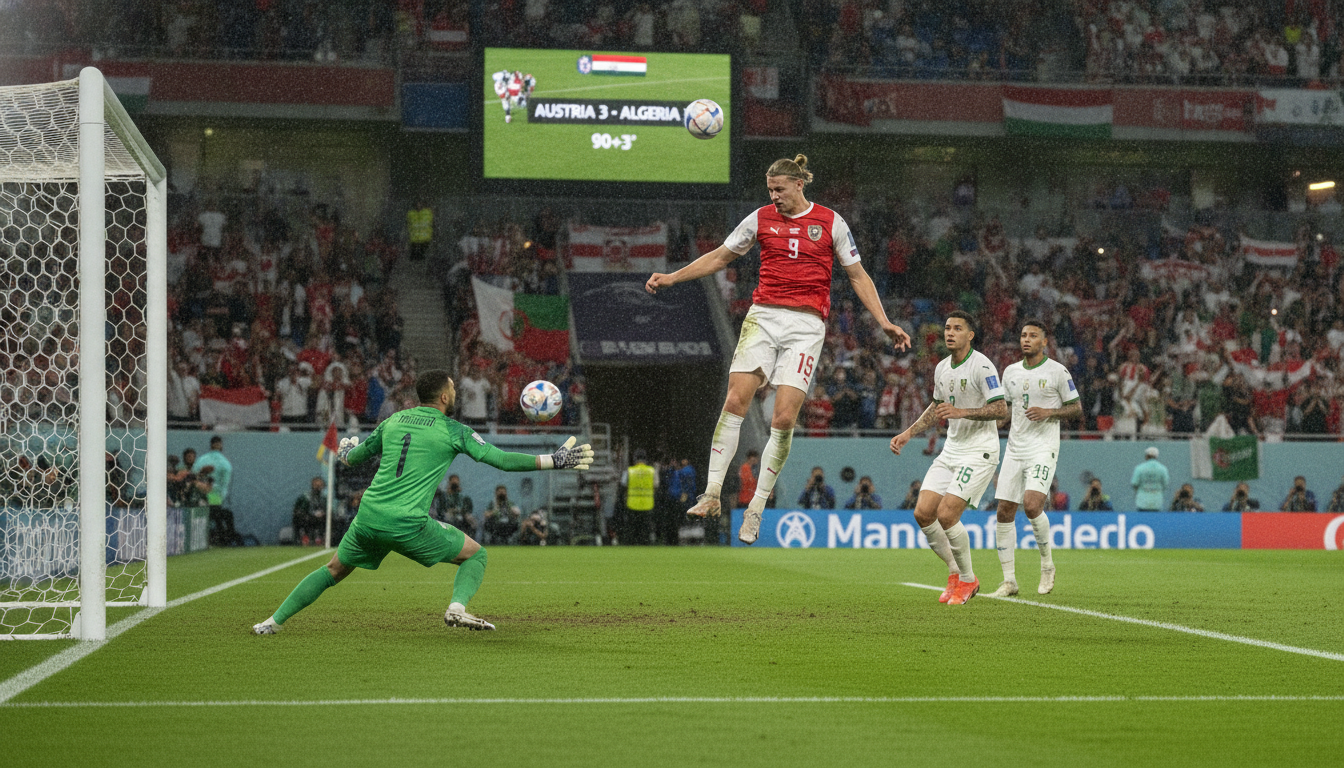
Austria and Algeria played out a pulsating finale in Group J that only found its final chapter deep into stoppage time. Sasa Kalajdzic struck in the 96th minute to level the game after Riyad Mahrez had drawn Algeria level just three minutes earlier. The draw meant Austria finished second in the group while Algeria qualified among the best third‑placed teams to advance.
The outcome also eliminated Iran from contention, with the final standings shaped by the late twists in this fixture. Austria’s response to falling behind showed immediate composure under Ralf Rangnick, while Algeria’s resilience ensured their path to the knockout stage despite finishing third. Both teams will now turn attention to quick recovery and preparing for single‑elimination fixtures.
Kalajdzic’s 96th‑minute finish capped a furious finale
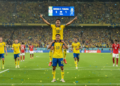
Sasa Kalajdzic, the former Stuttgart striker, produced the decisive intervention in stoppage time to rescue Austria from defeat. His late finish cancelled out Riyad Mahrez’s effort and delivered the emotional lift that kept Austria’s tournament hopes alive. The timing of the goal underscored the match’s intensity and left players and supporters stunned at the final whistle.
Kalajdzic’s contribution highlighted Austria’s persistence and ability to find a crucial moment under pressure. The forward’s presence in the box proved valuable in a chaotic closing sequence where every second mattered. That intervention will be remembered as one of the tournament’s most dramatic late finishes.
A back-and-forth scoring contest with key contributors
The match opened with Marko Arnautovic giving Austria an early lead through a scrappy but effective finish from close range. Algeria responded before half‑time when Rafik Belghali produced a composed strike to restore parity and change the complexion of the contest. The opening 45 minutes set the tone for a game defined by rapid momentum swings and clinical finishing.
After the restart, Marcel Sabitzer put Austria back in front with a well‑timed effort that reasserted Rangnick’s side in the contest. Algeria’s Riyad Mahrez then produced two strikes to turn the match in the visitors’ favour, underlining his status as the team’s attacking fulcrum. The flow of goals reflected both teams’ willingness to commit numbers forward and their vulnerability on transitions.
Tactics, substitutions and the Bundesliga influence
Both squads made tactical adjustments as the match unfolded, seeking to control possession and exploit spaces on the flanks. Austria’s approach combined structured pressing with quick vertical passes to create openings, while Algeria relied on Mahrez’s creative running and set‑piece delivery to create chances. The contest often tilted on moments of individual quality rather than sustained domination by either side.
The Bundesliga’s influence was notable, with a dozen players from the German top flight featuring in the match and nine of them representing Austria. Those players brought a familiar level of intensity and tactical discipline that shaped passages of play, particularly in midfield and defensive transitions. Coaches from both teams used substitutions to alter tempo and attempt to close out or chase the game, leading to the frenetic final stages that produced the decisive moments.
Knockout-round matchups and immediate consequences
Austria’s second‑place finish sets up a Round of 32 meeting with Spain, a high‑profile test that will demand a compact defensive display and clinical attacking execution. Spain arrive as a formidable knockout opponent, and Austria will need to tighten defensive organisation while finding ways to exploit set pieces and counter‑attacks. Ralf Rangnick and his staff face a short turnaround to prepare tactical plans and manage player fitness.
Algeria, meanwhile, advance to face Switzerland in the next round, a fixture that carries additional narrative weight given the teams’ recent histories. Algeria’s coach, Vladimír Petković, will confront a side he previously managed at international level, adding an extra subplot to the encounter. Algeria’s path requires them to maintain the attacking threat of Mahrez while bolstering defensive solidity to withstand a disciplined Swiss unit.
Group J implications and tournament context
The 3-3 draw reshaped Group J’s narrative, highlighting how tight margins and late goals can alter tournament trajectories in an instant. Iran’s elimination underscored the fine differences between advancing and exiting, particularly in a format where third‑place qualification is determined by narrow statistical margins. For Austria and Algeria, progression provides both relief and a fresh set of challenges at the knockout stage.
From a wider tournament perspective, this game showcased the unpredictable nature of the 2026 World Cup knockout race, where dramatic finishes and individual brilliance can rewrite expectations. Teams that survive such contests often carry momentum, but they also inherit the physical and emotional toll of high‑intensity matches. Managing recovery, rotation and tactical clarity will be pivotal for both sides as they prepare for single‑elimination football.
Austria 3-3 Algeria will be remembered for its late twists and the way small margins decided who advanced. Both teams leave Group J with lessons learned and immediate tests ahead as the World Cup moves into its knockout rounds.