Bayern Munich Fans Paint Kai Tak Red Ahead of Audi Football Summit Match
Bayern Munich fans packed Kai Tak precinct for the Audi Football Summit, with supporters from Hong Kong and mainland China gathering ahead of Bayern vs Aston Villa.


Bayern Munich Supporters Turn Kai Tak Into Sea of Red
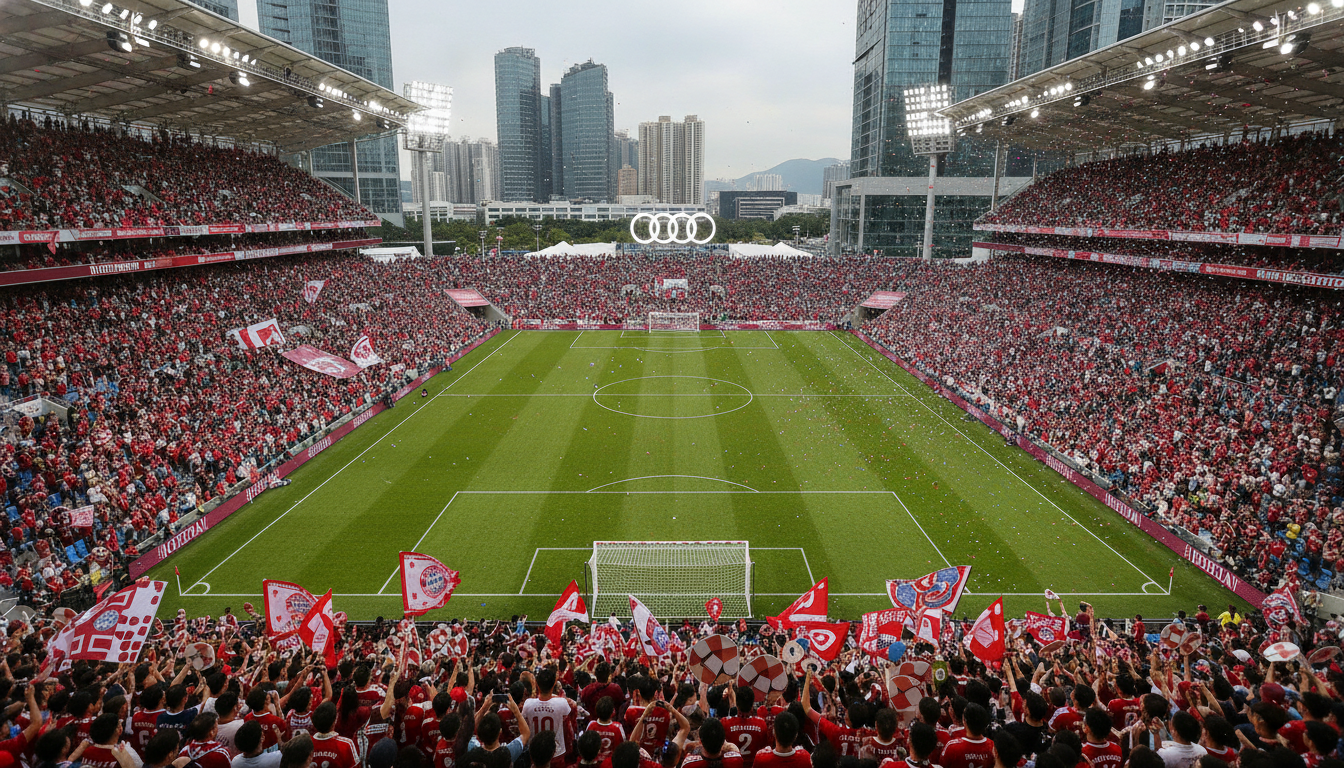
Fans gathered outside Kai Tak Stadium on Friday, waving giant flags and chanting in multiple languages as they prepared for the Audi Football Summit fixture between Bayern Munich and Aston Villa. The area around the stadium was transformed into a vivid display of club colours, with red scarves and banners punctuating the crowd. This visible show of support underscored the draw of a high-profile preseason meeting between a Bundesliga heavyweight and an English Premier League side.
Organisers and local stewards noted the density of the crowd but said the atmosphere remained celebratory rather than confrontational. Attendees included casual spectators and organised groups, creating a mix of spontaneous energy and coordinated supporter activity. The scene set the tone for an evening where fan presence was as much a headline as the match itself.
Regional Fan Clubs Mobilize from Shanghai, Chengdu and Beyond
Bayern Munich fan clubs from Hong Kong and mainland Chinese cities including Shanghai, Chengdu, Shenzhen and Dalian travelled to Kai Tak in numbers. These regional contingents arrived in coordinated waves, often wearing matching shirts or carrying club flags to mark their affiliation. Such turnout reflects Bayern’s sustained popularity across Greater China and the importance of live fixtures for sustaining that connection.
Club captains and organisers said they communicated through social media and member networks to align travel plans and rally supporters for the event. For many fans, the match offered a rare chance to see their team in person without travelling to Europe. The presence of multiple mainland groups also emphasized the cross-border nature of modern supporter culture.
Chengdu Contingent Bought Tickets Together and Flew In
“We started preparing almost a month-and-a-half ago when we received the news,” said Zhu Junru, captain of the Chengdu Bayern Munich Fan Club, describing the planning that preceded the trip. Zhu said more than 100 members travelled from Chengdu specifically to attend the fixture, and the group purchased match tickets collectively before flying to Hong Kong. That centralised approach, he explained, made coordination simpler and helped ensure the group sat together inside the stadium.
Zhu, who works in telecommunications, added that organised group travel felt safer and more efficient for a contingent of their size. Members booked a mix of flights and shared transport to reach Kai Tak, and many coordinated pre-match gatherings to maintain momentum. Their experience reflects a broader trend in which organised supporter networks manage logistics to maximise the matchday experience.
Matchday Atmosphere Featured Chants, Flags and Multilingual Cheers
Supporters filled the precinct with songs and chants that ranged from classic club anthems to localized variations sung in Cantonese and Mandarin. Volunteers and fan leaders distributed flags and arranged group displays that caught the eye of passersby and media alike. The multilingual nature of the cheering underlined how global clubs like Bayern Munich cultivate diverse followings in different language communities.
Vendors and nearby businesses reported higher foot traffic as fans congregated hours before kick-off, with many supporters socialising and sharing food and drink. Photographs and short videos circulated rapidly on social apps, amplifying the visual impression of the gathering. Match organisers encouraged respectful behaviour while acknowledging the positive energy generated by the fans.
Organised Travel and Safety for Large Fan Groups
Large fan contingents arriving from multiple cities presented logistical demands for transport, ticketing and crowd management. Fan club leaders worked with members to stagger arrivals and to confirm seating arrangements, which helped reduce bottlenecks at entry points. Stewards and local authorities monitored the crowds, focusing on ensuring safe movement around the stadium precinct rather than policing supporter expression.
Group travel arrangements also included contingency plans for delayed connections or last-minute changes, with organisers assigning point persons for communication. Several clubs reported hiring chartered buses or coordinating shared rides to streamline arrival at Kai Tak. Those precautions reflected lessons learned from past high-attendance fixtures and aimed to keep the matchday experience orderly and enjoyable for all.
Local Impact and Club Outreach in Asia
The turnout at Kai Tak highlights Bayern Munich’s commercial and cultural reach in the region, where preseason tours and exhibition fixtures often form part of clubs’ broader engagement strategies. Matches such as the Audi Football Summit provide opportunities for local supporters to see top-level football and for clubs to reinforce brand loyalty. They also serve as moments for sponsors, local partners and community groups to connect with a passionate fan base.
For Hong Kong’s sports calendar, hosting prominent international clubs creates economic activity and draws international attention. Local hospitality and retail sectors benefit from increased patronage on matchdays, while grassroots football initiatives can leverage the visibility to promote participation. Observers said the event demonstrated how one match can ripple across many layers of the local sporting ecosystem.
The pre-match congregation at Kai Tak was notable for its organisation and optimism, with fan clubs leveraging coordinated planning to maximise the experience. Supporters from Chengdu and other mainland cities contributed to a cross-border atmosphere that blended regional identity with global fandom. As clubs continue to stage marquee fixtures abroad, the role of organised supporter networks in shaping matchday atmospheres will remain significant.