Bayern Munich DFB-Pokal final in focus as Eberl calls for cup return
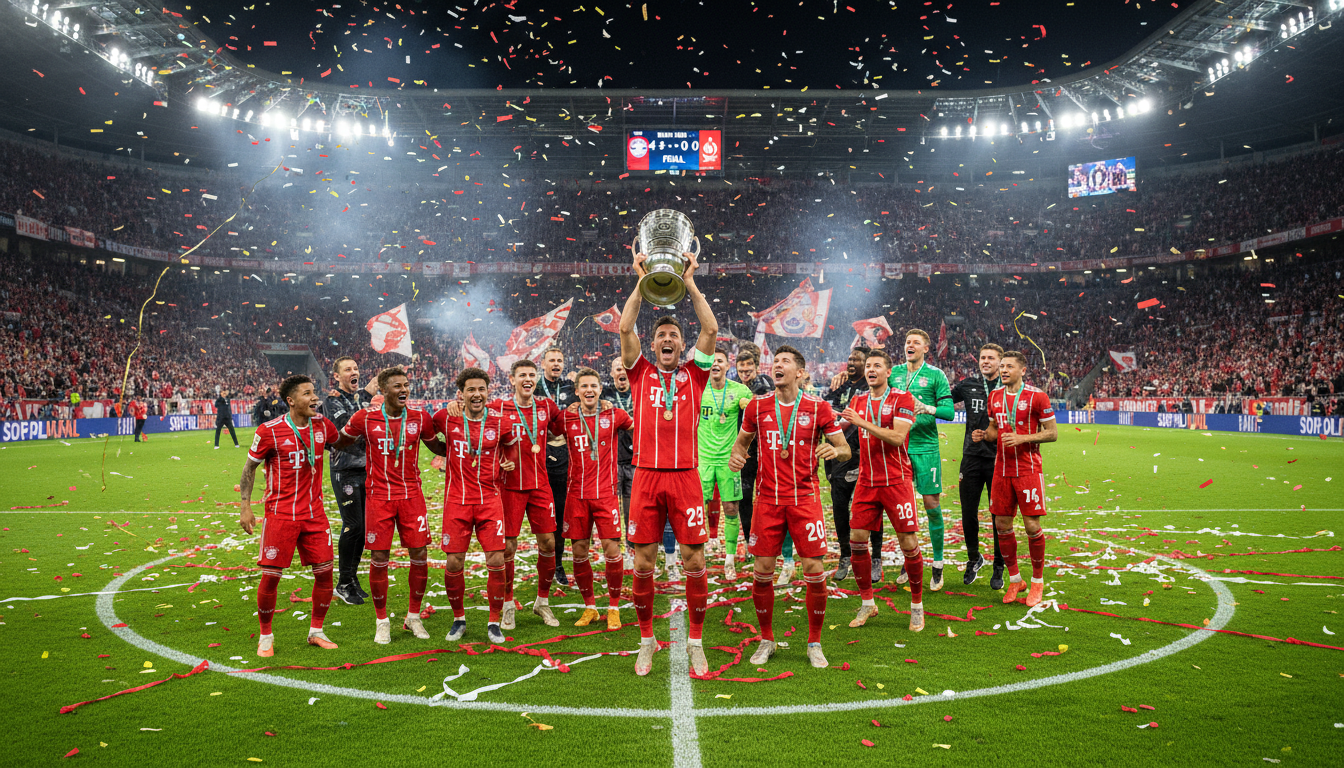
Bayern Munich target DFB-Pokal glory as Max Eberl seeks to end a six-year cup drought against VfB Stuttgart and cap the season with a domestic double.


Bayern Munich DFB-Pokal final looms large with club leadership eager to convert opportunity into silverware.
Bayern Munich arrive at the DFB-Pokal final with clear intent, and sporting director Max Eberl has made the club’s priority plain: win the cup and bring the trophy back to Munich. The keyword Bayern Munich DFB-Pokal final is at the center of the club’s plans as players, staff and fans prepare for a one-off showdown against VfB Stuttgart.
Eberl told Abendzeitung that the mood around the club hardened after the semi-final victory over Bayer Leverkusen and that the squad and supporters are eager to end a six-year absence from the cup final stage. With the men’s team seeking to mirror the women’s side that already secured a domestic double this season, Bayern view the match as a chance to complete a season-defining moment.
Bayern seek to end six-year DFB-Pokal wait
Bayern’s last DFB-Pokal triumph came in 2020 when they beat Bayer Leverkusen to secure the cup and complete a domestic double, a feat the men’s team has not repeated since. The gap in cup final appearances has grown into a notable absence at the club that has set domestic standards for decades.
Max Eberl framed the final as an opportunity to “bring the cup back to Munich,” reflecting both historical weight and current ambition within the club hierarchy. That aspiration shapes preparations and underlines why the Bayern Munich DFB-Pokal final is being treated as a pivotal fixture rather than a routine domestic showpiece.
Eberl’s comments point to more than nostalgia; they signal a strategic objective to restore the men’s side to a pattern of silverware that is expected at Bayern. The club’s status as the German record champions has built a culture where major trophies are the benchmark for success.
Eberl highlights club-wide anticipation
Eberl described palpable anticipation following the semi-final, saying players, staff and supporters have been drawn into a shared longing for the final. He framed the upcoming match not only as a chance to secure another trophy but as a culminating event for a season that began with the Supercup victory over the same Stuttgart side.
The sporting director connected the season’s arc from the Supercup to the cup final, presenting Saturday’s match as a full-circle moment that could define the campaign. This narrative has been embraced internally and provides a straightforward rallying point for the team and supporters alike.
By emphasizing the club-wide nature of the anticipation, Bayern have made the fixture a collective objective rather than an individual milestone, reinforcing the institutional push toward a successful close to the season.
Previous success and the double context
The men’s team last completed a domestic double in 2020, and that historical touchstone is now being invoked as a template for success. Eberl explicitly referenced the women’s team’s double as inspiration, indicating a desire for symmetry in achievements across the club’s senior sides.
The comparison with the women’s double suggests Bayern want the men’s side to match the broader success of the club’s programs, lending added significance to the DFB-Pokal final. Achieving the double would reassert Bayern’s dominance on multiple fronts and would be promoted internally as a restoration of full domestic supremacy.
For supporters and the leadership alike, the final therefore carries layers of meaning: a standalone trophy, a piece of club history to reclaim, and a way to cap a season that began with optimism and early silverware in the Supercup.
Tactical considerations and selection challenges
Bayern’s coaching staff will enter the final with familiar dilemmas about balance, rotation and the need to marry control with cutting edge. Cup finals typically reward disciplined structure and clinical finishing, and those priorities will shape training and match-day selection in the days leading up to the game.
The coaching team must weigh squad freshness against the desire for continuity, choosing personnel who can handle the physical and mental pressures of a one-off final. Set-pieces, transitional moments and the management of key match phases are likely to be decisive, and Bayern’s approach will reflect both their strengths in possession and the necessity to guard against counter-attacks.
Attention to detail in preparation — recovery, tactical drills and scenario planning — will be particularly important, as small margins often determine outcomes in cup finals. Bayern’s staff will aim to ensure players are primed for high-intensity sequences and ready for the psychological demands of a decisive match.
Stuttgart as final opponents and competitive threat
VfB Stuttgart enter the DFB-Pokal final as the opposition that Bayern defeated in the Supercup earlier in the season, providing a recent baseline for familiarity between the sides. That earlier meeting offers both clubs material to study, but finals often play out differently from single matchups earlier in the campaign.
Stuttgart’s path to the final has tested their depth and resolve, and they arrive with their own motivations and tactical ideas aimed at exploiting any vulnerabilities. Bayern must prepare for a Stuttgart side capable of structured defending and incisive attacking phases, especially on the break and from set situations.
The dynamic between the teams will hinge on who can impose their game while remaining adaptable to changing match rhythms, and both sides will aim to manage momentum swings that can define cup finals.
Supporter atmosphere and club mood ahead of the final
The build-up to the final has lifted expectations inside the Allianz Arena and among the wider Bayern fan base, with anticipation described as tangible by club leadership. The prospect of returning the DFB-Pokal to Munich has driven increased engagement across fan groups, club partners and local stakeholders.
Finals also present intensified security, logistics and supporter coordination, and the club will be managing these aspects while focusing on the pitch. The emotional charge of a cup final can act as both fuel and pressure; Bayern will look to channel that energy into sustained performance rather than distraction.
Eberl and the leadership have framed the occasion as a moment for the whole club to unite behind a single objective, and that unity will be a critical element on match day.
Bayern’s objective is clear and outcomes will depend on execution
The Bayern Munich DFB-Pokal final represents a convergence of historical expectation, seasonal momentum and strategic intent from the club’s leadership. Max Eberl’s public framing of the match has been designed to crystallize focus, connect the Supercup start to this decisive fixture and elevate the encounter beyond a single trophy.
How the game unfolds will be determined by in-game management, individual performances and the ability to handle the distinctive pressures of a cup final. Bayern enter with clear targets and a club-wide imperative to secure the cup, while Stuttgart will present a competitive and tactical challenge that cannot be underestimated.
The final will provide a definitive answer on whether Bayern can translate anticipation into silverware and close the season with a trophy that the club has sought for six years.