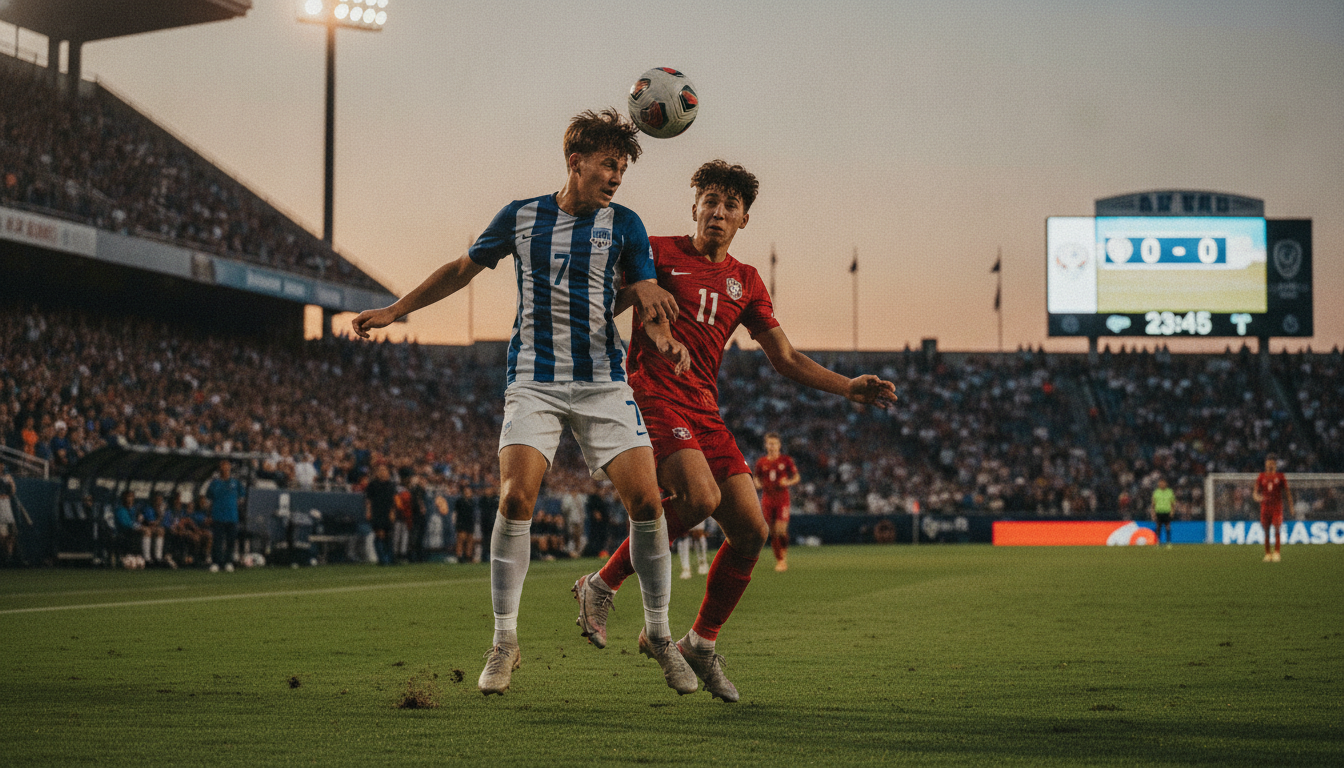
Big South Soccer Breakout Players to Watch in 2026
Previewing the top Big South soccer breakout players who could redefine the conference next season and challenge High Point’s dominance.
The Big South soccer breakout players to watch this coming season are concentrated across several programs, not just the perennial leader High Point, and could reshape the conference pecking order through maturity, recruiting gains and coaching continuity. High Point’s recent run at the top of the league has set a high bar, but emerging talents from Gardner‑Webb, USC Upstate, UNC Asheville and Longwood offer credible threats and storyline intrigue as the conference prepares for another competitive campaign. (bigsouthsports.com)
High Point’s hold on the league
High Point’s depth and development pipeline have translated into sustained success in Big South play, with the Panthers closing recent seasons as the conference’s benchmark. The program collected both regular‑season and tournament honors in recent years and finished the 2025 campaign as the conference tournament champion, a run built on a balanced attack and defensive organization. (bigsouthsports.com)
Several High Point contributors now sit on award lists and postseason watch rosters, signaling the program’s ability to turn recruits into immediate impact players. That continuity—from coaching staff to returning starters—gives High Point a margin for error in league play and places a target on every team aiming to dislodge the Panthers. (bigsouthsports.com)
Players primed to break out
A short list of individual names already appears on the radar after a season of conference awards and statistical flashes, and these players look ready to move into national conversation. Daniel Lugo, High Point’s redshirt sophomore forward, finished the season among NCAA leaders in goals and earned conference Offensive Player of the Year honors, a platform that often precedes a breakout sophomore-to-junior leap. Jefferson Amaya has likewise shown multi‑year growth that makes him a central figure in any projection for the Panthers’ next campaign. (bigsouthsports.com)
Across the rest of the league, Gardner‑Webb’s Samson Kpardeh and USC Upstate’s Oskar Kaufmann offered consistent production that could translate into star turns with a fuller offseason and stable minutes. Young talents such as High Point freshman Prosper Adagani and UNC Asheville’s Rodrigo Mendes flashed the kind of scoring touch and composure that often accelerate a collegiate trajectory from good to elite. (bigsouthsports.com)
How coaching and system changes amplify opportunities
Coaching continuity and targeted tactical adjustments will determine which candidates actually make the leap into conference stardom. Programs that returned a majority of their core starters—coupled with coaches who adapted systems to player strengths—saw quicker returns in late‑season form. Teams that invested in speed on the counter, set‑piece organization and goalkeeper development positioned several underclassmen for elevated roles. (s3.amazonaws.com)
For many breakout prospects, playing time is the first prerequisite and a clear role is the second. Players who transition from rotational minutes to consistent starts benefit from repetition and situational responsibility, which often produces measurable statistical improvements in goals, assists and defensive metrics. Those step‑ups are visible across the Big South’s end‑of‑season reports and award ballots. (s3.amazonaws.com)
Under‑the‑radar programs supplying impact talent
While High Point grabbed headlines, the conference’s competitive depth means meaningful breakout stories can arrive from any roster. Gardner‑Webb sustained itself through a mix of veteran leadership and freshman injections, while USC Upstate posted results that reflected tactical maturation in key matches. UNC Asheville and Longwood both produced individual performers whose numbers suggest upcoming seasons of higher output. (s3.amazonaws.com)
Those under‑the‑radar contributors often arrive with less fanfare but equal potential. Defensive standouts—central defenders and fullbacks with strong positional instincts—frequently set the framework for breakout offensive players by stabilizing possession and enabling progressive passing lanes. The conference’s statistical reports show several defenders and midfielders whose underlying numbers support optimistic projections. (s3.amazonaws.com)
Recruiting, professional upside and national visibility
The Big South has increasingly become a scouting ground for pro programs and MLS academies, and breakout seasons here can convert into professional trials or draft interest. Players who combine goal output with athleticism, or defenders who demonstrate composure in possession, attract attention from higher‑level leagues. A strong postseason showing, either in the conference tournament or in an NCAA appearance, amplifies exposure considerably. (bigsouthsports.com)
Individual accolades and national watch lists also matter. Recognition such as conference player‑of‑the‑year awards or inclusion on national midseason watch lists often correlates with increased scouting and media coverage, which in turn expands a player’s pathway to professional opportunities. For many prospects in the Big South, one elevated season can alter career trajectories. (bigsouthsports.com)
Tactical trends that could create breakout windows
Several tactical shifts across the conference created clear paths for specific player types to break out. Teams favoring quicker transitions put a premium on pacey forwards and wide midfielders who can exploit space. Clubs emphasizing build‑up play rewarded midfielders with high passing accuracy and spatial awareness, creating assist and chance‑creation opportunities that inflate attacking statistics. Those trends dictated which positional profiles would most likely enjoy statistical leaps. (s3.amazonaws.com)
Set‑pieces remain a reliable avenue for both goals and assists in a league where margins are small. Players with delivery precision or aerial dominance saw tangible contributions late in the season, and coaches who prioritized dead‑ball work gave certain specialists a platform for breakout recognition. Those minutes and responsibilities often mark the difference between a secondary role and a conference breakout. (s3.amazonaws.com)
What the postseason and NCAA berth mean for exposure
The structure of the Big South postseason—where the top six teams qualify and seeding influences match location—means that a late push from a breakout player can carry a team into the tournament and, potentially, an NCAA berth. Tournament games also provide high‑visibility environments for scouts and national media, making them natural springboards for players seeking recognition beyond conference borders. Coaches will lean on emergent leaders when postseason stakes rise. (bigsouthsports.com)
A deep run by any Big South team into the NCAA Championship can rapidly elevate the national profile of a conference standout. Tournament performance is a short window, but historically it has produced outsized returns in exposure and professional interest for players who seize the moment with decisive goals, key defensive plays, or consistent match‑winning performances. (bigsouthsports.com)
The Big South is entering a period where the usual narratives and traditional hierarchies may face meaningful tests, thanks to a wave of young talent and narrowing competitive gaps across programs. If several of the breakout candidates realize their potential, the conference could produce multiple NCAA tournament victors and a handful of players ready for professional trials.
As teams complete summer training and ramp toward the next season, coaches and scouts will watch for clear markers of growth—improved finishing percentage, decisive defensive reads, and leadership in high‑pressure moments—that separate promising prospects from true breakout stars.
These storylines promise a compelling campaign in which the Big South soccer breakout players will either confirm preseason expectations or surprise with accelerated ascents that shift attention beyond the conference’s established center.