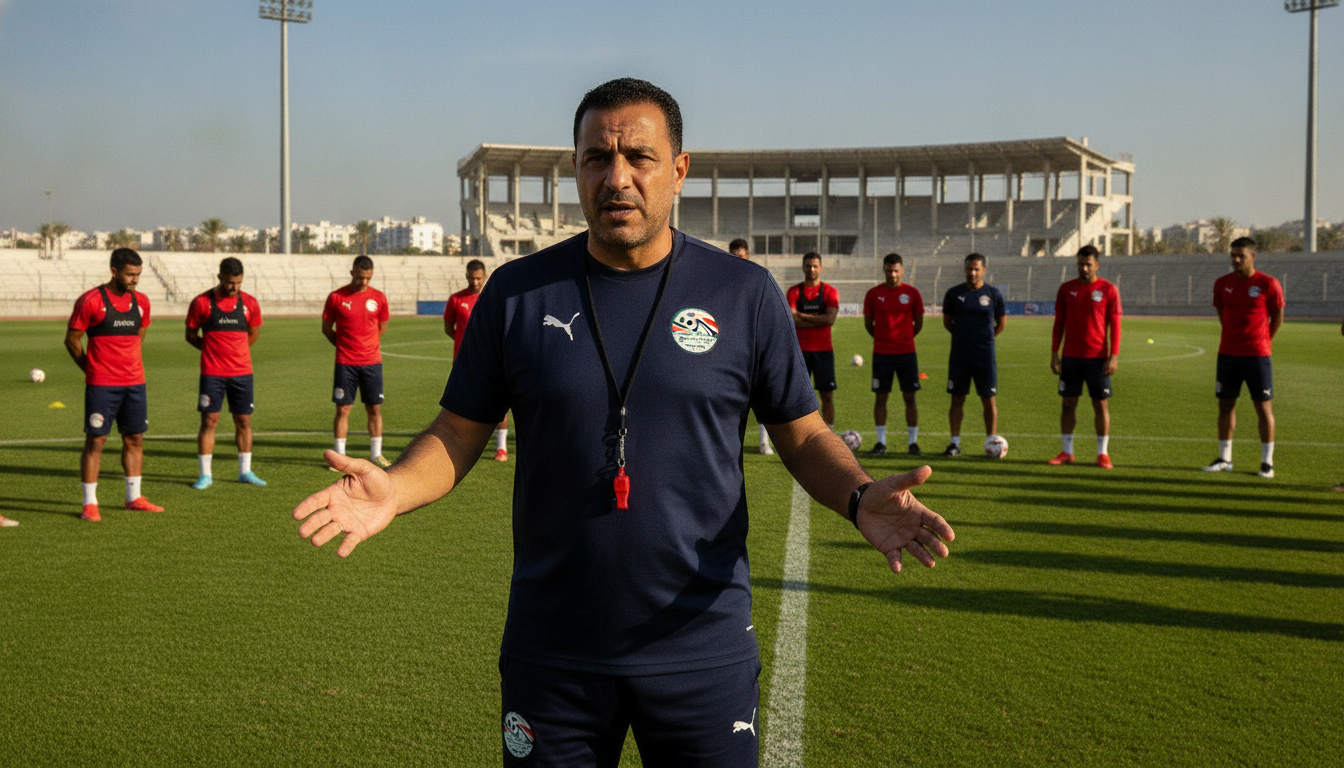
Egypt vs New Zealand: Hossam Hassan says long-term project is bearing fruit at World Cup 2026
Egypt coach Hossam Hassan says his long-term project is paying off as the Pharaohs prepare to face New Zealand in a crucial World Cup 2026 Group G match.


Egypt arrive at the second Group G fixture against New Zealand carrying belief that careful, multi-year planning has begun to show results under coach Hossam Hassan. The manager emphasized the gradual nature of the team’s development and pointed to qualifiers, tournament experience and high-profile friendlies as building blocks. A solid showing against New Zealand would strengthen Egypt’s position in a tightly contested group and bolster hopes of advancing to the knockout phase.
Hossam Hassan Sees Long-Term Work Paying Off
Hassan framed Egypt’s World Cup push as the culmination of sustained effort rather than a short-term scramble. He highlighted the pathway from World Cup and AFCON qualifiers through the Africa Cup of Nations in Morocco to friendlies with top teams as crucial stages in the project. That sequence, Hassan said, allowed the coaching staff to test ideas, integrate new players and refine the tactical identity he wants Egypt to display.
The coach has repeatedly stressed that his mandate extends beyond immediate results to building a squad capable of consistent performances on the international stage. He pointed to the domestic league as both a strength and a constraint, saying the pipeline of talent is rich but that introducing younger generations requires patience. Hassan’s comments underline a strategic view that the team’s present form reflects years of adjustments rather than overnight improvement.
Hassan also cited concrete gains from facing high-level opposition in friendlies and tournaments, arguing that those encounters accelerated the learning curve. Training against Spain, Brazil and Saudi Arabia offered tactical lessons and fitness benchmarks that were not available during routine qualifiers. The message from the manager is clear: the present squad embodies a project-oriented approach aimed at long-term competitiveness.
Early Arrival and Structured Preparation in Tournament Camp
Egypt’s decision to arrive early at their World Cup base has been presented as an investment in physical readiness and mental cohesion. Hassan said the extra days allowed his staff to impose training rhythms and recovery routines tailored to the demands of tournament football. Early arrival also gave the team time to assimilate scouting reports and rehearse set-piece routines under calm conditions.
Preparation covered both conditioning and psychological work, with the coaching team focused on ensuring players were comfortable and confident before match day. That approach included simulated match scenarios and opponent-specific drills designed to sharpen decision-making under pressure. Hassan emphasized that mental readiness is as important as tactical clarity when fine margins decide outcomes at this level.
The extended camp also provided opportunities to manage squad rotation and monitor recovery after the Belgium match that opened Egypt’s campaign. Staff were able to evaluate individual fitness and adapt plans to ensure players hit peak form. For Hassan, those adjustments are part of the detail-oriented management he believes separates consistent teams from inconsistent ones.
Tactical Priorities for Egypt vs New Zealand
Hassan described a pragmatic yet controlled tactical blueprint for Egypt’s encounter with New Zealand, focusing on structure without sacrificing attacking intent. The coach said his team studies opponents closely to understand strengths and vulnerabilities and then adapts its shape accordingly. Against a physically robust New Zealand side, Egypt plan to balance midfield compactness with quick transitions to exploit spaces.
Pressing patterns and defensive organization will be tailored to neutralize aerial threats and long-ball strategies that New Zealand often employ. Egypt’s technical players are expected to play through lines and create overloads in wide areas where the Pharaohs can use pace and ball control. Hassan reiterated that while surprises are not part of his public lexicon, tactical flexibility and disciplined execution are central to his match plan.
Set pieces remain an area of emphasis given the fine margins typical of World Cup group games, and Egypt’s staff have worked on both defensive markers and attacking routines. Coordination between defenders and midfielders in zonal marking, plus well-rehearsed deliveries from dead-ball situations, figure in the preparation. Hassan’s insistence on detail reflects his wider aim to ensure that Egypt minimize avoidable errors.
Key Players Who Could Decide the Match
Egypt’s core of experienced internationals and emerging talents offers a blend of composure and dynamism that Hassan hopes will influence the contest. Central midfield will be pivotal in dictating tempo and linking defense to attack, with Hassan likely to lean on players who have demonstrated consistency through qualifiers. The captaincy and leadership from senior figures are also expected to play a role in managing game rhythm.
Attacking options include forwards capable of rapid combinations and incisive finishing, but much of Egypt’s threat may hinge on wide players who can stretch New Zealand’s defensive shape. Hassan has also underscored the importance of full-backs contributing to build-up while maintaining defensive discipline. In goal, reliability and command of the area will be vital if the match becomes tight and tense.
Younger squad members who have been integrated as part of the long-term plan could seize the moment to make decisive contributions. Hassan’s project has deliberately introduced fresh faces to complement established performers, creating competitive dynamics in training and match selection. Those newcomers may provide the energy and unpredictability needed to unlock a stubborn New Zealand defense.
Group G Scenarios and Qualification Stakes
With the group finely balanced following Egypt’s draw with Belgium, the New Zealand match represents a crucial pivot point for the Pharaohs’ qualification ambitions. A win would not only lift Egypt’s points tally but also provide momentum heading into the remaining fixtures. Conversely, a defeat would place pressure on the team to chase results and could force more risky tactical choices in later matches.
Mathematically, several outcomes remain possible in Group G, and goal difference could become decisive if multiple teams finish level on points. For Hassan, the priority is controlling what his team can influence: performance levels, discipline and minimizing lapses that cost goals. The group dynamics mean that measured risk-taking and maintaining defensive solidity will be as important as attacking fluency.
Hassan’s emphasis on steady progress ties into broader qualification strategy, where consistency across matches trumps isolated moments of brilliance. The coach has repeatedly framed the campaign as a collective test of resilience and execution under pressure. Egypt’s pathway to the knockout rounds will likely require balanced displays that combine tactical discipline with moments of creativity.
Public Expectations and Historical Context for Egypt at World Cups
Egypt’s football history carries sizeable expectations from fans who equate national identity with footballing success, and Hassan has acknowledged the emotional weight of that legacy. The manager has spoken about delivering football that reflects Egypt’s stature and meets public ambition, framing the World Cup as part of a generational project. That context gives added resonance to each match and amplifies scrutiny on tactical and selection decisions.
The Pharaohs’ performances at major tournaments have often been defined by the quality of domestic talent and the ability to convert potential into consistent international results. Hassan’s strategy of blending home-league stars with younger prospects aims to harness local strengths while modernizing tactical approaches. How that balance bears out in a high-pressure World Cup environment will be closely observed by supporters and commentators.
Public expectation can be a double-edged sword, offering motivation but also increasing pressure on players and staff. Hassan has attempted to mitigate that by channeling focus toward day-to-day preparation and emphasizing processes over outcomes. If Egypt can translate the work of recent years into composed performances, the team can meet its own standards and ease external pressure.
Egypt will enter the New Zealand match determined to convert progress into a first victory in the group stage, with the coach stressing that confidence comes from preparation and execution. The tactical plans, squad management and psychological work that preceded the tournament are all being tested in real time. For Hassan and the Pharaohs, the upcoming fixture is both a checkpoint for a long-term project and a decisive step in their World Cup campaign.
The match against New Zealand will reveal whether the careful program Hassan describes can withstand the demands of tournament football, and whether Egypt’s blend of experience and youth can produce the results needed to advance.