Thomas Partey and Inaki Williams bolster Black Stars squad ahead of Wales friendly
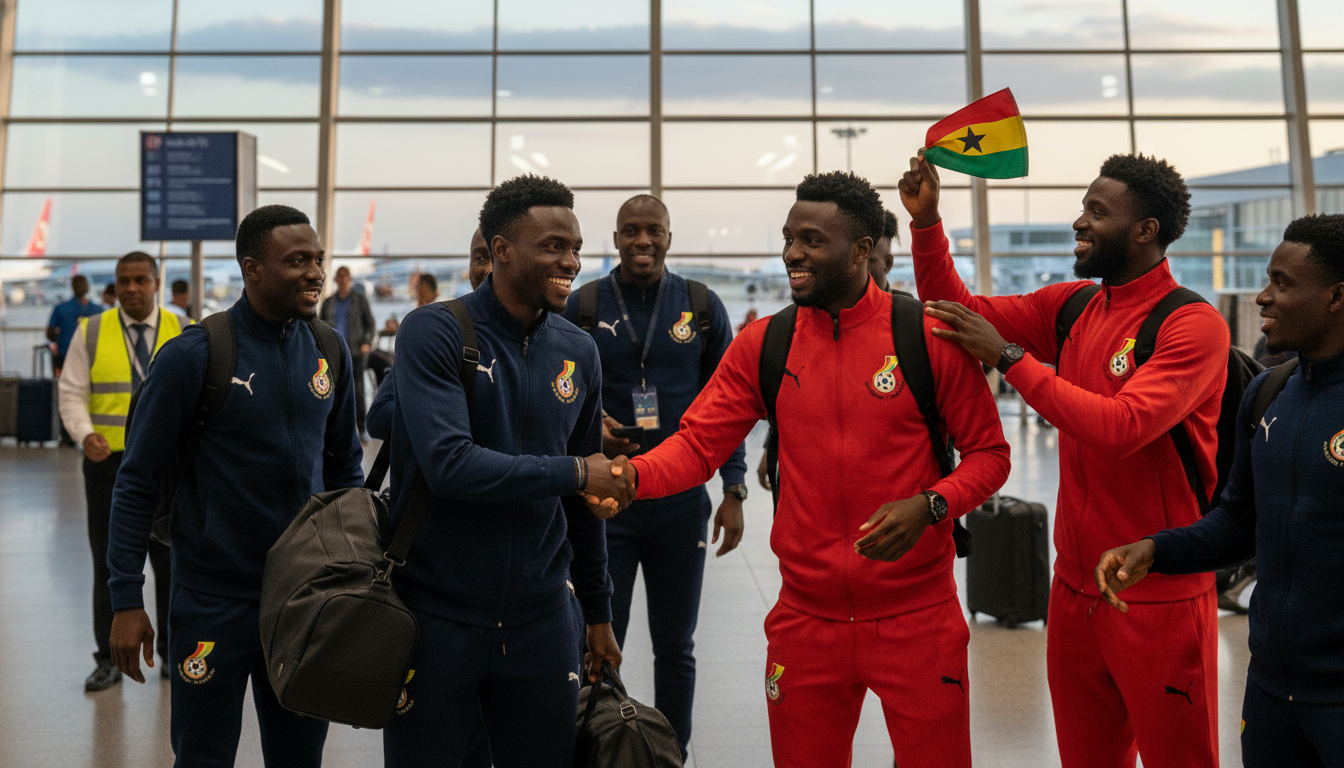
Ghana’s Black Stars squad has been strengthened by the late arrivals of Thomas Partey and Inaki Williams, bringing the training camp in Cardiff to 24 players as the team prepares for the international friendly against Wales on June 3, 2026 and final World Cup preparations.

Partey and Williams Arrive in Cardiff
Thomas Partey and Inaki Williams joined the Black Stars camp at Dragon Park on the morning of Saturday, May 30, 2026. Both players were integrated immediately into the day’s training session as head coach Carlos Queiroz continues to assess his options ahead of the Wales friendly on June 3.
Their arrival completes a short-term influx of senior talent into the squad, offering Queiroz additional experience in midfield and attack. Partey’s presence is expected to influence midfield balance, while Williams provides pace and directness in the final third.
Squad List Expanded to 24 Players
The squad that has assembled in Cardiff now numbers 24, after 22 players had already been in camp since Tuesday, May 26, 2026. The group includes a mix of international veterans and emerging talent, with goalkeeping options led by Lawrence Ati-Zigi and Joseph Anang.
Defensive depth features the likes of Baba Abdul Rahman, Gideon Mensah, Jerome Opoku, Alidu Seidu and Abdul Mumin, while the midfield and attack options include Abdul Fatawu Issahaku, Kamal Deen Sulemana, Christopher Bonsu Baah and Brandon Thomas‑Asante. The full complement of names aims to provide Queiroz with tactical flexibility and cover for the World Cup window.
The coaching staff have prioritized having a balanced panel to run through tactical drills, set-piece routines and match-specific scenarios in the limited time before the friendly and the June World Cup kickoff. Fitness and sharpness are central to the selection mix as Ghana transitions from training camp to competitive matchplay.
Queiroz’s First Big Test Under Scrutiny
The friendly against Wales at Cardiff City Stadium on June 3, 2026 represents Carlos Queiroz’s first significant public assessment since taking charge of the national team. The fixture will be an immediate opportunity to observe how quickly his methods are being adopted by the squad and how tactical changes manifest in match conditions.
Queiroz has limited time to trial formations and player combinations ahead of Ghana’s World Cup opener, so the June 3 match serves both as an evaluation and a final dress rehearsal. Observers will be watching the midfielder partnerships, defensive organization and ways the team plans to transition from defence to attack.
Expectations are that the coach will use the fixture to test both personnel and structure, while preserving player fitness for the intensive World Cup schedule that follows. The friendly offers a controlled environment to measure progress, make adjustments and finalize roles for the tournament in North America.
World Cup Group L: Opponents and Schedule
Ghana has been drawn in Group L for the 2026 FIFA World Cup alongside Panama, England and Croatia, a section that combines different styles and tactical challenges. The Black Stars are scheduled to open their World Cup campaign against Panama on June 17, 2026 in Toronto, before facing England and Croatia in subsequent group matches.
That opening match in Toronto will be pivotal for momentum, and squad preparations in Cardiff are being tailored with the June 17 kick‑off in mind. Coaching staff are calibrating training loads and tactical rehearsals so that players peak in mid‑June and maintain intensity across the group phase.
Scouting and match planning will vary significantly between the opponents in Group L, and the coaching team has signaled that early friendlies, squad cohesion work and minutes for players like Partey and Williams are integral to the plan. The group stage presents a compact schedule that places a premium on rotation, recovery and disciplined tactical execution.
Ernest Nuamah on Team Focus and Return
Young winger Ernest Nuamah, recently reintegrated into the national setup after a period on the sidelines, has spoken candidly about the squad’s mindset and commitment to the World Cup campaign. He emphasized that rapid adaptation to Queiroz’s tactical demands is essential if Ghana is to make an impact in Group L.
Nuamah described his pride at returning to the Black Stars and underlined a determination to contribute while the squad finalizes its approach. He said the players understand the magnitude of the task ahead and are focused on hard work, unity and delivering performances that reflect national ambitions.
The winger also acknowledged the emotional weight of representing Ghana at a first World Cup for him personally and stressed he had worked to regain full match fitness. His reintegration adds a youthful, dynamic option on the flanks and represents one of several selection storylines for the coaching staff to evaluate before June 17.
Training Focus and Tactical Adjustments
Training sessions at Dragon Park have centered on possession patterns, transitional play and set-piece organization as Queiroz seeks to imprint his tactical blueprint. Coaches have used the expanded squad to create multiple training groups and to simulate the variety of game states Ghana might face against Wales and in the World Cup.
Midfield structure is a recurring theme; Thomas Partey’s presence brings a proven defensive midfield platform that can enable more adventurous wide play. Meanwhile, attacking drills have emphasized quick combinations and off‑the‑ball movement to exploit space behind high defensive lines.
Defensive drills have focused on compactness and coordination between fullbacks and centre backs, while goalkeeper work with Ati‑Zigi and Anang has targeted distribution under pressure and command of the penalty area. Physical conditioning and recovery protocols have been integrated into daily routines to keep players fresh for the upcoming fixtures.
Selection Decisions and Matchday Variables
With 24 players in camp, Queiroz faces decisions about starting formations, bench composition and which players will travel to Canada for the World Cup. Injuries, form and tactical fit will all play into his final selections, and the staff have been monitoring training performance closely to inform those choices.
Matchday variables for June 3 will include minute management for players with limited recent game time and potential experimentation with playing styles. For the World Cup, rotation plans are expected to factor workload management, especially in midfield and across the front line where physical demands are highest.
The coaching team will also be watching how quickly newer squad members settle into match rhythms and how veterans respond under pressure. Those internal benchmarks will influence not only starting lineups but also adjustments between matches as Ghana navigates the congested tournament calendar.
Tactical subtleties such as press triggers, fullback involvement and set‑piece responsibilities are also being rehearsed with the World Cup opponents in mind. The balance between early tactical continuity and the need to respond to opponents’ strengths is a central puzzle Queiroz must solve in the coming weeks.
As the Black Stars move from camp to match action, the next ten days will be vital in shaping final roles, clarifying strategies and building the mental resilience required at football’s biggest stage. The addition of established internationals alongside emerging talent gives Ghana a broader palette from which to select.
Ghana’s final preparations in Cardiff and the friendly in Cardiff City Stadium on June 3, 2026 will set the tone for a World Cup campaign that begins on June 17 in Toronto. The squad’s immediate focus is to translate training ground work into cohesive performances under match pressure.
The integration of Thomas Partey and Inaki Williams into the squad adds experience and tactical options, while younger players like Ernest Nuamah push for meaningful roles as Ghana seeks a competitive showing in Group L at the 2026 FIFA World Cup.