

Cape Verde World Cup 2026: Blue Sharks hold Uruguay to 2-2 draw in Miami and keep knockout hopes alive
Cape Verde World Cup 2026: The Blue Sharks drew 2-2 with two-time champions Uruguay in Miami, moving to two points in Group H and preserving a chance to reach the knockout stages. Kevin Pina scored Cape Verde’s first-ever World Cup goal before Uruguay fought back, and a second-half substitute levelled to keep the underdogs unbeaten after two matches.


Kevin Pina nets historic free-kick to stun Uruguay
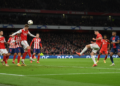
Kevin Pina delivered a moment that will be remembered across Cape Verdean football when he bent a long-range free-kick past Fernando Muslera midway through the first half. The strike was not only spectacular in execution but also landmark in significance as the nation’s first goal at a FIFA World Cup.
The opener put Pedro “Bubista” Brito’s side ahead against a team with far greater tournament pedigree and briefly shifted momentum in Miami. The early lead gave Cape Verde belief and forced Uruguay to alter plans as they chased a response before the interval.
Uruguay respond with two goals before halftime
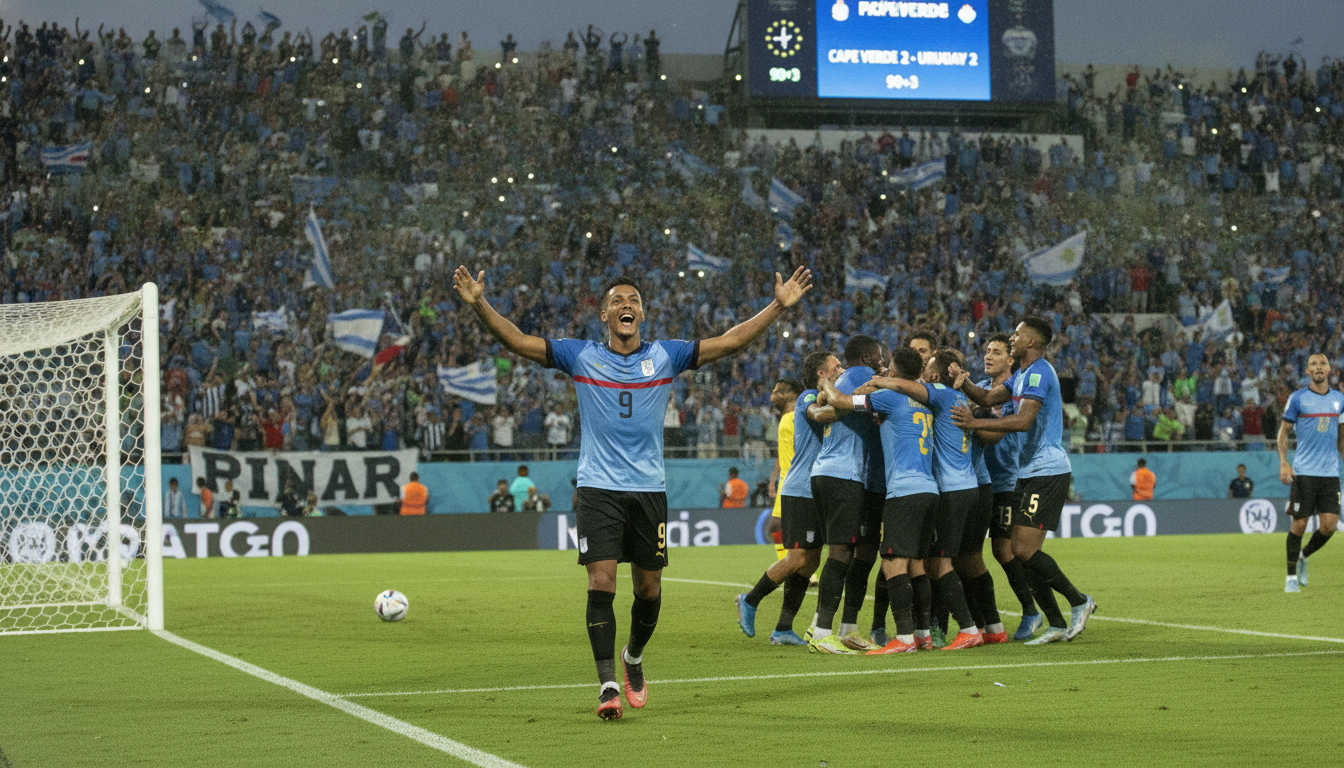
Uruguay finished the first half the stronger side, levelling through Maxi Araujo late in the half after Rodrigo Bentancur’s effort had rattled the post. The equaliser settled La Celeste and signalled a period of Uruguayan ascendancy as the hosts pushed for a breakthrough.
Stoppage-time drama followed when Agustín Canobbio turned the game on its head with a goal that sent Uruguay into the interval in front 2-1. The quick swing in fortunes highlighted both Cape Verde’s early threat and Uruguay’s capacity to rally under pressure.
Hélio Varela’s instant impact restores parity
Bubista’s tactical switch just before the hour mark changed the complexion of the match when Hélio Varela was introduced and made an immediate impression. Varela capitalised on a defensive lapse, reacted quickly to a loose ball and composedly slotted beyond Muslera to bring Cape Verde level.
The equaliser re-energised the Blue Sharks and silenced large portions of the crowd as an upset started to feel increasingly plausible. Varela’s contribution underlined the depth of Cape Verde’s squad and Bubista’s willingness to make decisive, game-changing substitutions.
Cape Verde push for a famous victory but Uruguay hold firm
After regaining parity, Cape Verde pressed for a winner with growing confidence, producing a number of promising passages in the final half-hour. Jamiro Monteiro tested the upper limit of the target with a long-range attempt and Laros Duarte forced Muslera into late saves as the match opened up.
Despite sustained pressure and several half-chances that could have swung the contest, Cape Verde were unable to find a second match-winning goal. Uruguay tightened defensively in the closing stages and managed to secure a share of the points that will prove crucial in Group H calculations.
Group H implications and path to the knockout stage
The draw leaves Cape Verde unbeaten after two matches, a remarkable run that includes a point against Spain in the tournament opener and now a hard-fought split with Uruguay. With two points from two games, the Blue Sharks face Saudi Arabia in their final Group H fixture with a clear route to progress if they can secure another positive result.
For Uruguay, the single point salvaged their campaign after a nervy performance and keeps them on course for advancement, depending on their result in the remaining match. Group H now presents a tightly poised scenario in which goal difference, head-to-head margins and late twists could decide who advances.
Tactical observations and what Cape Verde showed in Miami
Cape Verde’s structure balanced compact defending with quick transitions, and their set-piece delivery produced a decisive moment through Pina’s free-kick. The team’s discipline in midfield and willingness to press in targeted moments allowed them to limit Uruguay’s top attackers for long periods.
Bubista’s substitutions, in particular bringing on Varela, demonstrated proactive management and an eye for impact personnel. The Blue Sharks’ ability to recover from conceded goals and create chances against a traditionally strong side suggests the team will remain competitive in the final group match.
Uruguay’s response and lessons for La Celeste
Uruguay exhibited character in overcoming an early shock by reasserting control before half-time, but the first-half goals conceded underline vulnerabilities from set plays and in defending initial pressure. Managerial decisions and bench options produced a temporary advantage, yet the team could not close the game despite late resistance.
La Celeste will return to training with questions about defensive consistency and the need to manage games more effectively against teams that invite pressure. The match provided reminders that even established nations cannot assume straightforward results in a tournament that has already produced several surprises.
Cape Verde leave Miami with momentum and belief, carrying a chance to complete one of the tournament’s most improbable stories if they can navigate their final group fixture successfully.