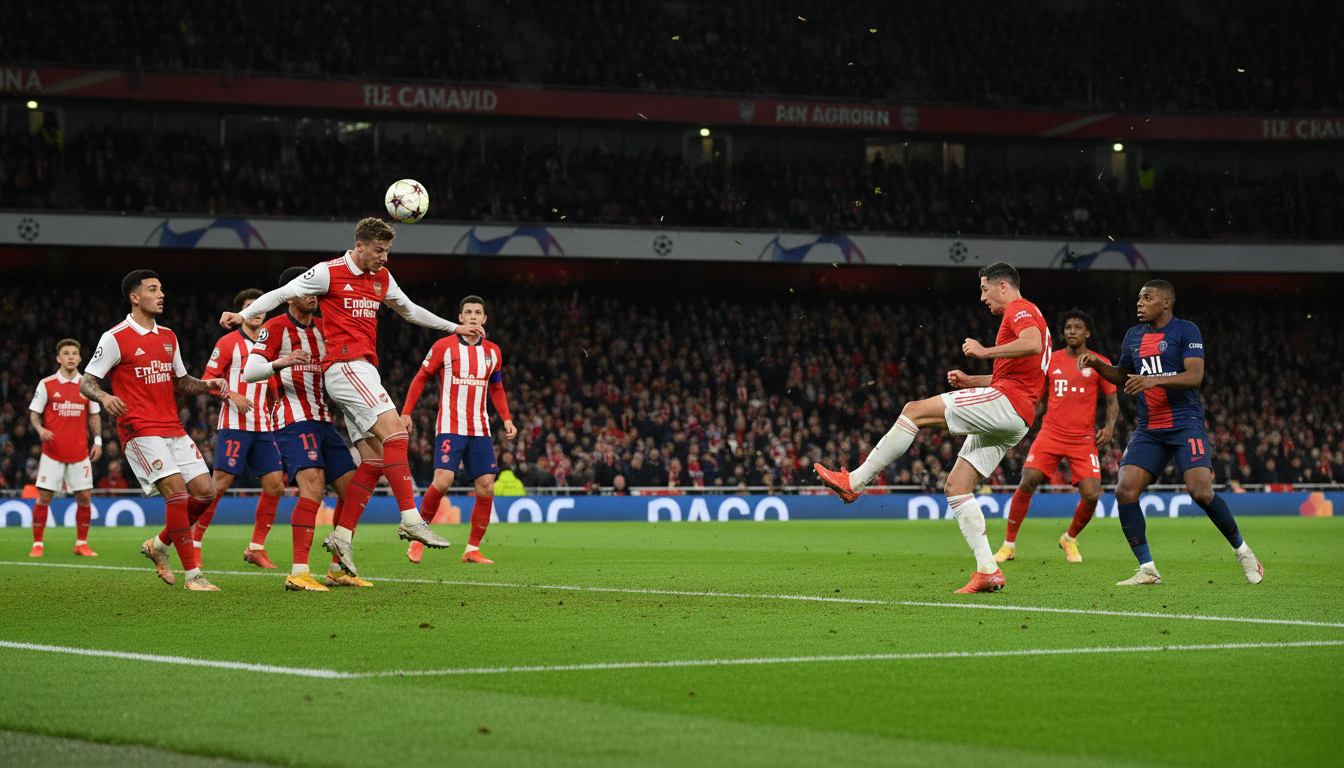
Champions League Semi-Finals Set: Arsenal, Atletico, Bayern and PSG Eye Budapest Glory
Arsenal, Atletico Madrid, Bayern Munich and PSG have emerged as the four contenders shaping up for the Champions League semi-finals, setting a blockbuster run to Budapest. Arsenal’s domestic and European form has been compelling this season, while Bayern’s goal-heavy attack, PSG’s recent final-winning experience and Atletico’s gritty resurgence create a competitive and unpredictable last-four. The stage is set for tactical battles, individual duels and a test of experience versus momentum as the continent’s elite chase the trophy.


Arsenal’s Quest to Reach Their First Champions League Final Since 2006
Arsenal arrive at the semi-final phase on the back of sustained European form, with an impressive run in the Champions League group and knockout stages. The Gunners topped their section and navigated a favorable route through Bayer Leverkusen and Sporting to secure their place among the last four. Mikel Arteta’s side have combined domestic improvement with continental consistency, yet the weight of history — Arsenal have not reached a Champions League final since 2006 — remains a psychological hurdle.
The current Arsenal squad has shown maturity in big matches, producing disciplined defensive displays and decisive attacking moments at key junctures. Their November victory over Bayern demonstrated they can compete with the competition’s elite, a result that still reverberates as a tactical blueprint. Club leadership and squad depth will be crucial as they aim to convert season-long form into a first-time final appearance in this competition.
Experience in Europe’s knockout phases often proves decisive, and Arsenal’s relative limited pedigree in Champions League finals is a factor their opponents will exploit. Only three of the previous 20 champions lifted the trophy for the first time, underlining how rare breakthrough victories are at this level. Arteta’s challenge is to blend youthful energy with the composure required to navigate two high-stakes ties en route to the final in Budapest.
Atletico Madrid’s Resurgence Under Pressure
Atletico Madrid have reasserted themselves as a formidable Champions League presence, overturning expectations and demonstrating the competition temperament their coach demands. Many anticipated an early exit against domestic rivals, but Diego Simeone’s side have shown the familiar resilience that has taken them to multiple finals in the past. Their path to the semi-finals has been defined more by defensive discipline and opportunistic attacking than by domestic form.
Despite slipping behind in the La Liga title race and suffering the sting of a Copa del Rey final defeat, Atletico’s continental campaign has offered a different narrative. The team’s focus in Europe has been sharpened, and confidence has grown with each progressive round. Atletico now rely on collective organization and the finishing ability of their forward line to spring surprises on the biggest stage.
A focal point of Atletico’s campaign has been the form of their Argentine forward, who has contributed prolifically across the Champions League matches. With nine goals and four assists in 13 games, he has provided the cutting edge Atletico need to puncture deep blocks and win tight knockout encounters. That attacking clinicality, combined with Simeone’s tactical pragmatism, makes Atletico a dangerous opponent capable of upsetting any rival over two legs.
Bayern Munich’s Goal Machine and Domestic Momentum
Bayern Munich enter the semi-finals with the momentum of a team that has already secured domestic silverware and rediscovered European ambition under Vincent Kompany. The German side have been prolific in front of goal throughout the Champions League, posting the season’s highest scoring return with an attacking unit operating at full throttle. Their quarter-final triumph over Real Madrid was a high-octane statement, underscoring both their offensive potency and willingness to engage in open contests.
Harry Kane has been central to Bayern’s European campaign, leading the line with a combination of finishing, hold-up play and leadership in the box. He has already amassed a significant goal tally and will be relied upon to deliver in the crucial moments ahead. The presence of wide game-changers such as Luis Diaz and Michael Olise has added pace and creativity to Bayern’s forward thrust, ensuring they possess multiple routes to goal that can unsettle opposing defenses.
Bayern’s six-time Champions League pedigree gives them a template for navigating the pressure of late-stage ties. Their blend of experience, tactical adaptability and relentless attacking intent has made them a benchmark for what it takes to lift Europe’s premier club prize. Opponents will need to balance defensive solidity with the audacity to take the game to Bayern if they are to stand a chance.
PSG’s Hold on the Trophy and the Value of Final Experience
Paris Saint-Germain arrive as the reigning champions and carry with them the unique advantage of final-winning experience, having claimed the trophy in emphatic fashion last May. Their decisive 5-0 win in the final showcased a level of dominance rarely seen on the continent and provided a psychological edge that comes from having recently solved football’s toughest knockout puzzle. That experience now forms a cornerstone of PSG’s campaign as they defend their crown.
PSG’s route into the knockout rounds required a play-off, but once through they have demonstrated the capacity to dispatch formidable opponents, including two Premier League sides. A 4-0 aggregate victory over the English champions highlighted their ability to rise to the occasion and execute at the highest level. Luis Enrique’s side combine individual brilliance with a tactical framework adapted to the knockout constraints of the Champions League.
The Parisian squad’s depth and quality across the pitch means they can navigate injuries and rotate while preserving a high standard. Having already managed the unique pressure of a Champions League final, PSG possess a mental resilience that cannot be taught overnight. That pedigree will be tested again as they face teams who believe momentum or form can blunt experience, making for compelling tactical encounters.
Individual Matchups That Could Decide the Semi-Finals
The semi-finals will hinge as much on individual moments as on team structure, and several key player matchups will draw the spotlight. Harry Kane versus Arsenal’s centre-backs promises to be a recurring subplot, with Kane’s movement and finishing presenting a stern examination of defending discipline. Similarly, Atletico’s in-form striker will be a focal point for opponents who must limit his space and supply lines.
Wide players such as Luis Diaz and Michael Olise offer Bayern unpredictable outlets down the flanks, and how opponents contain those threats could determine control of midfield battles. For Arsenal, managing transitions and finding creative outlets without losing defensive shape will be essential against teams that press and counter with ruthless efficiency. PSG’s individuals bring moments of brilliance that can turn ties, so neutralizing key creators while remaining wary of second-phase overloads will be vital.
Goalkeepers and set-piece efficiency could also sway the balance in closely fought encounters, where ties are often decided by narrow margins. Teams that convert their chances and maintain concentration for 180 minutes will significantly improve their prospects. Coaches will therefore prepare not only tactical blueprints but also contingency plans to manage suspensions, fatigue and the psychological ebb and flow of two-legged opposition.
Tactical Roads to Budapest and the Role of Competition Pedigree
The path to Budapest will test tactical flexibility as much as technical quality, with each semi-final pairing offering contrasting challenges. Arsenal’s systematic build-up play and pressing structure will be pitted against Atletico’s low block and counter-attacking discipline in one possible scenario. Meanwhile, Bayern’s high-tempo, attack-first approach could collide with PSG’s combination of individual flair and structured transitions in the other tie.
Competition pedigree often reveals itself in the smallest details: game management when leading, how coaches respond to setbacks, and the ability to close out tight moments in knockout football. Historically, few Champions League winners have been true first-time conquerors, and that trend underscores how experience can be a decisive factor in the final quarter of the tournament. Still, form and momentum can overturn history, and teams carrying sustained confidence into these rounds should never be discounted.
Coaching decisions will be scrutinized intensely, from substitutions that change the rhythm to tactical tweaks that exploit opponent weaknesses. With Budapest looming as the season’s final destination, each manager must balance risk with pragmatism across two high-stakes ties. Ultimately, the team that can synthesize tactical clarity, individual excellence and competition savvy will be best placed to progress to the final.
As the Champions League semis approach, narratives of history, form and individual brilliance intertwine to promise gripping football and strategic chess between Europe’s elite. The meeting of Arsenal, Atletico Madrid, Bayern Munich and PSG sets up a compelling run to Budapest where experience and momentum will collide over two legs and, for the victors, a final that will test everything they have built this season.