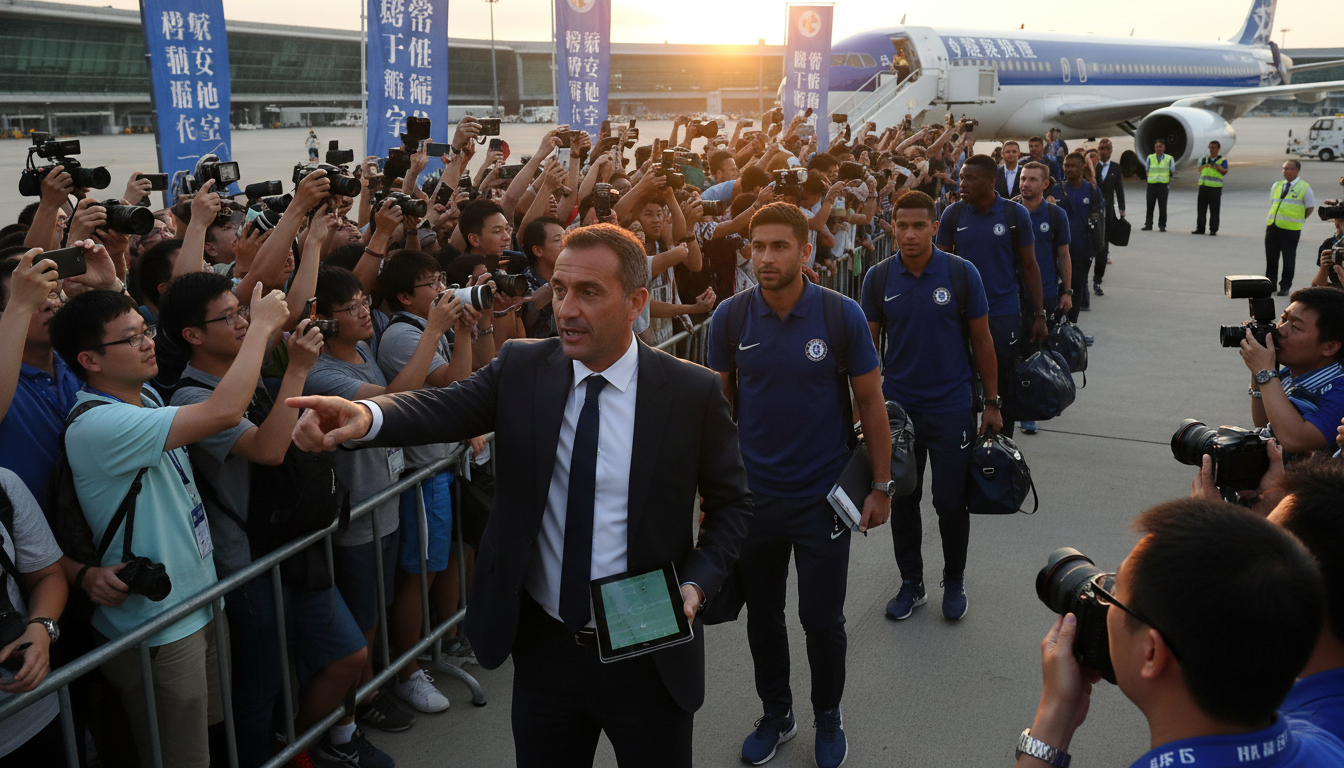
Cudicini: Chelsea Hong Kong trip will be vital for new manager’s first season
Cudicini says Chelsea Hong Kong trip in August, including Juventus at Kai Tak, will be vital for the new manager to set his message and assess squad leaders.


The Chelsea Hong Kong trip this August — which will see the club meet Juventus at Kai Tak Stadium as part of the Hong Kong Football Festival — has been cast as a make-or-break moment for whoever takes charge of the first team next season. Loan player technical coach Carlo Cudicini told the South China Morning Post that the short, high-profile tour will be critical for a new manager to establish authority, discover leaders and transmit a clear playing identity to the squad. With Chelsea preparing for Saturday’s FA Cup final under caretaker Calum McFarlane after Liam Rosenior’s departure, the timing of the summer fixtures elevates their importance ahead of a compressed preseason.
Why the Hong Kong trip matters to Chelsea’s next manager
The trip to Hong Kong offers a concentrated opportunity for a new manager to assess players in competitive conditions and begin imprinting tactical expectations. Preseason matches against established opponents like Juventus will expose player temperament, fitness and adaptability in front of large, international crowds. Cudicini emphasised that modern preseason tours are more than promotional exercises; they are operational windows in which managerial philosophies must start to translate into on-field behaviour.
A manager arriving with limited preparation time must prioritise clarity and quick relationship-building with the squad. Cudicini, who has worked within Chelsea’s evolving backroom, noted the need to identify who among the players will step into leadership roles and to calibrate messaging to different personalities. The compressed timeline of a tour leaves little room for gradual integration, making decisive early impressions essential.
The fixture against Juventus at Kai Tak Stadium also carries symbolic weight for a club intent on restoring competitive credibility. Facing a top European side provides a barometer for where the squad currently sits and where upgrades or tactical adjustments will be required ahead of the Premier League campaign. The public nature of such games increases scrutiny but also accelerates the process of team definition.
Cudicini draws on Mourinho’s blueprint from 2004
Cudicini invoked Chelsea’s recent history when explaining the potential impact of an intensive preseason tour. He recalled the clarity of purpose instilled during Jose Mourinho’s 2004 U.S. tour, when the Portuguese coach set out a rapid roadmap that helped the club capture the Premier League crown the following season. For Cudicini, those early, detailed meetings created instant understanding among players about expectations and roles.
The comparison is not offered as nostalgia but as a practical lesson: early-season frameworks matter. Mourinho’s ability to communicate a consistent approach and to quickly identify the squad’s psychological and tactical leaders remains a textbook example of how short, intense periods of preparation can reshape a team. Cudicini suggested that a new manager who uses the Hong Kong fixtures to mirror that sort of clarity could gain an early advantage.
That historical perspective also touches on recruitment, conditioning and the subtle behavioural changes that turn a collection of players into a coherent unit. The lessons of 2004 underline the importance of decisive leadership during the first full weeks with the squad, including in public-facing environments like international tours.
Logistics and the August schedule at Kai Tak Stadium
The specific scheduling of Chelsea’s match against Juventus in August positions the club in the heart of the Hong Kong Football Festival and in front of a sizeable Asian audience. Kai Tak Stadium, a modern venue purpose-built for large events, will offer both the technical challenge of playing on unfamiliar turf and the commercial benefits of global exposure. For coaching staff, that combination of variables requires meticulous logistical and tactical planning.
Physically, the summer timing falls within the typical preseason window, meaning that players should be transitioning into match fitness while coaches are still refining systems. The intensity of travel and the compressed number of high-profile fixtures can test squad depth and adaptability. Staff will need to balance minutes for senior players with opportunities for fringe and loan-returnees to stake a claim.
From a strategic standpoint, showcasing the club in Asia is part of Chelsea’s wider brand and commercial objectives, but the sporting stakes are substantive. Matches against top-quality opponents can reveal shortcomings more harshly than closed-door friendlies, providing the incoming manager with clear evidence to inform tactical choices and early transfer-market targets.
Immediate context: FA Cup final under caretaker Calum McFarlane
Before the summer tour arrives, Chelsea’s immediate focus is Saturday’s FA Cup final, where Calum McFarlane will serve as caretaker boss following Liam Rosenior’s exit. The result and performance in that fixture will influence morale and could shape how the next manager begins the handover process. Cudicini’s comments arrive against this backdrop of managerial transition and short-term leadership responsibilities.
A cup final presents a unique managerial test: it is a high-pressure, one-off occasion where clarity, composure and tactical nous are on full display. For players, the final is a moment to respond to interim guidance and to show resilience during change. For the incoming manager, watching the team under these conditions will provide additional context ahead of the Hong Kong trip.
Chelsea’s recruitment of a permanent manager and how quickly that appointment is made will dictate whether the summer fixtures are used as a showcase for a new system or as a continuation of interim methods. Either way, the leadership displayed in the cup final contributes to an evolving narrative about who among the squad can be relied upon in pivotal moments.
How the tour can reveal squad leadership and tactical identity
Cudicini stressed that tours compress learning curves: players who are vocal, composed and tactically intelligent emerge as leaders when time is scarce. Managers gain insights into group dynamics, such as who organizes defence transitions, who communicates during set pieces and which individuals carry influence in the dressing room. These indicators guide early decisions on captaincy, starting line-ups and mentorship roles.
Tactically, short series of matches force coaches to test core principles quickly, whether prioritising ball retention, transitional speed or defensive compactness. The responses of players under fatigue and in hostile atmospheres inform which systems are viable. For the coaching staff, the data derived from these fixtures—both quantitative and observational—helps shape preseason training cycles and informs targeted interventions.
The Hong Kong environment, with passionate local support and international media attention, also tests players’ psychological readiness. The ability to maintain concentration amid travel, spectacle and commercial obligations is a measure of professionalism that a new manager can use to assess squad maturity.
Potential implications for recruitment and season planning
Findings from the Hong Kong trip are likely to have downstream effects on transfer strategy and preseason scheduling. If the fixtures expose recurrent weaknesses—be it central midfield tempo, defensive cohesion or lack of goals from certain positions—Chelsea’s recruitment team will have specific areas to prioritise. Early identification of needs simplifies negotiations and gives the club a clearer short-list before the market heats up.
Conversely, standout performances from young or fringe players during the tour can alter the club’s path by integrating homegrown or loan-return talents into first-team planning. The preseason stage is where coaching conviction meets empirical evidence; what managers learn on tour often translates directly into roster decisions and minutes allocation for the opening months of the competitive season.
Operationally, the outcome of the Hong Kong visit will also affect how training camps, friendly fixtures and international outreach are arranged. A successful, coherent showing could allow the new manager to proceed with an ambitious tactical program, while mixed signals may prompt a more cautious, stabilising approach for the early league fixtures.
Carlo Cudicini’s perspective, drawn from his longstanding affiliation with the club, frames the tour as a potentially decisive chapter in a managerial transition. His emphasis on immediate clarity, leadership detection and practical testing echoes a pragmatic view of how elite clubs accelerate integration ahead of competitive commitments.
The coming weeks — shaped by the FA Cup final, the managerial appointment timeline and the Hong Kong fixtures — will offer a clearer picture of Chelsea’s direction. How the new manager uses the Hong Kong trip to stamp his identity and to assess the squad’s leadership will be closely watched by supporters and stakeholders as the club prepares for the challenges of the next season.