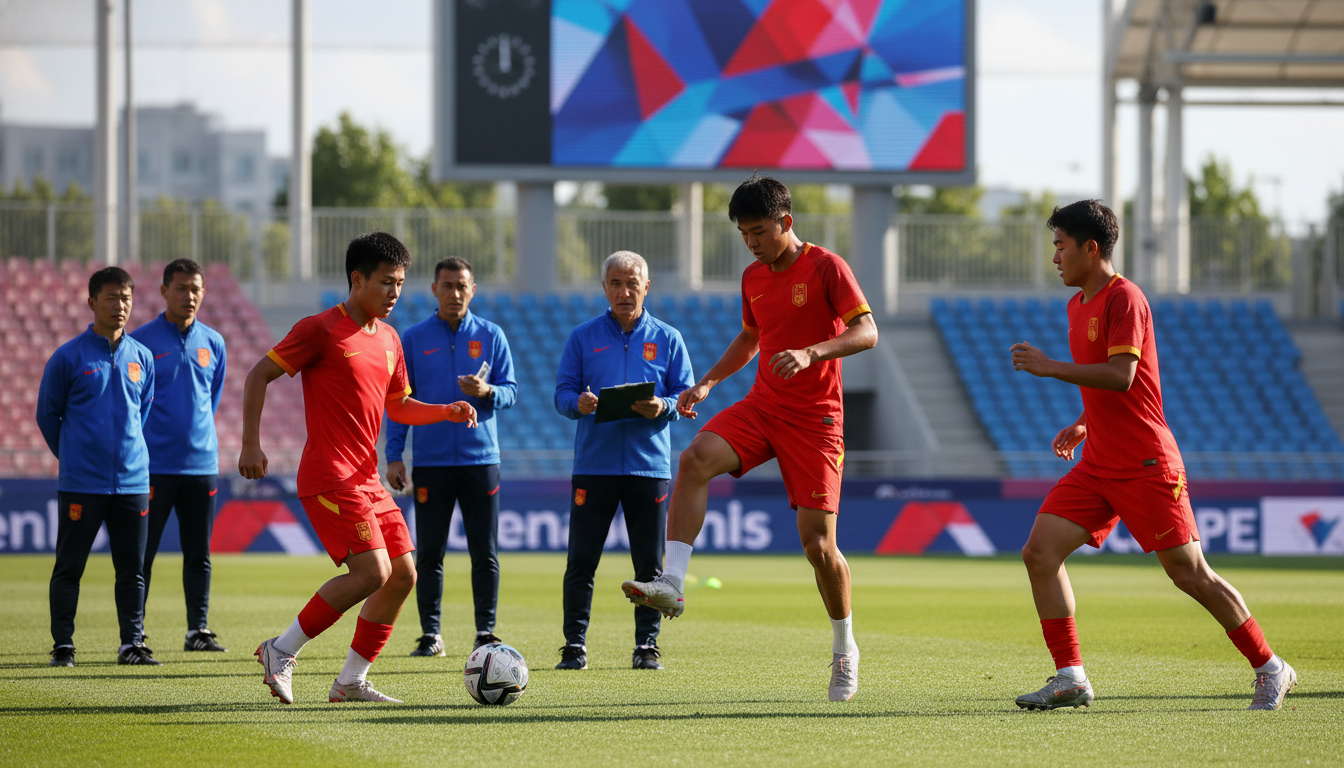
Chinese Super League shows worrying asterisks — but young stars spark cautious optimism
Young stars are lifting optimism in the Chinese Super League as financial asterisks haunt more than half the clubs, testing reform and World Cup ambitions.


Chinese football’s top flight is presenting a study in contrasts: a league table dotted with asterisks that flag regulatory or financial concerns while a fresh generation of players is beginning to catch the eye of supporters and national team planners. The dual narrative — institutional fragility on the one hand and promising on-field development on the other — is shaping conversations about whether China can realistically aim for the 2030 World Cup. Club fortunes, player emergence and governance pressures are all converging to create a pivotal season for the competition.
League Table Marred by Asterisks
More than half of the 16 clubs in the competition are currently listed with asterisks in the standings, an emblem of off-field complications affecting sporting records. Those marks typically denote administrative penalties, suspended operations, or unresolved financial obligations and they reflect broader instability across the domestic game.
The prevalence of asterisks has altered the competitive landscape, complicating promotion and relegation calculations and casting doubt over the long-term planning of clubs. For fans and stakeholders, the signs are unmistakable: sporting outcomes are increasingly intertwined with boardroom solvency and regulatory compliance.
Rising Youth Reshapes Matchday Narratives
Amid the uncertainty, a cadre of young players is changing the conversation on the pitch, delivering performances that are both effective and marketable. Their contributions are shifting attention from structural deficits to the potential for a homegrown recovery built around a new generation.
These teenagers and early‑twenty-somethings are not only filling out rosters; they are affecting results, providing goals, defensive solidity and leadership at surprisingly young ages. That dynamic has encouraged cautious optimism among supporters who remember the national team’s last World Cup appearance in 2002 and who now look toward qualification for the 2030 tournament.
Wang Yudong’s Impact at Zhejiang FC
Nineteen-year-old forward Wang Yudong has emerged as a tangible example of the league’s upward talent trend, scoring four goals in 11 appearances for Zhejiang FC. Each of those strikes has had a direct bearing on points accrued, underlining his growing influence in the final third.
Wang’s movement, finishing and game intelligence have made him a regular feature of match reports and a focal point for Zhejiang’s attacking patterns. For a player of his age, the consistency of decisive contributions has raised questions about how clubs and the national program can accelerate pathways to senior international involvement.
Xiang Yuwang: A Young Captain in Chongqing
At 22, Xiang Yuwang is captaining newly promoted Chongqing Tonglianglong, a role that underscores the leadership responsibilities now falling to younger players. Chongqing sit near the top of the early table, a position created as much by their own results as by the missteps of rival clubs.
Xiang’s captaincy is notable for its composure and vocal direction on the field, traits that have helped stabilize a squad adjusting to top-flight demands. His example suggests a shift in club policy toward entrusting younger domestic players with strategic roles rather than relying exclusively on experienced signings.
Defensive Prospects: Peng Xiao and Hu Hetao
Defensive reinforcements from the youth pool are also catching attention, with 20‑year‑old centre-back Peng Xiao appearing nine times for Shandong Taishan and 22‑year‑old left‑back Hu Hetao a fixture in Chengdu Rongcheng’s back line. Their physical profiles and minutes on the pitch indicate a readiness to shoulder responsibility.
Peng’s height and aerial presence give Shandong a reliable option on set pieces, while Hu’s consistent starts — including involvement in all of Chengdu’s ten wins and a draw so far — highlight his role in a team that has controlled matches through balance at both ends of the field. Their development trajectories will be watched closely by national team staff seeking defensive solutions.
Club Stability Versus Sporting Merit
The juxtaposition of sporting merit and institutional instability is particularly stark this season, with teams such as Chongqing and Zhejiang rising in the table while others struggle with compliance issues. Newly promoted sides have exploited the vacuum created by off-field problems to post unexpected results.
For the league, that mixed pattern poses a governance challenge: ensuring the competition remains credible requires sanctions and oversight, yet penalizing clubs can also depress match competitiveness and fan engagement. Balancing enforcement with support for restructuring will be a central task for administrators in the months ahead.
Implications for China’s 2030 World Cup Ambitions
The emergence of a talented cohort offers a constructive narrative for China’s long-term international aspirations, but the pathway to the 2030 World Cup remains contingent on systemic reforms. Youth production must be matched by stable club environments and coherent national team planning if qualification hopes are to be more than aspirational.
Investment in academies, coaching education and consistent competitive minutes for homegrown players are immediate requirements, yet they operate within the constraints of club finances and regulatory enforcement. The presence of promising individuals gives planners a platform, but converting that promise into a deep, competitive national squad will demand sustained organizational commitment.
How the Chinese Football Association, clubs and regional authorities respond to the present tensions will determine whether these early signs of sporting renewal materialize into durable progress. Short-term results can mask structural fragility; long-term qualification ambitions require both quality players and reliable institutions.
Supporters have reason for guarded optimism given the performances of players like Wang, Xiang, Peng and Hu, all of whom represent a new baseline for domestic development. Nevertheless, optimism must be tempered by realism about the financial and administrative hurdles that continue to impede many clubs.
Final paragraph: The interplay of youthful talent and club fragility defines this season of the Chinese Super League, offering a fragile but genuine opportunity for rebirth that will depend on governance, investment and the ability of promising players to mature into a collective capable of carrying China back to the world stage.