Colombia World Cup Fans Bring Carnival Atmosphere to Guadalajara as Coach Warns of Caution
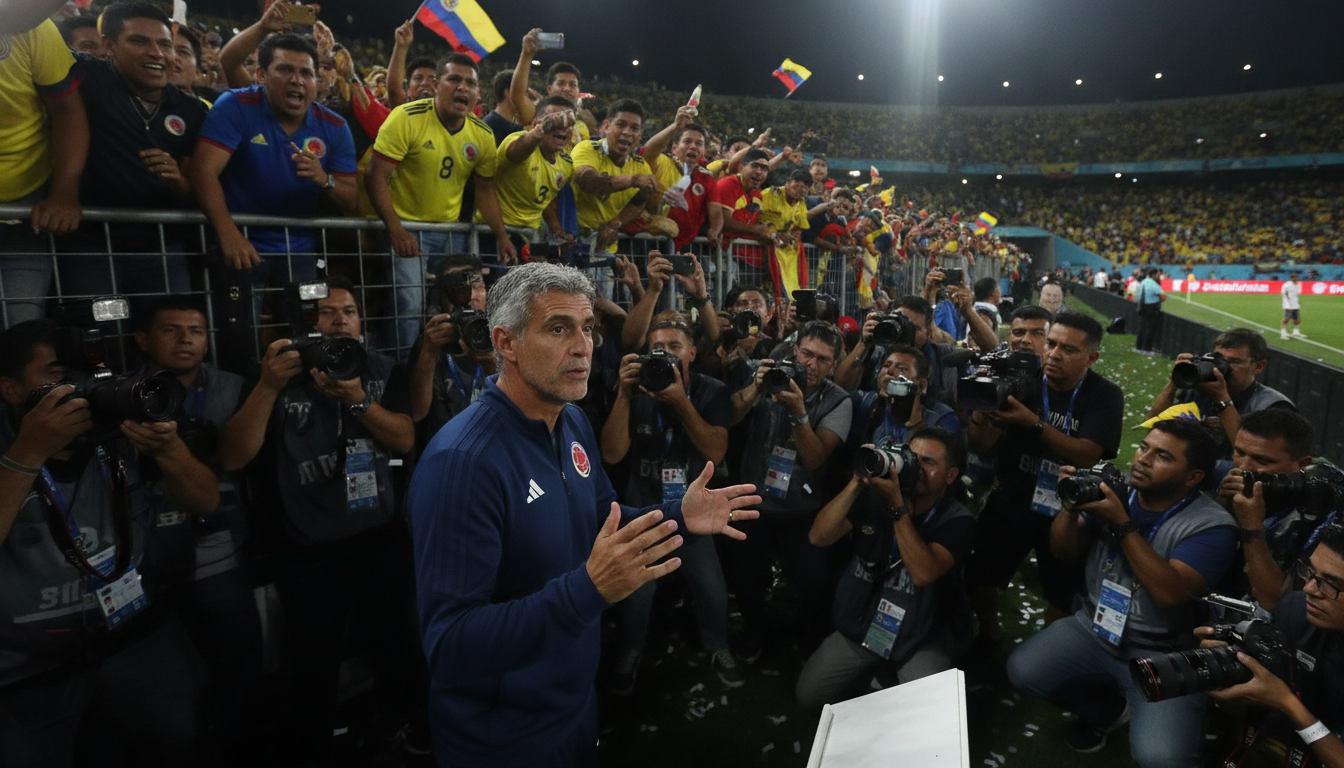
Colombian supporters turned Guadalajara into a celebration ahead of their World Cup match, but coach Nestor Lorenzo warned the team’s nerves have left them playing too conservatively. The Colombia World Cup contingent mixed family, song and spectacle at their hotel while the coach urged a return to bolder, more attack-minded football after the opening win.

Hotel Lobby Turns into Fan Zone
In the vast lobby of the Grand Fiesta Americana Guadalajara Country Club on Sunday, the Colombian squad arrived to scenes more akin to a festival than a training camp. Players were flanked by family, friends and supporters; children sprinted through the atrium in full kits with surnames printed on the back, and relatives carried new shopping bags as if returning from a tournament of their own.
The atmosphere was loud, warm and intermittently chaotic, with wives and partners leading impromptu songs and small groups breaking into dance. That off-the-cuff joy underlined a familiar South American football tradition: supporters and players sharing a close, effusive bond that spills easily into public celebration.
Mojica’s Family and the Personal Touch
Johan Mojica’s young relatives were particularly conspicuous, clustering around the left-back and treating the hotel as an open space for family theatrics. Their shirts with Mojica’s name, laughter and constant motion gave a domestic dimension to what is otherwise a high-pressure international tournament.
Those personal scenes mattered to the squad’s temperament; they showcased the social support that bolsters players but also highlighted the emotional stakes attached to Colombia’s World Cup campaign. For many in the party, the hotel lobby functioned as a refuge where the national team’s human side felt as important as any match preparation.
La Minerva Becomes a Rallying Point
Outside the hotel and elsewhere in Guadalajara, public gatherings amplified the national mood, with La Minerva roundabout emerging as a focal point for celebration. Colombian fans converged there to sing, dance and wave flags ahead of the team’s fixture against DR Congo, turning the public space into a vibrant pre-match carnival.
This street-level fervor created an unmistakable home-from-home vibe for the players based in the city, and it helped sustain momentum after Colombia’s opening victory. The public displays of unity and optimism underscored how a World Cup can quickly alter the social rhythm of a host city.
South Korea’s Contrasting Approach in Guadalajara
A short drive away from the Colombians’ convivial base, South Korea’s squad adopted a markedly different posture in Guadalajara’s industrial quarter. Their hotel on Avenida de las Rosas presented a secure, tightly controlled environment where fans were kept at a distance behind railings and team movements remained deliberately low-profile.
The contrast between the two camps was striking: where Colombia’s base felt open and celebratory, South Korea’s accommodations prioritized routine and security. Even small details — like an undisturbed sponsor-stocking fridge in the reception area — highlighted the composed, clinical approach of the Asian side ahead of their crucial fixture in Monterrey.
Lorenzo Says Support ‘Emotionally Weighed’ on Players
Despite the upbeat surroundings, Nestor Lorenzo offered a measured assessment after Colombia’s 3-1 win over Uzbekistan, saying the fervent support had “emotionally weighed” on his squad. He suggested that the players’ awareness of expectations led them to play with caution, prioritizing safety over the attacking verve fans expect from the national side.
Lorenzo’s critique was candid and tactical in nature; he identified a tendency toward risk-averse choices that blunted Colombia’s natural dynamism. The coach’s remarks framed the celebratory backdrop as a double-edged sword: while fan energy can uplift a team, excessive emotional pressure can also inhibit decisive play.
Tactical Implications and What to Watch Next
Lorenzo’s observations pose immediate questions about Colombia’s tactical direction as the group stage progresses. If supporters’ expectations are prompting conservative decision-making, the coaching staff will need to balance crowd management with tactical clarity so players can commit to forward play without fear of criticism.
Key areas to monitor include full-back involvement, midfield tempo and finishing efficiency. Johan Mojica’s presence on the left offers width and overlapping options, but that attacking outlet counts for little if midfielders retreat too readily or forwards hesitate in the final third. Encouraging decisive runs and quicker transitions will be essential if Colombia are to convert possession into sustained pressure.
Set-piece organization and defensive compactness will also shape how the team proceeds. A robust defensive structure can free attackers to take risks, and clear, simplified tactical instructions from the bench could help players make quicker, more assertive choices during crucial moments.
Looking Ahead to DR Congo and Group Progression
On the pitch in Guadalajara, Colombia’s next match against DR Congo will be an early test of whether Lorenzo’s message has taken root. The Congolese side will likely present physical, direct challenges and require Colombia to sustain intensity across 90 minutes rather than rely on sporadic bursts of flair.
From a tournament perspective, managing the psychological balance between fan expectation and on-field freedom is as important as any tactical tweak. A convincing display in the next match would calm nerves and validate Lorenzo’s squad selections, while another cautious performance could invite scrutiny and heighten pressure from supporters.
Final paragraph without title
Colombia’s World Cup chapter in Guadalajara has been a study in contrasts: effusive support and familial warmth at the team’s hotel against the sobered, secure approach of other delegations nearby. How Lorenzo channels that public passion into purposeful, attacking football will determine whether the carnival atmosphere becomes a launching pad for success or a weight that keeps the team from playing at full tilt.