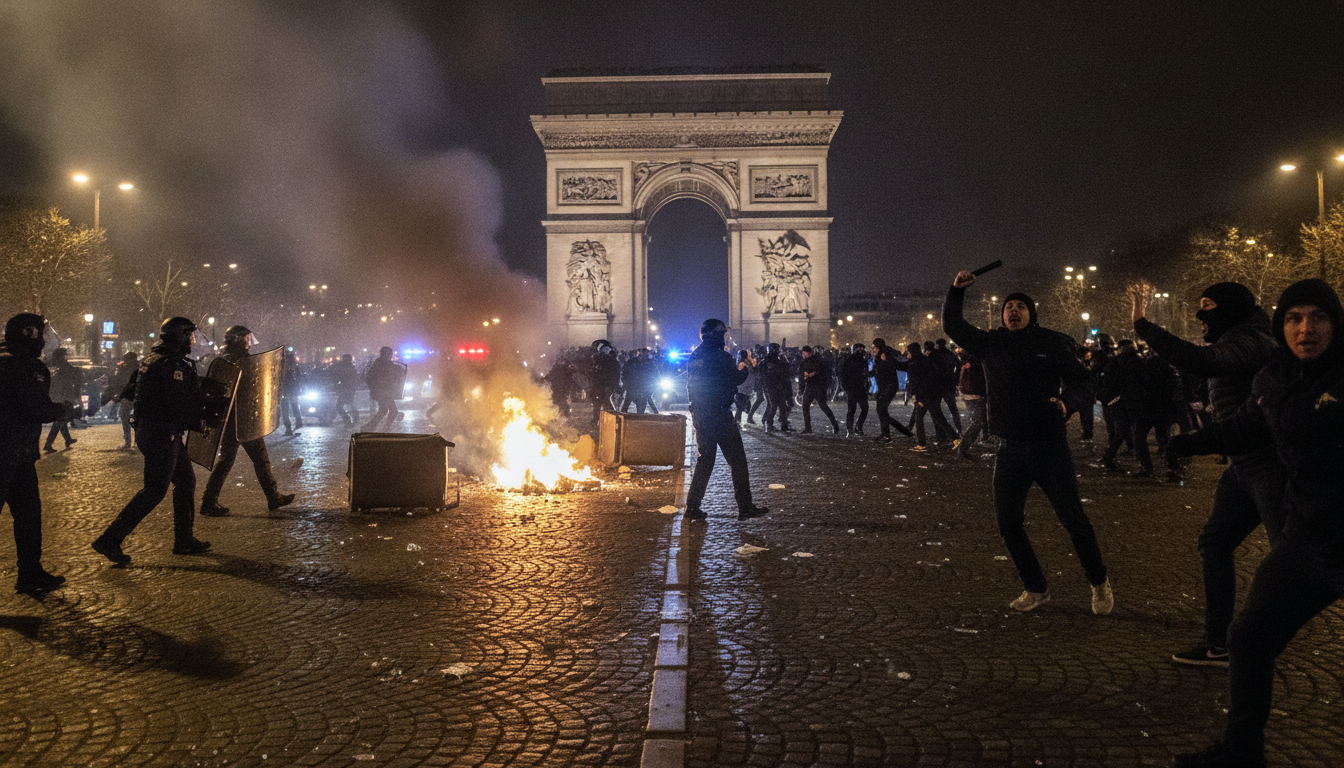
PSG celebrations in Paris erupt into violence, hundreds arrested after cup win
PSG celebrations in Paris turned violent after the club’s cup win, prompting mass arrests, tear gas and a government warning as authorities investigate a fatality and widespread property damage.


The city of Paris saw PSG celebrations spiral into unrest after the local team’s cup victory, with thousands of supporters gathering on the Champs-Élysées and elsewhere in the capital. The clashes left hundreds detained, widespread property damage, and at least one person dead under unclear circumstances, prompting an official response from security forces. Police used tear gas and made arrests as they sought to disperse groups setting fires and smashing shopfronts, while transport services were disrupted across the city. Authorities have opened investigations into the most serious incidents and warned that assemblies will be allowed only within the bounds of public order.
Mass arrests and police response
Paris police reported a large number of detentions as they moved to regain control of central areas where fans had congregated after the match. According to provisional figures released by the prosecutor’s office, almost 500 arrests were made, with a significant portion of those taken into formal custody. The charges reported span attacks on officers, property damage, theft and illegal weapons possession, reflecting the broad range of incidents that unfolded.
Security forces deployed in substantial numbers ahead of the expected celebrations, and the interior ministry emphasized a firm stance toward excesses that threaten public safety. Officers used crowd-control tactics including tear gas to disperse groups that had set fires and vandalized storefronts. Officials stressed that freedom of assembly would be permitted but warned that violent or destructive behavior would be met with a robust policing response.
Scenes on the Champs-Élysées
The emblematic avenue became the focal point for the largest gatherings, with fans pouring onto the wide boulevard after the match concluded in a penalty shootout. Footage circulating from the scene showed flares ignited among crowds, electric bicycles burning in the street, and glass smashed from commercial properties. The celebratory atmosphere quickly shifted into chaotic scenes as groups moved through the area creating hazards for bystanders.
Local retailers and commuters found themselves caught in the disruption as revellers blocked thoroughfares and confronted police lines. The sudden escalation on the Champs-Élysées forced law enforcement to prioritize dispersal to protect people and property. Eyewitness accounts described a mixture of jubilant supporters and smaller factions intent on creating trouble, complicating police efforts to restore calm while avoiding broader clashes.
Casualties and unclear circumstances surrounding a death
Among the most grave outcomes was the death of a 24-year-old near Porte Maillot on the ring road, a development that has prompted urgent investigative attention. Details surrounding the incident remain unclear, with some witnesses reporting a motorcycle crash into concrete barriers while others await official findings. Prosecutors have described the fatality as among several serious injuries recorded during the unrest, but cautioned that the precise sequence of events must be established.
In a separate incident, a teenager was reported in critical condition following a brawl in another area of Paris, though authorities have not confirmed whether that episode was directly linked to football-related rioting. Medical services attended multiple injured people across the city, and hospitals treated victims for burns, cuts and inhalation issues from tear gas exposure. Investigators said forensic and witness inquiries are under way to determine responsibility and to piece together how both the fatal and severe non-fatal incidents occurred.
Transport disruption and public safety measures
The disturbances had a measurable impact on Paris’s transport network, with bus, train and regional rail services disrupted as police sought to limit movement and protect infrastructure. Commuters and residents experienced delays and cancellations as authorities restricted access to key arteries and stations to manage the flow of people. Operators worked to restore services while coordinating with law enforcement to reopen routes safely.
City officials urged patience and advised the public to avoid affected areas while clean-up and security operations continued. Emergency services prioritized clearing hazards such as burning bikes and debris that posed risks to traffic and pedestrians. The disruptions underscored the wider public safety implications of large-scale spontaneous gatherings and the strain such events can place on urban services and emergency responders.
Government statements and security posture
Senior officials framed the response as a necessary measure to safeguard public order while maintaining the right to peaceful assembly. The interior ministry signalled a firm approach, emphasizing that celebrations must not descend into lawlessness. Authorities highlighted the deployment of large numbers of officers and reiterated that excesses would not be tolerated, a stance designed to deter repeat incidents following a similar outbreak of violence after last year’s cup celebrations.
The prosecutor’s office issued provisional figures and outlined the range of alleged offences under investigation, signaling that legal proceedings would follow for those taken into custody. Officials also pointed to the involvement of minors among detainees, noting the need for particular procedural safeguards in those cases. Political leaders called for calm and urged clubs, supporters’ groups and community figures to help de-escalate tensions in the aftermath.
Aftermath and legal follow-up
In the days after the unrest, authorities are expected to pursue further inquiries into the events, identifying individuals responsible for the most serious offences and assessing the adequacy of pre-event planning. Prosecutors will examine evidence from video footage, witness statements and police reports to build cases against those accused of attacks on officers and property damage. Legal sources indicated that those detained could face a range of charges depending on their alleged roles, from mischief and theft to more serious violent offences.
Club and matchday stakeholders may also face scrutiny over communications and crowd-control protocols, though initial comments from officials focused primarily on the behavior of those who committed criminal acts. Civil society organisations and victim representatives are likely to demand accountability for the death and injuries sustained during the disturbances. Meanwhile, municipal teams began visible clean-up and repair efforts along the most affected streets as insurers and businesses assess losses.
The full picture of what occurred during and after the PSG celebrations will depend on the outcomes of ongoing investigations, which authorities say are a priority. In the short term, law enforcement presence across Paris is likely to remain heightened during forthcoming fixtures and public gatherings to prevent a recurrence. Public appeals for restraint and lawful celebration were issued by local leaders, who stressed that sporting success should not be marred by violence.
The city now faces the dual tasks of addressing the human cost of the unrest and rebuilding confidence that future celebrations can be conducted without danger to the public or to property.