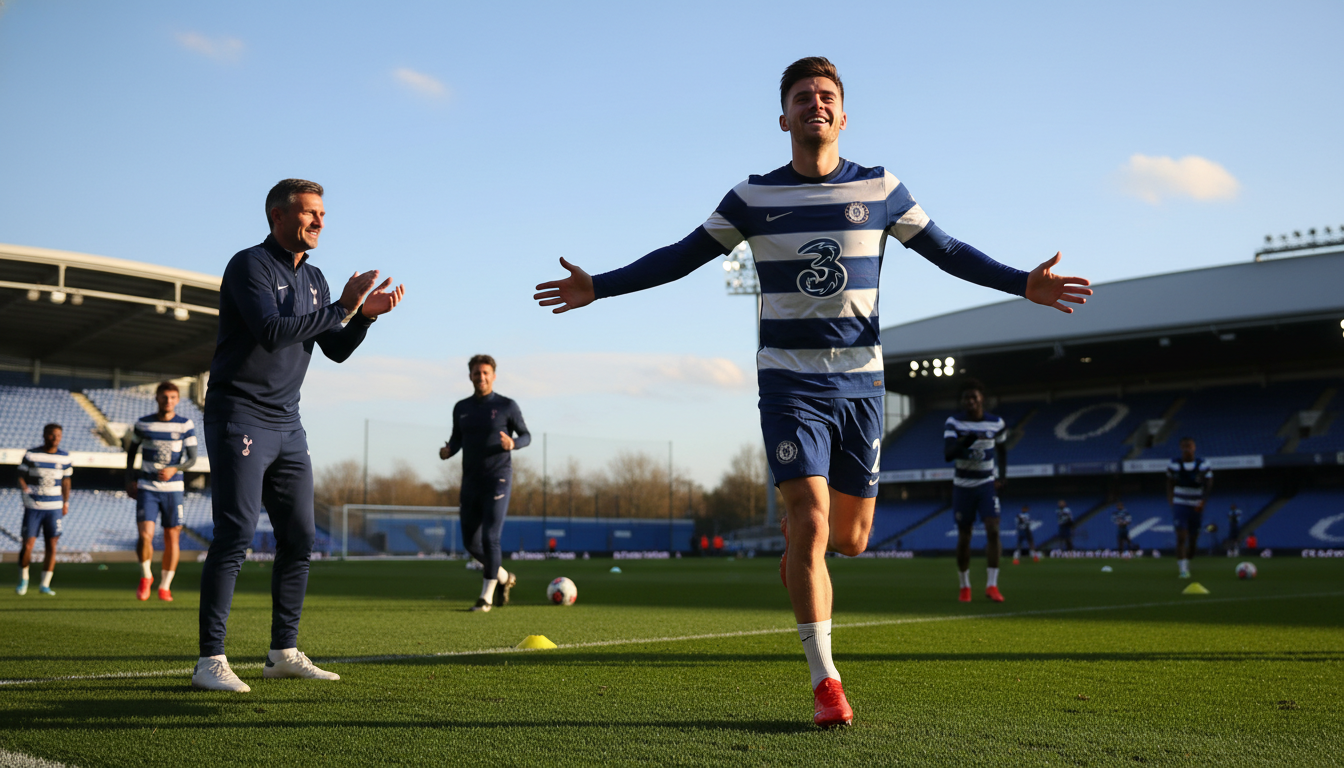
Conor Gallagher at Tottenham: Midfielder Says Manager Change Helped Rebuild Confidence
Conor Gallagher’s resurgence at Tottenham has been driven by a change in the dugout, the midfielder says, after a difficult start to life at Spurs that saw him struggle for form and support. Gallagher told media he felt the previous manager did not favour him and that public opinion had turned against him, but that recent shifts at the club have helped him regain belief and performance levels. The comments underline how quickly fortunes can change for a player in the modern Premier League and frame Gallagher as a central figure in Tottenham’s late-season recalibration. His remarks, reported by Sky Sports, add weight to a narrative that managerial decisions and fan sentiment can combine to shape a player’s trajectory.


Early struggles following the move to Tottenham
Conor Gallagher arrived at Tottenham with expectations attached to his energetic midfield play, but the transition did not go smoothly. Limited starts and tactical misfits under the previous coaching regime left the midfield role uncertain, and Gallagher struggled to find consistent minutes. That lack of rhythm fed into a wider perception problem, with the player acknowledging that both the coaching staff at that time and sections of the fanbase had questioned his suitability for Spurs’ system.
The combination of inconsistent selection and public doubt can dent a player’s confidence quickly, especially in a high-pressure environment like Tottenham Hotspur Stadium. Gallagher’s candid admission that he felt unwelcome under the former manager highlights how interpersonal dynamics inside a club influence performance. Players often need clarity of role and visible backing from coaching staff to perform at their best, and Gallagher’s early months at Spurs lacked that visible support.
Managerial change alters Gallagher’s role and confidence
A change in the dugout has altered Gallagher’s standing within the squad, with the midfielder himself crediting the transition for a boost in confidence. The new coaching approach appears to have provided clearer tactical responsibilities and more consistent game time, factors Gallagher identified as central to his recent improvement. That immediate impact underlines the influence a manager can have on individual players, especially those who need reassurance to play with freedom.
Coaching changes often come with altered expectations and renewed opportunities for players who were previously sidelined. For Gallagher, that translated into a more defined role in midfield and a chance to reassert his strengths: energy, ball-winning, and forward drive. The psychological lift of feeling trusted can be as important as tactical fit, and Gallagher’s comments suggest the new staff offered both.
Fan perception and the locker-room response
Public opinion swung against Gallagher early on, and he acknowledged the toll that had on his confidence in a public remark about fans doubting his quality. Rebuilding relationships with supporters is rarely immediate, but performance on the pitch remains the most effective remedy. As Gallagher began to produce more influential displays, the disconnect with fans began to narrow and media narratives shifted toward his resilience.
Within the dressing room, teammates’ reactions to the managerial change and Gallagher’s renewed form were important in stabilizing his season. Positive reinforcement from senior players and staff can accelerate a player’s recovery from a dip in form. In Gallagher’s case, the combination of internal support and clearer tactical instructions helped reduce friction and allowed him to concentrate on delivering consistent performances.
On-field contributions amid Tottenham’s difficult campaign
Tottenham’s season has been challenging, and Gallagher’s resurgence has come during a period of wider team instability. His attributes — high-intensity pressing, transitional bursts, and disciplined midfield work — have complemented Spurs’ attempts to regain control in matches. While individual statistics fluctuate, Gallagher’s influence has been visible in moments when Spurs sought to dominate midfield battles and transition quickly into attack.
Coaches often value players who can do the unglamorous work that allows creative teammates to flourish, and Gallagher has provided that platform in recent appearances. His increased minutes have coincided with periods in which Tottenham appeared more balanced and competitive. The midfielder’s ability to sustain tempo and press opponents has given the team a more cohesive midfield identity at crucial stages of the campaign.
Implications for squad selection and tactical flexibility
The restoration of Gallagher’s confidence carries immediate implications for Tottenham’s selection and tactical options moving forward. A midfielder who can press, carry the ball, and connect phases of play provides managers with choices about formation and in-game adjustments. Gallagher’s presence offers the option of a high-energy midfield pivot or a more advanced role where he can drive forward into attacking zones.
For the coaching staff, selecting Gallagher more frequently also means rethinking rotation and load management across a congested schedule. Balancing his physical output with recovery will be important if Spurs are to extract his best level consistently. Tactical flexibility that leverages Gallagher’s strengths could allow Tottenham to vary their approach depending on opposition and competition demands.
Outlook for Gallagher and broader club context
Looking ahead, Gallagher’s immediate challenge is to maintain the momentum earned since the managerial change and to deliver sustained performances that silence lingering doubts. Continued backing from the coaching staff and constructive engagement with supporters will be central to that process. For the club, the wider question remains how to integrate players like Gallagher into a long-term plan that balances short-term results with squad development.
If Gallagher can translate renewed confidence into a string of influential displays, he will not only consolidate his place at Tottenham but also help stabilise a team seeking consistency. The coming weeks will be important for both player and club as they attempt to close a difficult season on a positive note. Gallagher’s candid reflections about feeling marginalised, and his subsequent recovery, offer a case study in how managerial decisions and supporter sentiment interact with on-field outcomes.
Conor Gallagher’s public acknowledgement of early struggles and his praise for the change in the dugout provide clarity on why his form has shifted at Tottenham. The midfielder’s trajectory through adversity back to a more prominent role underlines how quickly circumstances can evolve in elite football. As Spurs and Gallagher look forward, the hope for both is that this reset becomes the foundation for greater consistency and contribution in the seasons to come.