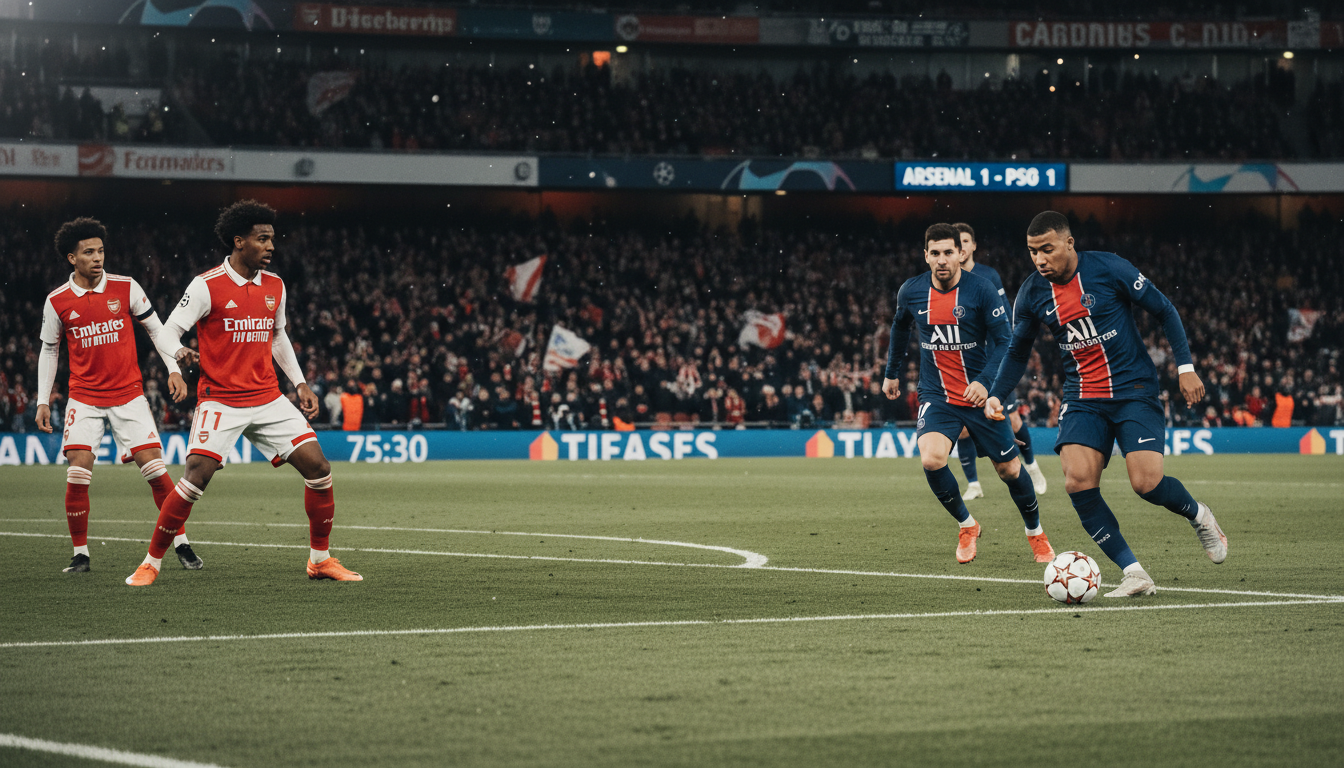
Arsenal vs PSG Champions League final: Pragmatism vs Panache in Paris Showdown
Arsenal vs PSG Champions League final preview – Arteta’s pragmatic Gunners face PSG’s free-flowing attack in a high-stakes European final – silverware at stake
Arsenal vs PSG meet in the Champions League final in a matchup that pitches Mikel Arteta’s disciplined, defence-first approach against Paris Saint-Germain’s expressive, attack-minded style. The clash brings together the Premier League winners who ended a 22-year title drought and the holders whose forward play has dominated headlines across Europe. Expectations are high and the contrasting tactical identities promise a game where margins, mistakes and moments of individual quality will decide the outcome.
Tactical contrast defines the match-up
Arsenal arrive in the final built on organisation, structure and consistency rather than flamboyant possession for its own sake. Arteta’s side have prioritised compact defending, quick transitions and controlled management of games to grind results, a formula that delivered the domestic crown this season. PSG offer the counterpoint: a side that seeks to unsettle opponents through rapid combinations, off-the-ball movement and creative freedom among their attacking stars.
Both approaches carry risk and reward in a one-off final. Arsenal’s defensive emphasis can frustrate but leaves less room for late dramatic comebacks, while PSG’s free-flowing attack produces chances but can expose defensive gaps. The final will therefore be a chess match of in-game adjustments, with substitutions and positional tweaks likely to determine which philosophy adapts better under pressure.
Arsenal’s defensive credentials and consistency
Arsenal’s route to the final has been built on defensive discipline and teamwork, a fact reflected in their Champions League numbers. The Gunners conceded only six goals across 14 matches in the campaign, an indication of how the team has tightened gaps and limited opponents’ high-quality opportunities. That defensive record complements their season-long consistency in the Premier League, where calculated game management helped them edge out Manchester City.
Key to Arsenal’s stability has been a backline that defends as a unit and a goalkeeper capable of decisive saves when called upon. William Saliba and Gabriel have provided aerial presence and organisation, while the goalkeeper has offered crucial shot-stopping and distribution. Arteta’s system demands relentless concentration from defenders and midfielders alike, and the team’s unbeaten run in Europe underscores how effectively that template has been executed.
PSG’s attacking threat and creative freedom
PSG remain one of Europe’s most exciting attacking sides, able to generate high volumes of chances through movement, passing and individual skill. Their forward line can stretch defences and create moments of unpredictability that force opponents out of shape. That offensive potency has been a driving force in PSG’s Champions League defence, delivering the creativity and moments of magic needed in knockout football.
However, PSG’s attacking focus has come at a defensive cost at times, with the team conceding more goals in the competition than Arsenal. That vulnerability opens a potential avenue for the Gunners, who will seek to punish turnovers and set-piece opportunities. For PSG, balancing their desire to press forward with the need for defensive cover will be a central tactical conversation for the coaching staff before kickoff.
Key players who could decide the final
Individual match-winners on both sides will shape how the final unfolds, with attention on playmakers and defensive anchors. For Arsenal, the spine of the team — the centre-backs, the holding midfielder and the goalkeeper — will be crucial in neutralising PSG’s movement and limiting clear opportunities. Consistent performers who can nullify transitions and maintain composure under pressure will elevate their team’s chances.
PSG’s forwards and attacking midfielders, by contrast, will be tasked with breaking the deadlock and creating moments of brilliance. Players who can draw fouls, exploit half-spaces and convert limited chances into goals carry immense value in a final. Set-pieces, late substitutions and decisive individual actions often tilt one-off finals, so players with a history of delivering in big matches deserve close attention.
Managerial strategies and in-game adaptation
Mikel Arteta and Luis Enrique bring different managerial blueprints to the final, and their tactical adjustments will be a story within the story. Arteta’s focus on structure and incremental control is likely to be matched by precise instructions on when to press and when to sit deeper. His substitutions will probably emphasize maintaining balance and protecting structural integrity as the match progresses.
Luis Enrique, overseeing the holders, will need to manage the line between encouraging attacking expression and shoring up defensive responsibilities. His in-game choices may include altering formations to increase midfield control or introducing fresh attacking legs to exploit tired defenders. Both managers have the experience and tactical nous to reshape the match; the side that reads the flow better and reacts faster could gain the decisive edge.
Context and what victory would mean for each club
For Arsenal, lifting the Champions League trophy would be the crowning achievement of a campaign that restored domestic glory and returned the club to Europe’s elite conversation. A European title would validate a pragmatic strategy that prioritised consistency over aesthetics and would mark the club’s first Champions League triumph. The moral weight of ending a long wait for major honours domestically and then securing continental success would resonate deeply with supporters.
For PSG, successfully defending the Champions League would solidify their status as Europe’s premier attack-led powerhouse and vindicate a sustained investment in attacking talent. Retaining the title would also underscore their ability to perform on the biggest stages despite defensive frailties at times. Either outcome will reshape narratives around both clubs and influence transfer plans, strategic priorities and managerial reputations in the coming months.
The final is also significant for European football as a whole, pitting two competing philosophies against one another on the sport’s biggest club stage. A win for Arsenal would reinforce the value of defensive organisation and squad consistency in modern football, while a PSG triumph would celebrate creativity and attacking daring. Whichever side lifts the trophy, the match promises to be a defining moment for players, coaches and fans alike.
As kickoff approaches, focus will center on set-piece preparation, midfield battles and how each coach manages the space between lines. The match could be settled by small margins — a deflected shot, a goalkeeper’s intervention, or a tactical change that unbalances the opponent. In that sense, the Arsenal vs PSG Champions League final will be less about who plays prettiest and more about who executes their plan under the pressure of a single, decisive night.