DR Congo vs England: Kane’s late double turns 1-0 shock into 2-1 comeback for Three Lions
Harry Kane’s late double earned England a 2-1 comeback win over DR Congo in a dramatic World Cup tie, overturning Brian Cipenga’s early opener and ending the Leopards’ run. The match, billed as DR Congo vs England, saw Sébastien Desabre’s side lead for 68 minutes before tactical changes and Anthony Gordon’s influence set up Kane’s late heroics. England progressed after a tense finish while DR Congo left the tournament with pride after a disciplined and spirited performance.


Early shock as Cipenga gives DR Congo lead
Just seven minutes into the match DR Congo stunned the stadium when Chancel Mbemba found space at the back and released Brian Cipenga with a precise through ball. Cipenga took the chance clinically, slotting a right-footed finish beyond England’s keeper and silencing the crowd. The early goal forced England onto the back foot and set the tone for an intense contest between an underdog and one of the tournament favourites.
Sébastien Desabre’s game plan was clear from the first whistle: compact defending, quick transitions and reliance on the wide players to exploit any gaps. The Leopards remained organised and unusually composed against sustained English pressure. That structure allowed them to absorb attacks and launch dangerous counters, keeping England unsettled for long spells.
Mpasi keeps Leopards in contention with late first-half saves
Lionel Mpasi emerged as DR Congo’s key figure through the opening 45 minutes, producing a series of sharp stops that kept the underdogs in front. He denied Jude Bellingham on two occasions and made a crucial save to repel a Harry Kane attempt deep into stoppage time. Those interventions preserved the lead and carried momentum into the second half, underscoring the goalkeeper’s central role in the Leopards’ spirited showing.
Mpasi’s positioning and reflexes repeatedly frustrated England’s forwards and forced the Three Lions to probe for alternative avenues to break down the resistance. His calm distribution also helped DR Congo relieve pressure on several occasions. The goalkeeper’s early heroics contributed to a growing belief within the Congolese ranks that an upset was within reach.
England alters approach as substitutions shift dynamics
The momentum of DR Congo vs England shifted decisively after the hour mark when England’s coach introduced fresh legs to inject pace and directness. Anthony Gordon’s entrance proved pivotal; his willingness to run at defenders and deliver crosses added a new dimension to England’s attack. That tactical tweak altered the balance, forcing the Leopards to adapt and opening space for late pressure.
England’s substitutions illustrated a recognition that patience alone would not dismantle DR Congo’s discipline, so the Three Lions sought more vertical play and quicker delivery into the box. As fatigue weighed on the underdogs, England’s structure tightened and pressing routes became more effective. Those changes set up the key moments that followed in the final quarter-hour.
Gordon’s delivery and Kane’s finish restore parity
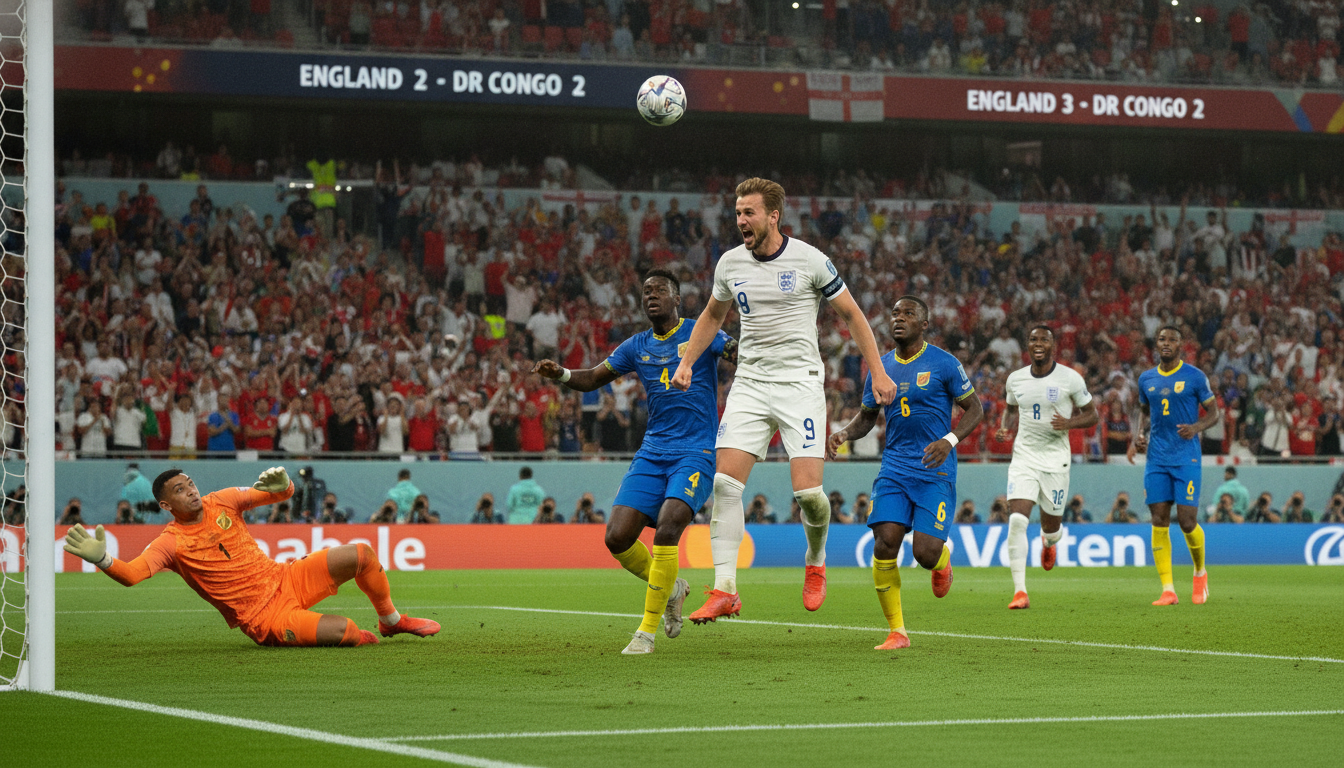
In the 75th minute Anthony Gordon delivered a pinpoint cross that found Harry Kane, who rose to power a header past Mpasi and level the score. The goal, coming after prolonged English pressure, relieved the tension in the England camp and signalled a momentum swing. Kane’s aerial threat and clinical timing underlined his continued importance as England’s attacking focal point.
The equaliser shifted the tactical battle, with England now probing for a winner and DR Congo attempting to re-establish composure. The Leopards showed resolve after conceding but increasingly had to chase the game. England’s renewed confidence and Gordon’s spark remained central as time began to run down.
Late winner and decisive moments four minutes from time
As fatigue accumulated, England found the breakthrough four minutes from time when Gordon again provided the assist and Kane rifled a right-footed strike into the far corner to complete the turnaround. The goal encapsulated the transformation of the match: from an early Congolese shock to an English recovery driven by substitution impact and individual quality. That strike not only secured a 2-1 lead but ultimately decided who progressed.
DR Congo battled on in stoppage time and earned one final chance when Wissa stepped up to take a powerful free-kick, which drifted narrowly over the crossbar. The miss summed up the Leopards’ fine margins on the night — so close to forcing extra time yet unable to find the equaliser. England’s defence then regrouped to see out the closing moments and confirm passage to the next round.
End of the road for DR Congo, pride and lessons for the Leopards
The result brought an end to a magnificent run for DR Congo at the tournament, with the Leopards departing having taken a favourite to the wire. Sébastien Desabre’s side leave with praise for a tactical performance that combined organisation, courage and technical moments, notably Cipenga’s early finish and Mpasi’s shot-stopping. Their supporters and football community will take encouragement from the progress shown against top-level opposition.
For England, the match was a reminder of the thin margins in knockout football and the value of timely tactical changes. Harry Kane’s late double reinforced his status as a match-winner, while Anthony Gordon’s contributions highlighted the importance of impact substitutes. The Three Lions advance but will carry lessons about breaking down compact opponents without conceding dangerous quick transitions.
Tournament analysts are likely to dwell on the contrasts between the two teams’ approaches: DR Congo’s compact defensive structure and effective counter-attacks versus England’s capacity to adapt and find solutions through personnel shifts. Both sides produced moments of high quality, but the final outcome hinged on England’s late delivery and Kane’s clinical finishing under pressure.
The match also raises questions for both coaching staffs moving forward. DR Congo must weigh how to sustain defensive intensity deeper into matches while extracting more attacking threat when defending a lead. England will examine the balance between patience and urgency in the final third, and how to preserve defensive stability when turning games late on.
Beyond tactical analysis, the fixture was a showcase for players who could shape future tournaments. Lionel Mpasi’s performances will attract attention for his composure under fire, and Brian Cipenga’s early strike will be replayed as one of the tournament’s breakthrough moments. For England, Kane’s late exploits add to his record in decisive fixtures and reinforce his leadership role.
The final whistle confirmed a hard-fought 2-1 victory for England in the DR Congo vs England tie, a match that will be remembered for its dramatic turnaround and the resilience shown by both sides.