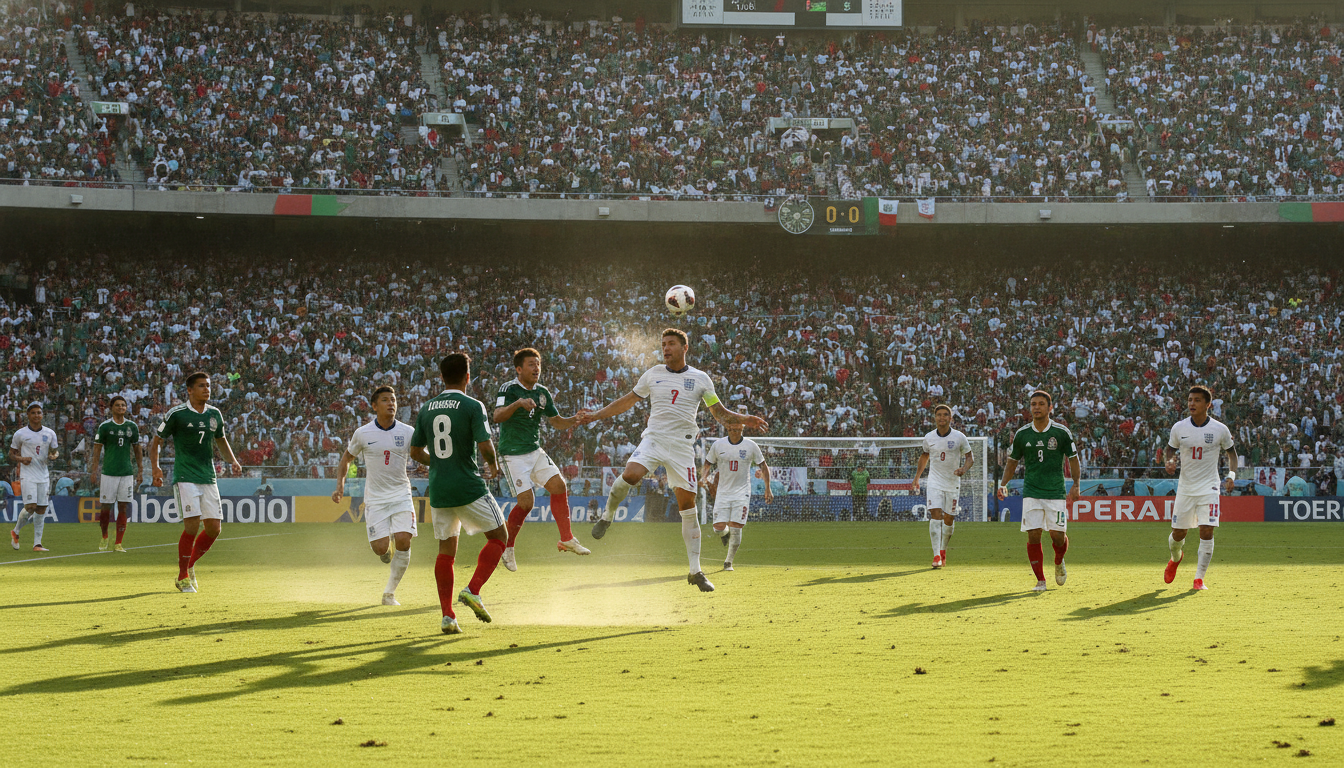
England vs Mexico at Azteca: Three Lions face hostile stadium as Haaland’s Norway take on Brazil in last-16 World Cup showdowns
England vs Mexico at the Azteca headlines a World Cup last-16 day, while Erling Haaland and Norway prepare to face Brazil in a fight for quarter-final places.


England vs Mexico at the Estadio Azteca is the standout fixture on a packed World Cup last-16 programme, with the Three Lions returning to the storied venue four decades after the 1986 tournament. England’s route to this tie was far from smooth, relying on a late double from captain Harry Kane to topple DR Congo and clinch progression. The Mexico side, bolstered by home support and altitude advantage, arrive in Mexico City seeking to exploit familiarity with the stadium and unsettle England’s rhythm. Across the Atlantic in New Jersey, Erling Haaland and Norway prepare to challenge Brazil, creating a high-stakes double-header that will determine two more quarter-finalists.
Historic setting and the Azteca atmosphere
The Estadio Azteca is synonymous with World Cup drama, and its capacity to influence a match remains undiminished. Mexico’s supporters are expected in full voice, creating an environment that tests visiting teams’ concentration and stamina. The stadium’s altitude and microclimate can sap energy from opponents unused to the conditions, a factor that often shapes substitutions and tactical plans. England must manage not only the fervour of the crowd but also the physical demands of playing at the Azteca if they are to advance.
How England secured a last-16 berth
England’s qualification from the group stage did not follow the script many envisaged before the tournament, with inconsistent performances causing concern. The decisive moment arrived against DR Congo when Harry Kane produced a late brace to overturn the match and ensure England’s passage to the knockout round. Those goals highlighted Kane’s continued centrality to England’s attacking identity and underlined the team’s occasional reliance on individual moments of quality. The manner of qualification has left questions over form and cohesion that England’s coaching staff must address before facing Mexico.
Mexico’s form and home-field advantages
Mexico enter the match buoyed by passionate local support and the belief that Azteca occasions can lift the team to overperform. The hosts often use quick transitions and wing play to create chances, seeking to stretch opponents and exploit defensive gaps. Mexico’s familiarity with the pitch and atmosphere gives them confidence to press early and interrupt the opposition’s build-up. For England, neutralising Mexico’s wide threats and responding to sudden counters will be essential to dictate the game’s tempo.
Tactical matchups and key players to watch
The tactical chess between the teams will pivot on how England tries to break Mexico down and how Mexico counters through speed and set pieces. Harry Kane’s movement and finishing remain a central question for England, while creative midfielders will be expected to supply timely passes and maintain territorial control. Mexico’s squad includes players accustomed to high-pressure home games who can influence proceedings through set-piece deliveries and rapid transitions. Managers on both sides will need to weigh substitution strategies and formation tweaks to navigate the match’s physical and psychological demands.
Norway’s gamble: Haaland versus Brazil
In New Jersey, Erling Haaland and Norway prepare for a daunting assignment against Brazil, a side with deep attacking resources and knockout-game pedigree. Haaland’s presence provides Norway with a clear focal point, and their plan will likely involve feeding the striker while attempting to disrupt Brazil’s fluid passing. Brazil, often favoured in such encounters, will look to dominate possession and create overloads in wide areas to test Norway’s defensive structure. The contest promises to be an intriguing contrast of styles: Norway’s directness against Brazil’s technical and movement-based approach.
Strategic implications for the quarter-final race
The outcomes of England vs Mexico and Norway vs Brazil will have immediate consequences for the tournament’s latter stages, shaping the projected quarter-final landscape. A win for England would validate a nervy path through the group and restore momentum, while a Mexican victory would be celebrated as a home triumph with broader psychological impact. Similarly, a Brazilian win would reinforce their status as contenders, whereas a Norwegian upset would represent a seismic shift and a narrative boost for Haaland’s side. Knockout matches often hinge on small margins, and both fixtures are expected to be decided by tactical discipline and decisive moments.
England will have to contend with more than the opposition on match day; travel, recovery and the media spotlight are additional variables that influence preparation. The rotation of personnel to manage fitness after a congested schedule will be a balancing act for the coaching team. Mexico’s preparations, by contrast, benefit from minimal travel and a singular focus on exploiting home conditions. Media narratives around England’s underwhelming group phase and the historic return to Azteca may add pressure, but players often use such narratives as motivation rather than distraction.
The matchups also present opportunities for emerging talents to stake a claim on the global stage. Young players on both teams can alter trajectories with standout performances, and managers are likely to place trust in those who have demonstrated resilience under pressure. Set pieces, too, are often decisive in knockout football, giving a spotlight to delivery specialists and aerial presences. Penalty preparedness and goalkeeper form will be scrutinised, as shootouts remain a plausible outcome in tightly contested knockout fixtures.
From a broader tournament perspective, these last-16 ties underscore the unpredictable nature of World Cup knockouts, where reputation and form from the group stage offer limited guarantees. Upsets and tight contests are common, and teams that adapt swiftly to match-day exigencies tend to progress. England’s task at the Azteca carries historical resonance, while Norway’s encounter with Brazil pits a rising star against an established footballing power in a high-profile setting.
Coaching decisions—formation choices, pressing intensity, and timing of substitutions—will be magnified in these matches, where the margin for error narrows considerably. Managers must anticipate opponent adjustments and prepare contingency plans for late-match scenarios. The role of sports science staff in monitoring player exertion and the use of data for opponent scouting will be integral to match preparations. In matches decided by single moments, thorough planning may supply the edge needed to advance.
Fan engagement and commercial stakes also rise as the tournament moves into knockout rounds, with broadcasters, sponsors and global audiences focusing attention on marquee fixtures. The atmosphere in both Mexico City and New Jersey will reflect differing football cultures, each capable of influencing player performance. For England supporters, the return to the Azteca carries symbolic weight, while Norwegian fans will rally behind Haaland’s bid to topple a heavyweight. These dynamics create a rich backdrop to what the matches ultimately deliver on the pitch.
As the whistle approaches, both England and Mexico face tactical and psychological tests that will reveal their adaptability under pressure. Norway and Brazil similarly confront questions of game control and how to convert chances into goals against well-drilled defences. The coming 90 minutes in each venue may be decisive not only for the teams involved but also for the tournament’s narrative arc. In knockout football, stories are written in bursts of intensity and individual brilliance, and both fixtures are primed to offer exactly that.
England vs Mexico at the Azteca and Norway vs Brazil in New Jersey represent critical inflection points in the World Cup, with quarter-final places at stake and dramatic implications for the teams’ trajectories. The matches will demand tactical acuity, physical resilience and clinical finishing, and they are likely to be remembered for singular moments that shift momentum. Supporters and neutrals alike can expect high drama as the tournament’s knockout phase heats up and a clearer path to the title begins to emerge.