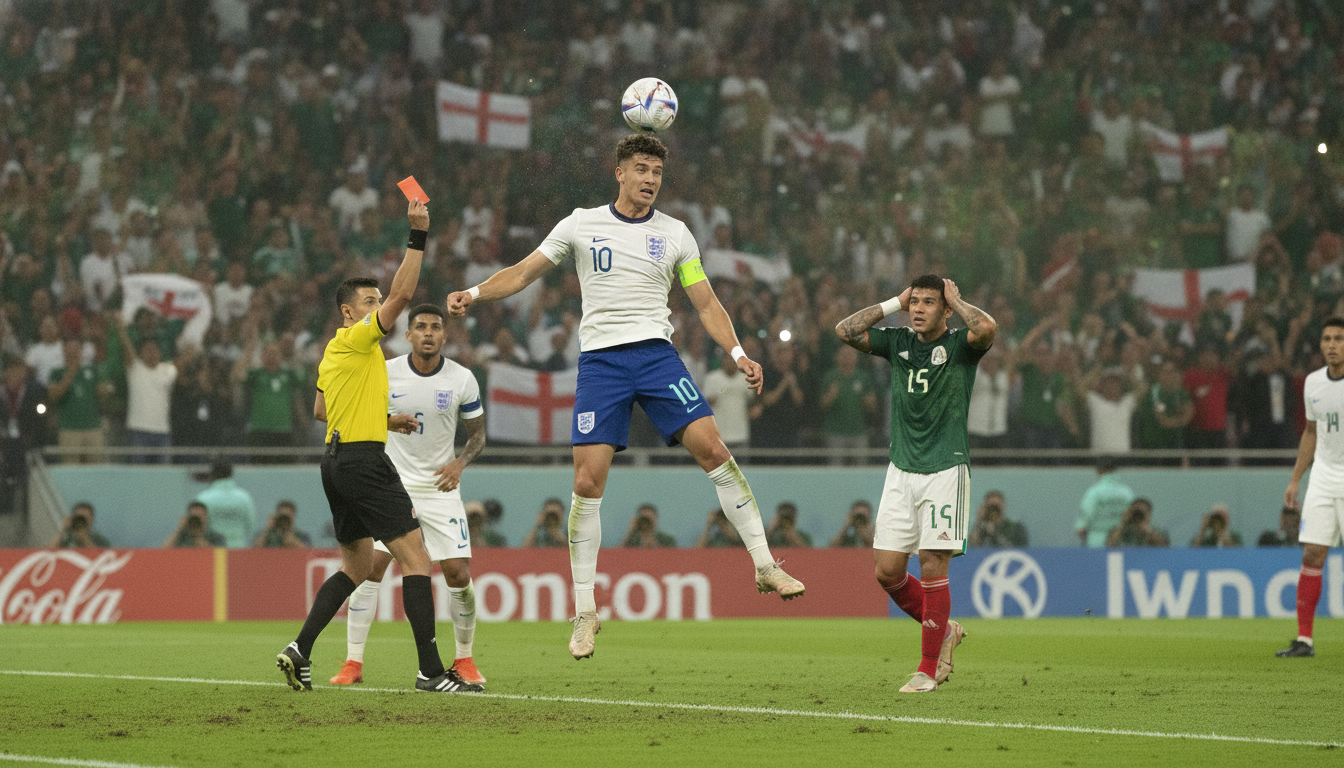
England beat Mexico in five-goal thriller at Azteca to reach quarter-finals
England vs Mexico: Jude Bellingham’s quickfire brace and Harry Kane’s penalty sealed a 3-2 win at the Azteca as the Three Lions progress to face Norway.


Electric start: Bellingham double shocks the Azteca
England vs Mexico delivered a dramatic opening when Jude Bellingham struck twice inside 98 seconds to put England in control. The midfielder’s first-time movement and clinical finishing stunned a vociferous Azteca crowd and set the tone for a high-stakes encounter. Those two early goals proved decisive in a match that swung wildly in intensity and narrative across 90 minutes. England rode that burst of momentum to withstand a furious Mexican response and unfavorable moments later in the game.
Penalty, poise and pressure: Kane converts from the spot
Harry Kane added a crucial third from the penalty spot after England were awarded a spot-kick in a tense sequence of play. Kane’s composed finish extended England’s lead and underlined the importance of his experience in knockout football. The penalty altered the balance, forcing Mexico to chase the game at altitude while England restructured to protect their advantage. Kane’s role, alongside Bellingham, continued to define England’s attacking outlet throughout the tournament.
Setback and resilience: Quansah sent off, defence holds firm
Midway through the contest England were reduced to ten men when Jarell Quansah received a red card, creating a fresh tactical test for Gareth Southgate’s side. The dismissal could have swung momentum fully in Mexico’s favour, but England reorganized quickly and tightened their defensive shape. Players rotated covering responsibilities, and the back line, often exposed by Mexico’s pressure, remained disciplined under sustained attack. That defensive effort proved pivotal in preserving the lead as Mexico searched for openings in the final third.
Mexico fightback: Quinones and Jimenez spark late drama
Mexico refused to surrender, with Julian Quinones and Raul Jimenez each finding the net to pull La Tri back into contention. Quinones’ goal ignited the stadium and Jimenez’s finish intensified a frenetic finish that had fans and players on edge. Those strikes showcased Mexico’s attacking quality and capacity to exploit space when England had to manage both the scoreline and the extra physical toll of playing at high altitude. Despite the comeback, Mexico could not find a leveller before the final whistle.
Tactical chess at altitude: How conditions shaped the game
The Azteca Stadium’s altitude and atmosphere were integral factors throughout the match, affecting tempo, recovery and ball control for both teams. England adjusted by conserving energy in possession phases and deploying quicker transitions to limit prolonged running demands on the squad. Mexico, accustomed to the conditions, used short passing and aggressive pressing to unsettle England, but defensive discipline and game management blunted many of their most dangerous opportunities. Substitutions from both benches reflected a balance between injecting attacking intent and maintaining physical stability.
What the win means: England through to face Norway and beyond
With the victory England advance to a quarter-final meeting with Erling Haaland’s Norway, keeping alive their bid for a first major tournament title since 1966. The win ends a run of disappointments in knockout stages and provides a morale boost ahead of a match likely to demand tactical caution and sharper finishing. For Mexico, the defeat marks a painful exit on home-region soil but underlined the team’s ability to challenge elite opponents and the promise in their attacking corps. England now turn their focus to preparation for Norway while managing recovery and tactical planning.
England’s route to the quarter-finals was built around the reliable partnership of Jude Bellingham and Harry Kane, whose influence on and off the ball continues to shape the side’s attacking identity. Bellingham’s two rapid goals not only broke the Azteca’s formidable recent record but also confirmed his status as the team’s most dynamic threat entering the latter stages. Kane’s calmness from the penalty spot reinforced the veteran striker’s value in moments that require clinical execution and leadership.
Mexico’s performance, though ultimately undone, offered encouraging signs about their depth and tactical flexibility. Players like Julian Quinones provided incisive movement and finishing, while Raul Jimenez’s awareness in the box delivered the kind of presence Mexico will need as they rebuild from this defeat. Managerial decisions in the closing stages suggested a squad willing to press and exploit numerical advantages, and the team’s resilience will be a foundation to build on for future competitions.
From a coaching perspective, England’s ability to withstand a red card and hostile environment speaks to preparation and collective discipline. Defensive rotations and midfield commitments to tracking runners limited the number of clear chances Mexico produced once the visitors adjusted to playing with ten. Southgate’s adjustments at half-time and during the second period minimized open-play vulnerabilities and prioritized structure while still allowing for counter-attacking opportunities.
The match will be remembered for its swings of fortune and the quality of individual moments more than for any single tactical masterstroke. Bellingham’s first two finishes showcased timing and technical sharpness, Kane’s penalty showed poise under pressure, and the subsequent Mexican goals revealed an attacking unit that could exploit openings against top opposition. For neutral observers, the game delivered the mix of drama and skill expected at the Azteca and underlined the unpredictability of knockout football.
In the aftermath, England face practical questions about squad rotation, injury management and how to replicate the intensity of this display against Norway. Recovery protocols and small tactical tweaks will be prioritised as the schedule tightens and attention turns to a quarter-final clash that presents different threats, chiefly Norway’s reliance on Erling Haaland for decisive moments. Preparing to contain a top target man while maintaining England’s own attacking patterns will be central to their next phase.
For Mexico, analysis will focus on how to prevent early concessions and how to maintain sustained pressure over 90 minutes, particularly against teams willing to absorb early dominance and counter quickly. The game highlighted both the strengths of Mexico’s attackers and some defensive lapses that elite opponents can exploit. Lessons from the match will be useful as coaches evaluate system tweaks and player roles for upcoming fixtures.
Ultimately, England’s victory at the Azteca represents a meaningful step in their pursuit of a major tournament title, achieved through a blend of individual brilliance, team resilience and effective game management. The match offered players and staff a test of character that they passed amid one of the tournament’s most hostile venues. As the Three Lions prepare for Norway, the performance in Mexico will serve as both a blueprint and a reminder of the margins that decide knockout football.
England leave Mexico with the reward of a quarter-final berth and momentum from a high-octane win, while Mexico depart with the clear knowledge that small defensive errors can prove decisive against world-class opposition. The contest at the Azteca will be replayed in the memories of supporters from both nations as a classic encounter that combined drama, technical quality and the unrelenting pressure of elimination football.
The focus now shifts to recovery, tactical refinement and mental preparation as England set their sights on a difficult quarter-final. The tournament’s latter stages will demand consistency and the ability to manage both the physical and psychological demands of high-stakes matches, and this night at the Azteca has given England a case study in how to prevail when adversity arrives.