England World Cup exit confirmed as Argentina reach final after 2-1 win in Atlanta
England World Cup exit confirmed as Argentina beat USA 2-1 in Atlanta; Messi and La Albiceleste reach the final against Spain while England head to the third place match.


The England World Cup exit was sealed as Argentina recovered from an early deficit to win 2-1 in Atlanta, booking a final against Spain and leaving England to contest a largely ceremonial third place match. Lionel Messi once again proved decisive for the holders, guiding a side that showed resilience and championship composure to a win in a match shaped by tactical swings and late momentum. For England the defeat marks the end of a campaign that promised much but ultimately fell short of the expectations of a nation that still debates whether football belongs at home.
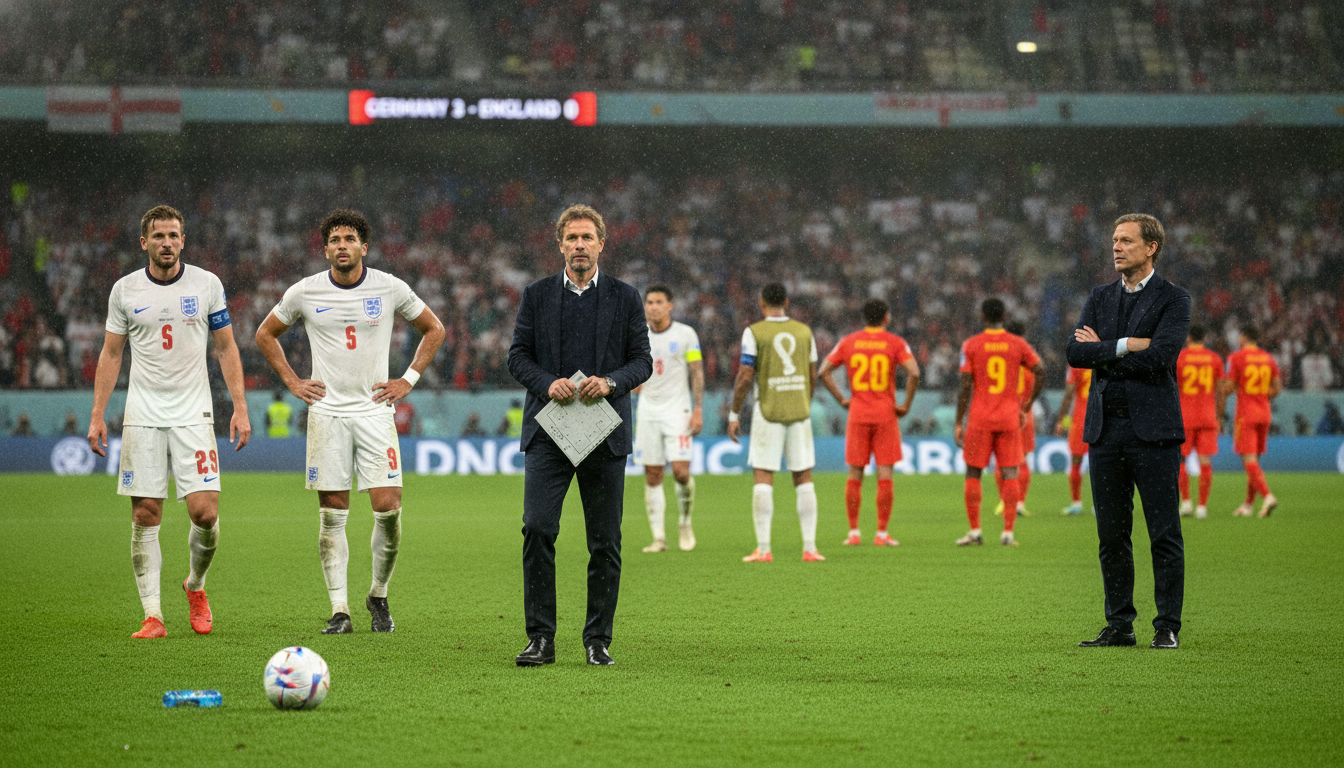
The postmatch mood in Atlanta was the contrast between elation in the Argentina camp and deflation among the England players and supporters who had poured into the city. England head coach Thomas Tuchel was pictured giving instructions to Jude Bellingham, a moment that underlined managerial intervention and questions about selection and in-game adjustments. The immediate consequence is a weekend fixture few neutrals will prize while a heavyweight final approaches between two teams who have played different paths to reach this stage.
England tactical collapse in Atlanta
England produced promising passages in the tournament but faltered when structure and control mattered most, a failure that culminated in their World Cup exit. The team struggled to contain early pressure and failed to impose a consistent defensive shape once Argentina found their rhythm. Key moments were influenced by turnovers and unclear defensive assignments that the opposition exploited.
Substitutions and set-piece defending compounded England’s difficulties and put pressure on the central spine of the team. Goalkeeper decisionmaking and midfield cover were repeatedly tested, with England unable to find sustained control of the middle third. The overall picture was of a side that lacked coherence at critical moments and could not convert possession into calming progress.
Argentina withstands early pressure and turns the match
Argentina conceded the opening goal but reacted with the calm of reigning champions, striking back to take control before the closing stages. The comeback illustrated Argentina’s ability to adapt tactically, alter their attacking approach, and protect their defensive shape when the situation demanded it. Their second half showed patience and an inclination to probe wide and through the center until openings appeared.
That capacity to weather a storm and deliver quality in decisive phases is a hallmark of successful title defences. Argentina combined individual class with collective discipline, and the result in Atlanta reflected both attributes. The win sets up a final against Spain that promises stylistic contrasts and a high-stakes tactical chess match.
Messi and substitutes make decisive impact
Lionel Messi once again influenced the course of a knockout match through moments of vision and execution that tilt the balance in tight games. His presence continues to draw the attention of defenders and create pockets of space for teammates to exploit. When match temperament is tested, Messi’s ability to lift his side remains a central factor in Argentina’s current form.
Beyond Messi, Argentina’s bench offered fresh legs and strategic alterations that shifted the game in their favor. The substitutes provided energy and different passing combinations that unsettled England late in the game. That depth of options and the manager’s willingness to change the tempo were vital ingredients in turning a tense contest into a victory.
Tuchel’s changes and selection questions
Thomas Tuchel entered the tournament with reputational weight and tactical credentials, but the defeat in Atlanta has intensified scrutiny on his choices. Some of the substitutions and in-game tactical switches failed to arrest Argentina’s momentum or to shore up defensive vulnerabilities. Observers will parse whether personnel decisions were driven by form, fitness, or a broader strategic vision that did not pay dividends in a knockout setting.
Selection dilemmas will dominate the postmortem for England, particularly in midfield where transitions often broke down and defensive cover was inconsistent. Tuchel will face questions about whether the balance between attack and protection was right and how to calibrate roles for players like Jude Bellingham. The third place fixture offers limited scope for rehabilitation but will be a chance to test alternatives and close the tournament with a performance that provides clarity ahead of future rebuilding.
Spain awaits in a highly anticipated final
Argentina’s victory sets up a final with Spain that will attract global attention and pit contrasting philosophies against one another. Spain have navigated their own path to the final by blending possession fluency with improved defensive robustness, and that blend will be tested by Argentina’s mix of individual brilliance and pragmatic organisation. The final promises tactical nuance and moments of individual quality capable of deciding a tight contest.
Both teams enter the match with pedigree and a roster of players who can change games on brief moments of inspiration. The tactical battle will likely revolve around midfield control and how each side handles transitions, with pressing triggers and positional rotations crucial to unlocking the opponent. Expect managers to plan meticulously and to pay close attention to set-piece and counterattacking scenarios.
Third place fixture draws limited interest but offers lessons
England and France will meet in the third place game in a contest that has long been downplayed by players, coaches and many supporters. While pride and ranking are on the line, the fixture typically lacks the emotional urgency of knockout ties that determine a champion. Nonetheless, the match offers a platform for reflection, for fringe players to stake a claim, and for coaching staffs to experiment with ideas ahead of qualification cycles and tournaments to come.
For England, the game presents an opportunity to examine squad depth, to trial midfield adjustments and to provide younger players with high-level experience. It also allows for a calmer environment in which to assess recovery needs and to begin framing the next phase of development. The challenge will be to salvage lessons from disappointment and to translate them into constructive planning rather than letting the fixture pass as mere formality.
England’s exit from this edition of the World Cup will prompt an era of critique and evaluation across the national setup. That process will involve questions about recruitment, youth integration, and the tactical blueprint most suited to the players available. Fans and analysts will debate whether the disappointment is cyclical or the result of a specific set of decisions that can be corrected.
Argentina’s progression, by contrast, reinforces a continuity of purpose and an ability to manage high-pressure knockout scenarios. Their approach combines veteran leadership with an emerging cohort capable of stepping into decisive roles. The final with Spain will be a test of whether the champions can sustain their form and whether Spain can disrupt a team that has shown a consistent temperament across recent big games.
The wider legacy of the match in Atlanta will be measured in immediate reactions and in longer term adjustments across both national programs. England must now turn introspection into planning, while Argentina will seek to channel momentum into peak performance for the title decider. The coming week will be defining for players and coaches as preparations shift from postmatch analysis to the targeted work required for the next challenge.