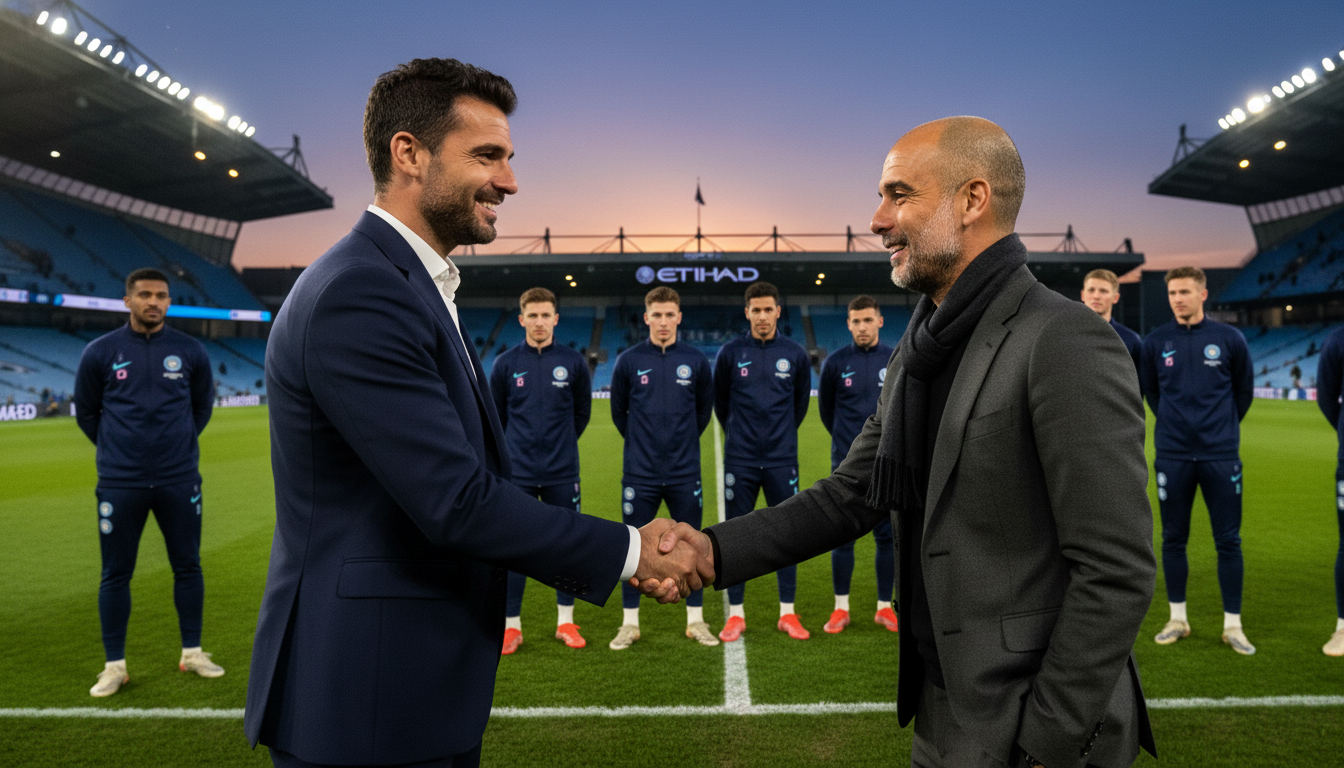
Enzo Maresca Set to Replace Pep Guardiola at Manchester City, Reports Say
Enzo Maresca linked to Manchester City in reported three-year agreement as Pep Guardiola reportedly plans to leave after a decade, sources say on May 19, 2026.


Pep Guardiola’s future at Manchester City has been the subject of intense speculation, with multiple outlets reporting that he will step down at the end of the season and Enzo Maresca poised to succeed him. The reports, amplified by a May 19, 2026 post from football journalist Fabrizio Romano, say City have reached a verbal agreement with Maresca on an initial three-year contract. City’s long-term planning and the possible end of Guardiola’s ten-year tenure at the Etihad form the backdrop to what would be a major managerial transition for one of Europe’s leading clubs.
Reports: Guardiola to leave at season’s end
According to multiple media reports, Pep Guardiola will depart Manchester City when the current campaign concludes, bringing to a close a decade in charge. Those reports characterise the move as the end of an era and indicate that discussions have accelerated in recent weeks as the season reaches its decisive phase.
The club has not issued a formal confirmation at the time of the reports, and City’s official stance remains undisclosed in public statements. For now the narrative rests on media sources and a high-profile report from Fabrizio Romano, leaving supporters and stakeholders awaiting an official announcement.
Fabrizio Romano reports three-year agreement for Enzo Maresca
Fabrizio Romano published a post on May 19, 2026 saying that Enzo Maresca has a “total verbal agreement” with Manchester City and that a three-year deal is in place. Romano’s bulletin described the arrangement as an initial contract and framed Maresca as the leading candidate to replace Guardiola, language that has been echoed across outlets since the tweet.
The report specifies the form of agreement as verbal rather than fully signed paperwork, which is a common step in high-profile managerial appointments but not the same as a completed contract. That distinction leaves room for formalities to be completed in the coming days, including any final terms, announcement timing, and integration plans within the club’s football structure.
Maresca’s pathway to the Etihad: coaching resume
Enzo Maresca’s coaching CV has strong links to Manchester City and English football. He spent a season in charge of City’s Under-23 side before a first senior head-coaching role at Parma, and later returned to the Etihad to serve as an assistant to Guardiola, developing within the club’s coaching ecosystem.
Maresca moved to manage Leicester City for the 2023–24 season, and he subsequently accepted the managerial role at Chelsea the following summer. His time at Stamford Bridge lasted 18 months before he departed at the start of this year, leaving him out of work when the recent reports of a City agreement emerged.
Those experiences give Maresca a mix of youth development knowledge, exposure to Guardiola’s methods, and senior-level leadership in the English game. That combination helps explain why some within the football industry regard him as an internal-style candidate capable of preserving continuity while bringing his own voice.
Guardiola’s decade: 20 trophies and a lasting legacy
Pep Guardiola’s decade at Manchester City transformed the club into a dominant force in English and European football, a spell that, by the reports’ accounting, yielded 20 trophies. The haul includes six Premier League titles — with the possibility of a seventh still in contention during the season of these reports — three FA Cups, five League Cups and multiple domestic and international honours.
City’s trophy cabinet under Guardiola also features Charity Shields and a set of continental and global accolades cited by the reports: the Champions League, the UEFA Super Cup and the FIFA Club World Cup. Beyond silverware, Guardiola’s tenure is widely associated with tactical innovation, squad investment, and a consistency of performance that established new benchmarks for the club.
Should the departure be confirmed, it will prompt reflection across football about Guardiola’s impact at City and on the modern coaching profession. His methods, recruitment strategy and the playing identity he instilled are likely to be central points in any appraisal of the decade he spent at the Etihad.
Transition logistics and immediate priorities for the incoming manager
If the reports are borne out, Manchester City will face a delicate transition from Guardiola to a new manager tasked with maintaining standards in a squad laden with elite talent. An incoming coach will confront immediate calendar-driven decisions, including navigating the summer transfer window, preparing for pre-season, and setting tactical direction for a team accustomed to a particular style of play.
Preserving continuity while asserting new management structures is a common managerial challenge in such handovers, and the reported three-year initial contract indicates City may be seeking a blend of stability and medium-term planning. The pace of the transition will depend on the finalisation of the agreement, the timing of an official announcement, and the degree to which existing staff are retained or adjusted to fit the new regime.
There will also be scrutiny over backroom appointments, recruitment alignment and player buy-in, all areas that can determine whether a managerial succession preserves City’s competitiveness domestically and in Europe. For supporters and analysts alike, how the new manager balances respect for Guardiola’s framework with necessary changes will be a defining storyline.
Potential sporting and cultural challenges for Maresca at City
Stepping into Guardiola’s role carries heightened expectations and unique pressures given the club’s recent standard of success. The incoming manager will be judged on immediate results, ability to manage star personnel, and capacity to perform in the Champions League while meeting the relentless demands of the Premier League.
Integrating into Manchester City’s existing culture — which combines heavy investment, high-performance targets and a coaching philosophy shaped over a decade — will require diplomatic management of player relationships and strategic control of football operations. The leadership will need to set clear priorities quickly, balancing the need to reassure a demanding fanbase with the practicalities of squad management and long-term development.
Maresca’s prior connection to City and familiarity with the club’s methods could ease this process, but replicating Guardiola’s on-field coherence and off-field authority remains a substantial task. Observers will watch closely how he articulates his vision and whether he opts for evolutionary changes or a clearer stylistic shift.
Early reactions: supporters, players and the transfer market
Initial reactions to the reported appointment are likely to vary among fans, pundits and players, reflecting both hope for continuity and questions about whether a relatively young manager can sustain the club’s high standards. Supporters who value the City style may see Maresca as a logical internal successor, while critics will underline the scale of the challenge ahead.
For the squad, managerial change can prompt a reassessment of roles and futures, with some players seeking reassurance while others may view the switch as an opportunity. The summer transfer window will serve as an early barometer for the incoming manager’s authority and the club’s strategic direction, particularly around signings that complement a new tactical approach.
In the broader market, clubs and agents will monitor the situation for knock-on effects, as a managerial appointment at a club of City’s stature can influence player valuation and recruitment narratives across Europe. How City approaches those decisions in the weeks after any official confirmation will shape expectations for the coming season.
The reported verbal agreement that emerged on May 19, 2026 marks a potentially decisive moment for Manchester City’s next chapter, but official confirmation and contractual signatures remain the next steps before a transfer of responsibility takes effect. Supporters, players and observers will now turn their attention to the club for formal announcements and the practical arrangements that follow such a significant managerial transition.