Espanyol 1-1 Real Sociedad: Óskarsson strike canceled by Roberto Fernández in hard-fought draw
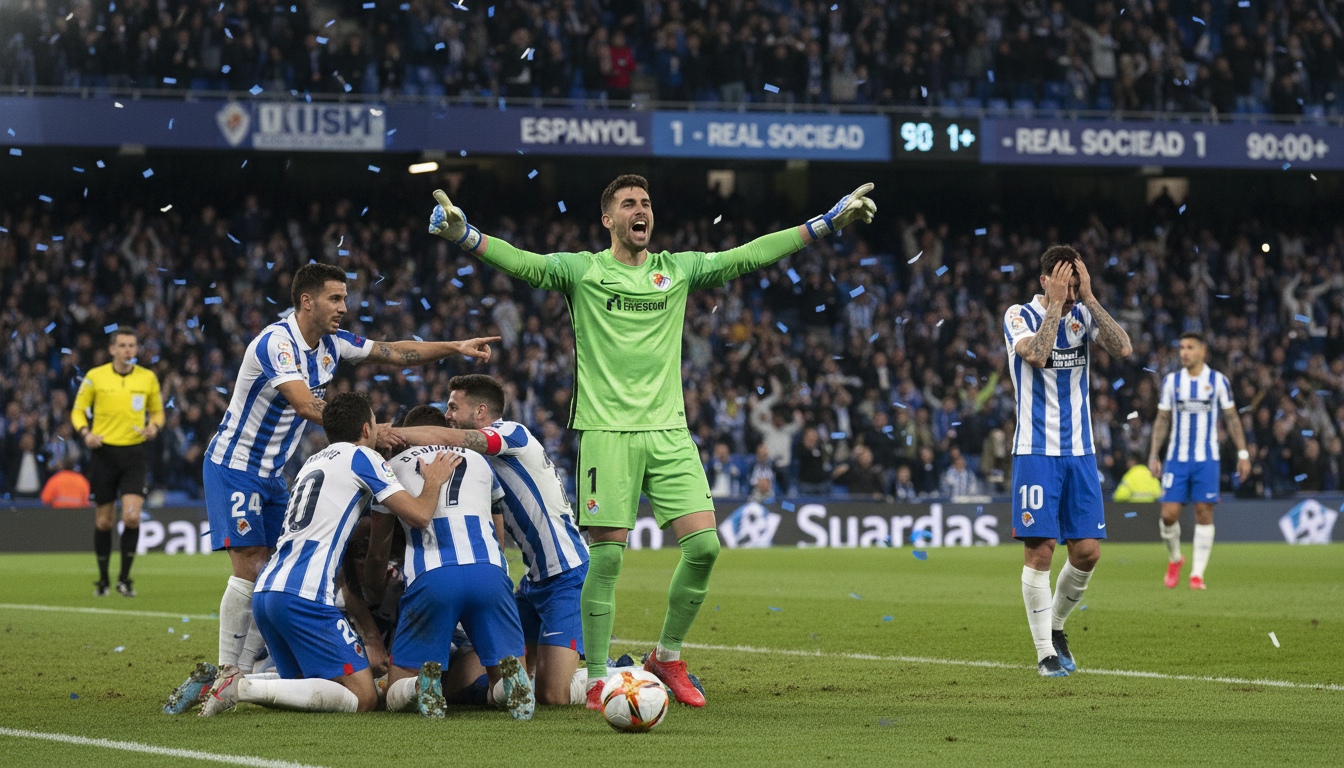
Espanyol 1-1 Real Sociedad ended level after Orri Óskarsson put Sociedad ahead and Roberto Fernández restored parity, in a match marked by stoppages, bookings and late chances.


Espanyol 1-1 Real Sociedad finished level after a first-half opener from Orri Óskarsson was cancelled out by Roberto Fernández in the second half, producing a draw that leaves both teams with mixed returns. The encounter was punctuated by injuries, a series of tactical substitutions and a number of set-piece opportunities that tested both defenses. Espanyol showed resilience to haul themselves back into the game at Montjuïc, while Real Sociedad created several dangerous openings but could not hold their lead. The result will prompt fresh questions for both managers as the season progresses and squad rotation continues to play a central role.
Óskarsson puts Real Sociedad in front
Orri Óskarsson opened the scoring for Real Sociedad with a close-range finish after a well-delivered cross from Sergio Gómez. The goal settled the visitors early and rewarded a period in which Sociedad probed down the flanks to create space in the penalty area. Óskarsson’s strike came from an incisive move that exposed Espanyol’s defensive lines and gave Sociedad the edge heading into the second half. That advantage allowed Real Sociedad to shift into a more controlled tempo as they sought to manage the game from the front.
Espanyol were forced to chase the match after falling behind and adjusted their shape to press higher up the pitch. The home side responded by increasing intensity in wide areas, looking to get crosses into the box and test Sociedad’s aerial organisation. Several early attempts from Espanyol were kept out by timely clearances and goalkeeper saves, illustrating the tight margins in a match dominated by transitional moments. Even with the early deficit, Espanyol maintained belief and continued to probe for openings.
Espanyol fightback and Fernández level
Roberto Fernández produced the equaliser that brought Espanyol back on terms, hooking a close-range right-footed finish into the top corner after an incisive assist from Pere Milla. The goal arrived following a sustained spell from the hosts, who had pushed numbers forward and created pressure from set-piece situations. Fernández’s finish was a clinical response to the momentum Espanyol had built, and it ultimately rewrote the balance of the contest. The leveller injected renewed intensity into the closing stages as both sides sought a decisive breakthrough.
Following the equaliser, Espanyol continued to press and fashion chances through combinations involving Jofre Carreras and Edu Expósito. Real Sociedad, despite losing their lead, did not sit back and retained the capacity to threaten on the counter through players such as Luka Sucic and Job Ochieng. The match flowed end-to-end at times, with neither team managing to establish extended dominance after the restart. Coaches from both camps made tactical tweaks aimed at securing a crucial three points that neither side ultimately achieved.
Tactical changes and substitutions that shaped the game
Both managers used eleven substitutions across the fixture to respond to fatigue, injuries and tactical needs, reshaping their midfields and forward lines during the second half. Espanyol introduced Pere Milla and Tyrhys Dolan to add fresh attacking impetus, while Roberto Fernández and later Kike García provided additional options inside the box. Real Sociedad’s double change saw Mikel Oyarzabal brought on alongside Aritz Elustondo as the visitors chased control and attacking balance. Those changes shifted match dynamics, with fresh legs influencing pressing patterns and ball circulation in the final third.
Midfield battles became decisive as the match wore on, with players such as Yangel Herrera and Beñat Turrientes engaging in physical contests to break up play and initiate forward transitions. Espanyol’s Edu Expósito and Jofre Carreras were central to the home side’s combination play, while Sociedad relied on Carlos Soler and Sergio Gómez for creativity. The managers’ willingness to alter personnel underlined the fixture’s importance and the need to manage workload during a congested schedule. Ultimately, the substitutions produced brief periods of control for each side but not the match-defining surge either coach hoped for.
Set-pieces, chances and missed opportunities
Set-pieces played an outsized role in the game, with corners and free kicks generating multiple openings for both teams. Sociedad earned a string of corners that tested Espanyol’s defensive organisation and forced important clearances, while Espanyol also created danger from dead-ball situations led by Ramon Terrats and subsequent deliveries into the box. Several attempts were repelled on the goal line and others sailed narrowly wide, demonstrating how marginal differences decided clear opportunities.
Both goalkeepers were called into action at key moments, denying attempts from close range and reacting quickly to rebounds. Remnants of clearance and goal-line interventions prevented what might have been late winners, and a sequence of blocked shots epitomised the tight defensive work from both back lines. Attacking players on either side produced moments of quality—accurate crosses and near-post rushes—but were undone by last-ditch defending or imprecise finishing. The shared inability to convert certain clear-cut chances ultimately led to the draw.
Injuries, stoppages and disciplinary impact
The contest was interrupted multiple times due to injuries and cautions, with three players notably receiving yellow cards and several stoppages for treatment altering rhythm. Yangel Herrera and Sergio Gómez were both penalised with bookings for fouls deemed to impede counter-movements, and Unai Marrero also collected a yellow as the match grew increasingly competitive. These disciplinary actions affected how both teams approached challenges in midfield and adjusted their tackles to avoid further punishment.
Injuries halted play on several occasions, with Mikel Oyarzabal and Yangel Herrera among those requiring assessment before being able to continue. Kike García and Luken Beitia also required attention after physical exchanges, leading to temporary pauses that disrupted the flow of the game. The fourth official added significant stoppage time to allow for treatments and substitutions, a factor that heightened late-stage tension as both sides sought a decisive goal. The interplay of fouls, bookings and injuries mattered as much as tactical adjustments in shaping the final result.
What the draw means for both teams
A 1-1 draw leaves Espanyol with a valuable point earned through resilience and a late response, but questions remain about their defensive balance and finishing in the final third. The result will be examined in the context of squad rotation and the need to secure more consistent performances at home. For Real Sociedad, the draw reflects both attacking promise and defensive vulnerability; the visitors created high-quality opportunities but failed to preserve a lead that could have yielded three points.
Coaches will review footage to identify moments where concentration lapsed and where substitutions could have produced a different outcome. Both clubs have players returning from rotation and injury concerns to manage, and this match underlined the fine margins separating victory from stalemate. As the campaign continues, the point apiece will be weighed against upcoming fixtures and the imperative to maintain momentum while protecting player fitness.
Espanyol 1-1 Real Sociedad was a competitive fixture that combined moments of individual quality with collective defensive work, leaving supporters with plenty to discuss as both sides turn their attention to the next round of fixtures.