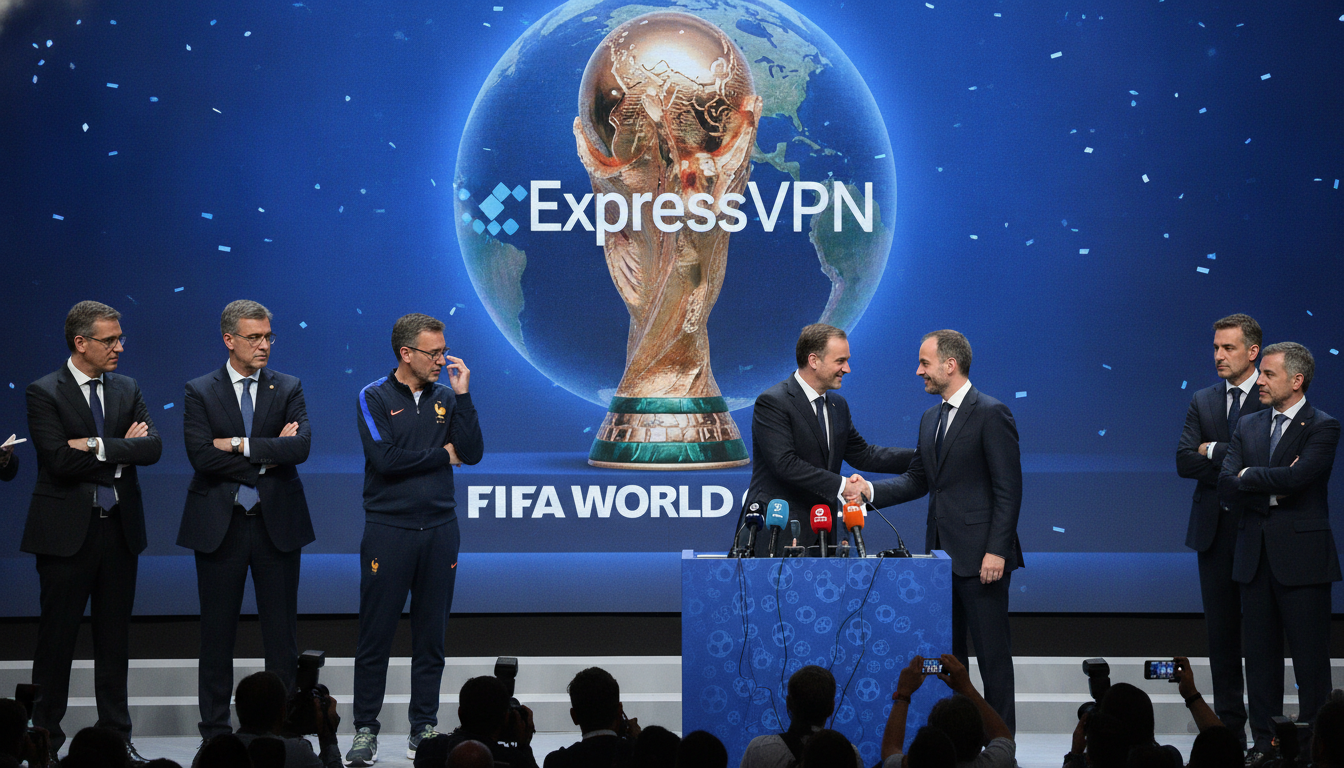
FIFA names ExpressVPN official World Cup sponsor, triggering protests from LaLiga and broadcasters
FIFA’s decision to add ExpressVPN as an official World Cup sponsor has sparked a dispute between rights holders and broadcasters, with LaLiga and French media groups publicly opposing the deal. The ExpressVPN FIFA sponsorship is at the center of concerns that promoting VPN services could hinder anti-piracy efforts and threaten audiovisual rights revenue.


FIFA names ExpressVPN as official World Cup sponsor
FIFA announced the inclusion of ExpressVPN among the roster of official World Cup sponsors, a move designed to broaden the tournament’s commercial portfolio and underline digital-security messaging. The ExpressVPN FIFA sponsorship was framed by organizers as a way to highlight privacy and online security at a global sporting event.
That announcement immediately prompted criticism from major rights holders, who argue that commercializing tools commonly used to bypass regional broadcast restrictions undermines protections for paid content. The clash has escalated into formal correspondence and public statements from top football and media organizations.
LaLiga and Javier Tebas deliver formal complaint to FIFA
LaLiga, led by president Javier Tebas, sent a formal letter to FIFA president Gianni Infantino urging reconsideration of the sponsorship arrangement. In the communication, LaLiga stressed that promoting a virtual private network at a flagship FIFA event sends a damaging signal to the entire football ecosystem.
Tebas and LaLiga contend that the ExpressVPN FIFA sponsorship could exacerbate piracy by normalizing access tools that can be used to evade geo-blocking and paywalls. The league underscores the commercial stakes for Spanish clubs, citing annual losses attributable to illegal viewing and distribution of matches.
Broadcasters and French rights groups raise alarm
French broadcasters and the Association for the Protection of Sports Programs (APPS) joined LaLiga in registering “deep concern” about FIFA’s deal with ExpressVPN. APPS has called on FIFA to ensure its commercial agreements safeguard the integrity, sustainability and market value of competitions and their audiovisual exploitation.
Broadcasters argue that sponsoring a brand associated with anonymity services risks weakening enforcement measures and complicating efforts to detect and disrupt illicit streams. The collective response from rights holders in France and Spain has taken the form of coordinated statements and legal scrutiny.
Legal context: Canal+ victories against VPN-enabled piracy
Broadcasters point to recent legal actions as context for their alarm. Canal+ and other European rights owners have pursued litigation and injunctions against intermediaries facilitating cross-border access to content, and earlier cases targeted service providers that enabled unauthorized viewing.
Rights holders note that previous court wins against intermediaries demonstrate the lengths to which broadcasters are willing to go to protect their rights, and they worry a high-profile sponsorship could reverse momentum. Those legal precedents are being cited as evidence that industry attention should remain focused on enforcement, not on promoting tools that can be misused.
FIFA and ExpressVPN defend partnership amid backlash
FIFA has responded by saying it conducted due diligence before finalizing the sponsorship and that the agreement does not harm rights holders. The organization maintains that commercial partnerships are subject to review and that contractual safeguards are in place to protect audiovisual exploitation.
ExpressVPN has also defended its brand, arguing that its service exists to provide privacy, security and internet freedom for lawful users. Company representatives emphasized that they do not endorse illegal activity and that a VPN should be understood as a tool for legitimate privacy protection rather than a way to circumvent the law.
Rights holders quantify economic threat from piracy
LaLiga and its allies have highlighted the scale of the financial impact they attribute to piracy, estimating substantial annual revenue losses for Spanish clubs. The league has repeatedly quantified those losses to underline the urgency of coordinated anti-piracy measures and to argue for policies that protect licensed distribution.
Beyond direct lost revenue, rights holders warn of secondary consequences such as diminished incentives for broadcasters to invest in premium rights and reduced funds available to clubs and competitions. They frame the debate as one about the sustainability of the sport’s business model rather than merely a dispute over a single sponsor.
Industry reaction and potential next steps
The dispute has prompted an industry-wide conversation about the responsibilities of global sports federations when selecting commercial partners. Rights holders insist that the reputational and commercial interests of broadcasters and leagues should be weighted heavily in sponsorship decisions for marquee events.
Observers expect further exchanges between FIFA, rights holders and commercial partners as stakeholders seek to reconcile commercial aims with enforcement priorities. Possible outcomes include contractual clarifications, additional safeguards, or a re-evaluation of the sponsorship if consensus cannot be reached.
Implications for future rights protection strategies
The controversy places renewed focus on how sports organizations and media companies will address technological tools that can be used both legitimately and illegitimately. Rights holders are likely to step up collaboration with enforcement agencies, platform operators and legal partners to adapt anti-piracy strategies to evolving technologies.
At the same time, privacy advocates and consumer groups argue for the legitimate role of privacy-enhancing technologies, insisting that reasonable restrictions should not override civil liberties or lawful use. The intersection of digital rights, commercial sponsorship and content protection is emerging as a defining policy battleground for the next cycle of sports rights negotiations.
Market and reputational risks for all parties
The ExpressVPN FIFA sponsorship has placed reputational risk on multiple stakeholders, from the federations that sign commercial deals to the broadcasters that fund elite competition coverage. Each side faces scrutiny for how it balances commercial revenue against the long-term health of the content marketplace.
Sponsors may also reassess how associations with contentious products affect their own brands, while rights holders will continue to press for commercial arrangements that align with enforcement priorities. The episode may shape how future sponsorships are negotiated and disclosed in major sports events.
The debate over the ExpressVPN FIFA sponsorship illustrates a broader conflict between commercial partnerships and content protection in modern sport, and it is likely to influence how federations, leagues and broadcasters craft sponsorship policies and legal strategies going forward.