France vs Morocco: World Cup quarter-final in Boston spotlights shared history and diaspora links
France vs Morocco in World Cup quarter-final on Friday highlights intertwined post-colonial ties, player migration and club friendships shaping a unique international fixture.


Match preview: France vs Morocco in Boston quarter-final
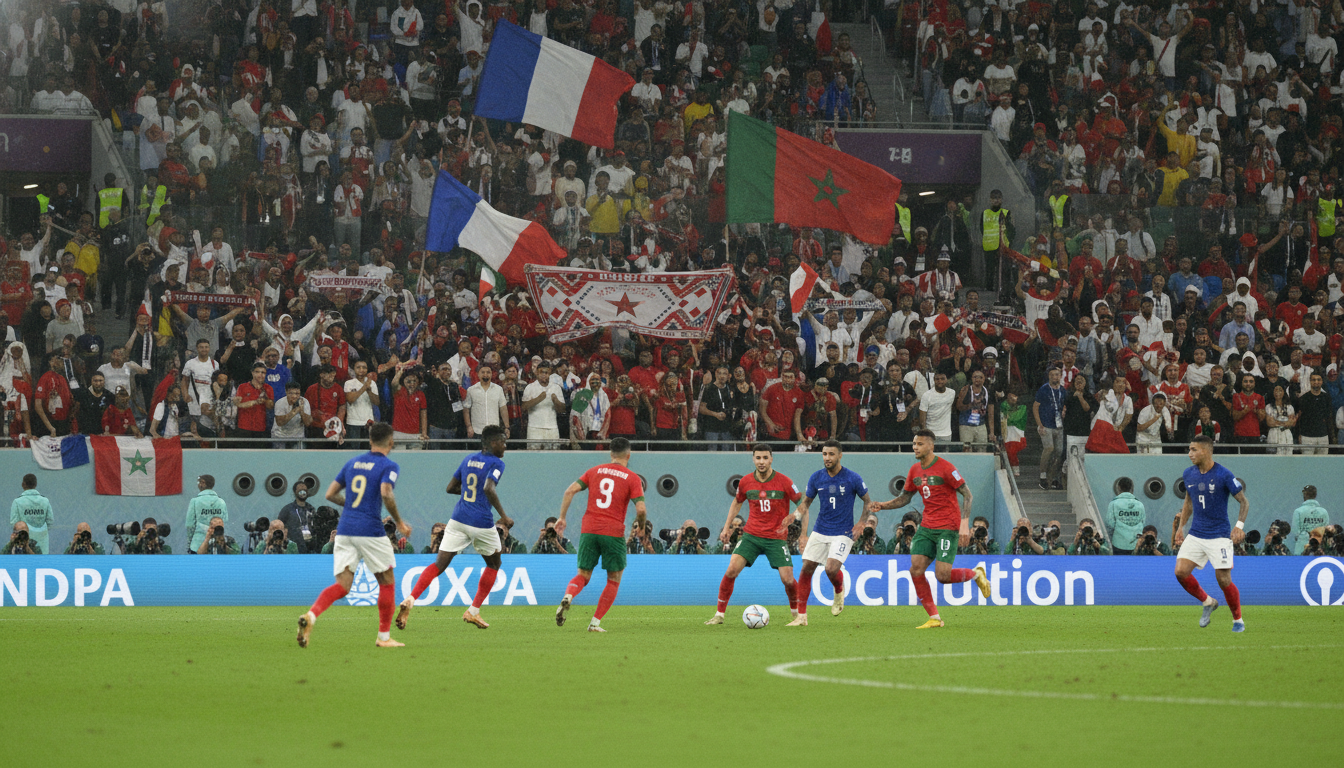
France and Morocco meet in a World Cup quarter-final in Boston, a fixture that carries political history as much as athletic intrigue. The match brings together teams connected by decades of migration, shared language and overlapping football systems. Anticipation has focused not only on the on-field battle but on how the countries’ intertwined pasts animate the occasion.
The contest is scheduled amid heightened attention to security and logistics, yet organizers and supporters hope the North American setting will temper tensions. Boston’s compact stadium atmospherics and large diaspora communities create an environment that can feel more familial than confrontational. That contrast frames how fans, players and officials approach the game.
Historical background: colonial ties and modern relations
Morocco was a French protectorate from 1912 to 1956, a period that established deep institutional and cultural links between the two countries. Those ties persist through language, education pathways and patterns of migration that have connected families across generations. Football has become one of the clearest contemporary expressions of that long relationship.
Post-colonial links are not merely historical footnotes in this fixture; they shape how players, coaches and supporters understand identity and belonging. Educational exchanges and bilateral business ties have maintained a steady flow of people and ideas between Morocco and France. The national teams’ encounter in Boston is therefore also a public moment reflecting that shared history.
Squad composition: France-born players in Morocco’s lineup
Morocco’s squad includes a notable number of players who were born and developed in France before choosing to represent Morocco at senior level. Six members of the team were born on French soil, and several others spent formative years in Ligue 1 or the French youth system. Those pathways underscore Morocco’s deliberate strategy of engaging its diaspora talent as a competitive asset.
This blending of home-based and diaspora talent has given Morocco a varied player pool and tactical adaptability. Players who trained in France bring experiences from top academies and professional clubs, while those developed elsewhere contribute different tactical and physical profiles. The result is a squad that reflects transnational development routes rather than a single domestic pipeline.
Player case study: Ayyoub Bouaddi and dual footballing identities
Ayyoub Bouaddi exemplifies the overlapping identities at play in this match; born and raised in France, he came through Lille’s academy and represented France at youth level before opting for Morocco. His trajectory is emblematic of a growing cohort of young players who navigate national eligibility and personal heritage when deciding their international futures. That personal choice gives added human meaning to the France vs Morocco narrative.
Bouaddi’s selection highlights how national teams now compete for talent in an increasingly mobile world where birthplace, upbringing and cultural affinity do not always align. For Morocco, recruiting players like Bouaddi strengthens the team on the pitch and signals a wider outreach to the diaspora. For France, such departures prompt reflection on youth development and the retention of emerging talent.
Club connections: Mbappé and Hakimi’s friendship reshapes the script
The personal friendship between France captain Kylian Mbappé and Morocco right-back Achraf Hakimi, forged during their time together at Paris Saint-Germain, adds an intimate subplot to the international clash. Their rapport underscores how club football frequently bridges national divides and creates personal ties that survive into the international calendar. Those connections soften the edge of national rivalry without removing the competitive stakes.
On the field, Mbappé and Hakimi remain rivals with distinct roles and responsibilities; off it, their history exemplifies the porous boundaries between club and country in modern football. Teammates who face each other in major tournaments often maintain friendships that receive special attention from media and supporters. In this match, those relationships will be part of the narrative alongside tactical and historical considerations.
Security and staging: Boston’s role in shaping match atmosphere
French authorities have signaled a heavy security presence around the build-up, match and aftermath, reflecting concerns about potential flashpoints tied to the fixture’s high profile. At the same time, the Boston location offers practical advantages: distance from the immediate French-Moroccan political sphere, a sizeable immigrant population, and venues accustomed to international events. Organizers are balancing visible security with efforts to preserve fan mobility and atmosphere.
Local authorities and tournament officials have coordinated to channel supporters into designated fan zones and transportation corridors while minimizing disruption to the city. The goal is to ensure safety without draining the occasion of its celebratory elements. For many spectators, the Boston setting will feel less like a battlefield and more like a communal gathering point for two closely connected diasporas.
Tactical match-up: strengths, weaknesses and key battles
Tactically, France enters the game with a deep squad and high individual quality across attack and midfield, emphasising pace, pressing intensity and creative overloads. Morocco typically counters with disciplined defensive organization, swift transitions and reliance on structured counterattacks. The match will likely be decided by how effectively Morocco isolates France’s creative hubs and how France breaches compact defensive lines.
Key battles include France’s attempts to exploit wide channels against Morocco’s full-backs, and Morocco’s need to win second balls in midfield to feed its quick forwards. Set pieces could prove decisive, given the narrow margins in knockout football. Coaches on both sides will have to weigh substitution options carefully, as fresh legs and tactical switches are often decisive in late stages.
Cultural and social impact: supporters, media and diaspora engagement
Supporters on both sides will deploy national symbols, chants and narratives that draw on shared languages and cross-border family ties. Media coverage will emphasize not just sporting stakes but the human stories of migration, identity and choice that the fixture highlights. Diaspora communities in Boston and beyond will use the match as an occasion to celebrate cultural heritage as well as national pride.
The encounter also raises questions about representation and belonging in sport, as players with multiple eligible nationalities continue to influence international competitions. Fan responses will range from fervent patriotism to a softer, diasporic solidarity that recognizes personal and familial links across borders. The match will therefore carry resonance for many who see it as more than a single game.
Wider implications: precedent for talent pipelines and bilateral football ties
A high-profile meeting such as this can influence how national federations approach recruitment and youth development in the coming years. Morocco’s use of diaspora talent demonstrates one model for expanding a competitive base without relying solely on domestic leagues. France’s sustained production of elite players remains a benchmark, but the flows of talent and allegiance highlight the evolving nature of national team assembly.
The fixture may also affect bilateral football cooperation, from scouting networks to coaching exchanges, as federations reassess how best to nurture and retain talent. Clubs and agents will watch outcomes closely, knowing that tournament visibility can accelerate transfers and career decisions. The match is thus a touchstone for broader trends in global football mobility.
This quarter-final between France and Morocco is more than a knockout tie; it is a mirror to decades of shared history, family ties and sporting interchange. The stadium in Boston will host a contest in which national narratives meet personal stories, and where the outcome will reverberate across communities on both sides of the Mediterranean.