Gara Gombe: Replacing NFF President Ibrahim Gusau Won’t Fix Nigeria’s Football, Says Veteran Administrator
Ahmed Gara Gombe warns replacing NFF President Ibrahim Gusau won’t fix Nigerian football, urging structural reforms and long-term planning for the 2030 World Cup.

Gara Gombe issues blunt warning ahead of NFF board elections
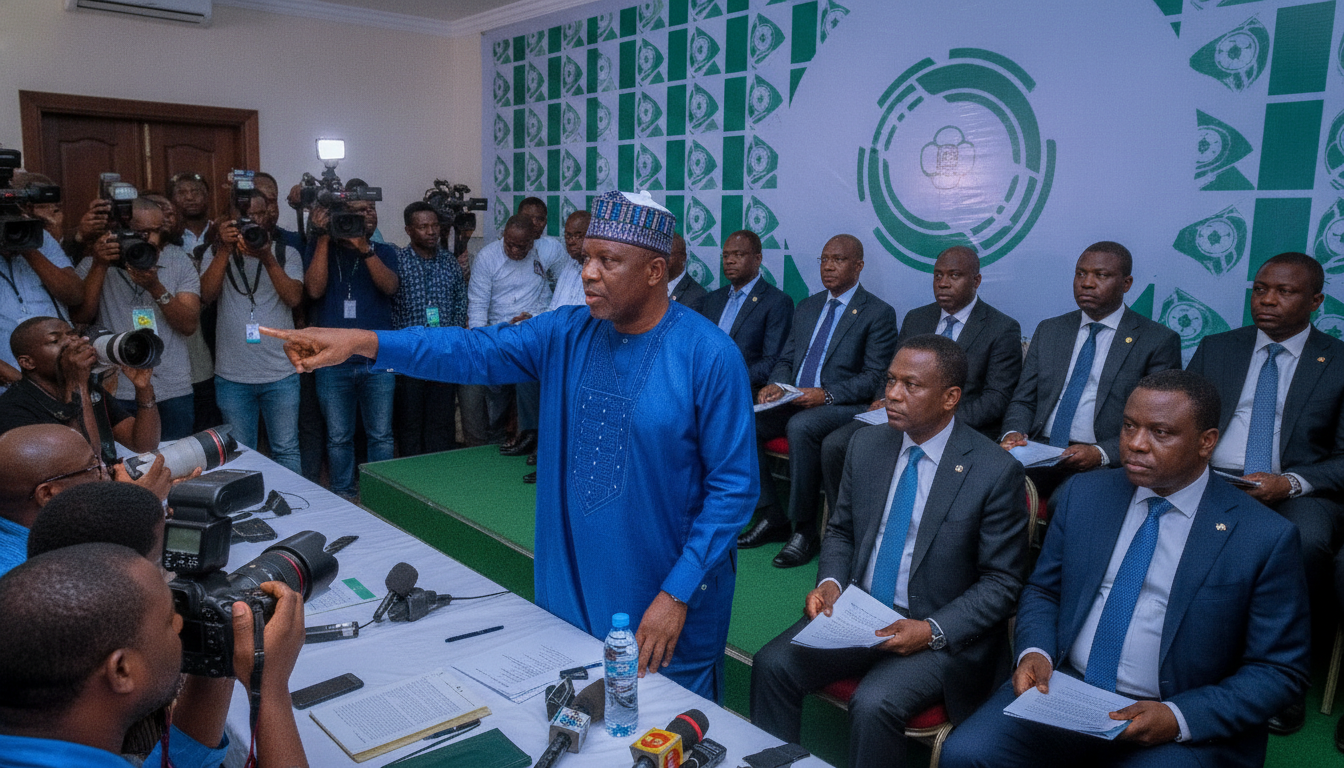
Former Gombe State FA chairman Ahmed Shuaibu Gara Gombe has urged stakeholders to think beyond leadership changes as Nigeria prepares for the forthcoming NFF board elections.
He told reporters and associates that removing NFF President Ibrahim Gusau will not, by itself, resolve the persistent problems facing Nigerian football.
Gara Gombe said the national game has been trapped in a cycle of administrative turnover that has never tackled underlying institutional weaknesses.
A four-decade pattern of election controversy, according to Gara Gombe
Gara Gombe framed the current debate as a long-running pattern that resurfaces at every election, describing decades of disputes, legal threats and acute public scrutiny.
He argued that disagreements and accusations flare during the campaign period only to fade after the new board is installed, leaving systemic issues unattended.
That pattern, he warned, explains why past changes in personnel have not translated into better outcomes on the field or more effective governance off it.
Who shoulders responsibility for World Cup failures: administration or coaching?
The veteran administrator disputed the narrative that places the failure to qualify for the 2026 FIFA World Cup squarely at the feet of the incumbent NFF president.
He pointed out that most coaches who led the Super Eagles during the qualification cycle were appointed before Ibrahim Gusau assumed office, calling for a clearer allocation of accountability.
Gara Gombe emphasized that qualifying for a World Cup is not a short-term project but requires planning that spans multiple years and administrations.
Gara Gombe presses for long-term planning toward the 2030 World Cup
Highlighting timelines, Gara Gombe said preparing for the 2030 World Cup requires foundations laid years in advance, not scramble tactics during qualifiers.
He described World Cup qualification as an eight- to ten-year endeavor that involves youth development, scouting networks, coaching continuity and infrastructure investment.
Accordingly, he urged federations, clubs and government agencies to commit to multi-year programs rather than episodic interventions tied to electoral cycles.
Criticism, hypocrisy and the stakes of public commentary
Gara Gombe criticized what he sees as selective public outrage among stakeholders, saying many voices become loud only when personal interests are affected.
He said newspaper columnists, former internationals and some administrators have contributed to a climate where criticism is often driven by convenience rather than consistent oversight.
The former FA chairman advocated for sustained engagement from all quarters, urging critics to offer constructive proposals and to back reforms through established processes.
Reforms must follow federation statutes and proper procedure
While accepting that the NFF statutes and governance arrangements require reform, Gara Gombe insisted changes should proceed through the federation’s formal mechanisms.
He acknowledged flaws in the current documents but cautioned against ad hoc measures that bypass agreed procedures and risk FIFA intervention.
His position was that durable reform must be institutional, not merely the product of whoever occupies the presidency at a given time.
Electoral mechanics: state FA chairmen and the balance of power
Gara Gombe highlighted the enduring influence of state football association chairmen in shaping NFF election outcomes, a structure dating back to reforms introduced under past administrations.
He suggested that the voting base and electoral rules have consistently produced continuity in leadership selections and that changing personalities does not necessarily alter that dynamic.
This, he argued, reinforces the need for systemic reform of voting structures if stakeholders genuinely want different governance outcomes.
Gusau’s leadership style contrasted with predecessors
Acknowledging differences in leadership approaches, Gara Gombe described Ibrahim Gusau as more conciliatory compared with previous NFF presidents.
He praised Gusau’s composure under pressure but also described him as “too gentle” for an office that often demands robust public engagement and decisive action.
Gara Gombe contrasted that demeanor with remarks attributed to a former president which he judged inappropriate, underscoring his view that tone and conduct matter in football administration.
Infrastructure projects as evidence of progress under the current administration
Gara Gombe pointed to a series of infrastructure initiatives underway as markers of progress beyond immediate match results.
He noted investment in hotel and pitch development at the Moshood Abiola National Stadium in Abuja as examples of tangible work that should factor into evaluations of the federation.
Those projects, he said, reflect a longer view of national football development that should not be overshadowed by electoral turmoil.
The limits of leadership change without systemic overhaul
A central theme of Gara Gombe’s remarks was that rotating administrators within the same systemic framework will likely reproduce past failures.
He argued that without addressing governance weaknesses, development gaps and inconsistent coaching pipelines, any new president will face the same entrenched challenges.
This perspective calls for a dual approach: accountable leadership and simultaneous institutional reform.
The role of coaches, development pathways and continuity
Gara Gombe emphasized that coaching appointments, player development systems and continuity of technical programs are critical to any successful long-term strategy.
He urged that technical planning, not tactical short-term fixes, be the priority for clubs and the federation if Nigeria is to contend for a spot at the 2030 World Cup.
Sustained investment in youth academies, coaching education and domestic league stability must accompany administrative reform for results to follow.
Stakeholders urged to measure progress beyond single outcomes
The former Gombe FA chairman cautioned against the tendency to judge federations solely by World Cup qualification, noting that infrastructure and development programs are equally important indicators.
He encouraged stakeholders to adopt comprehensive performance metrics that account for grassroots growth, facilities, and administrative efficiency.
Such an approach, Gara Gombe suggested, would generate a more balanced conversation about progress and accountability.
Calls for pragmatic engagement from former players and commentators
Gara Gombe appealed to former internationals and media commentators to contribute constructively rather than only criticize when personal ties to power shift.
He argued that experienced figures possess valuable insights and should be integrated into reform efforts through advisory roles or technical committees.
This inclusion, he said, would help bridge the gap between public criticism and practical solutions.
Legal threats and the risk of external sanctions during election cycles
Recalling the pattern of legal challenges surrounding NFF elections, Gara Gombe warned that litigation and threats of FIFA sanctions are recurring disruptions that sap momentum.
He urged all parties contesting positions within the federation to seek resolution through internal channels where possible and to avoid actions that jeopardize Nigeria’s standing with global governing bodies.
The implication was that measured, statute-driven reforms reduce the likelihood of external interference and protect the sport’s broader interests.
Conclusion
Gara Gombe’s message to Nigeria’s football community is straightforward: change of personnel alone will not deliver the ambitions many stakeholders seek.
He called for patient, structured reforms, technical continuity and realistic timelines as the only reliable path toward renewed competitiveness and sustainable development.
If implemented, those measures could shift the conversation from who leads the federation to how the game is run for the long term.