Egypt penalty shootout sees Pharaohs beat Australia 4-2 to reach World Cup last 16
Egypt penalty shootout clinches a 4-2 victory over Australia after a 1-1 draw, sending the Pharaohs into the World Cup last 16 with a composed, clinical spot-kick display. (latimes.com)


Hassan’s message steadies the side
Egypt’s coach Hossam Hassan delivered a forceful talk at the end of extra time, urging his players to narrow their focus to the single act of striking the ball.
He told them to "let that curtain drop" on everything else and to concentrate only on their penalty kick, a message he said was meant to remove any lingering doubt or pressure. (scmp.com)
Hassan, a former prolific international striker with extensive experience under pressure, has drawn on his playing career to prepare Egypt for high-stakes moments.
His intervention was credited inside the dressing area and by players after the match as a turning point in how the penalty sequence was approached. (scmp.com)
The coach’s calm but urgent instructions were visible in the composure of the takers, who approached their kicks with little hesitation and high conviction.
That disciplined mindset proved decisive when the shootout began, and the players executed the plan to the letter under intense stadium lights. (scmp.com)
Salah’s Panenka becomes the headline moment
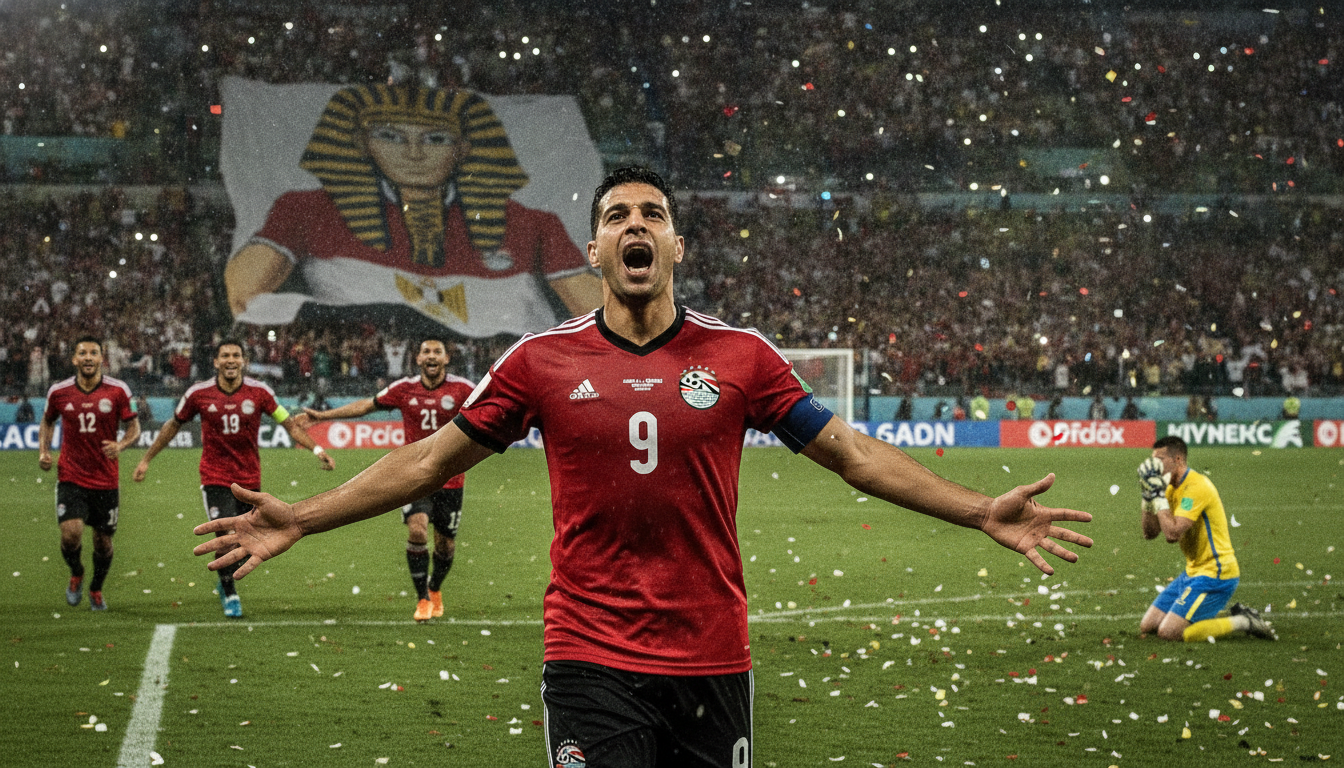
Mohamed Salah stepped up during the shootout and executed an audacious Panenka, a cheeky chip down the centre that drew gasps and applause.
The captain later said he wanted to create a memorable moment and believed that if anyone in the side was going to pull off such a kick, it should be him. (goal.com)
Salah’s strike was part of a flawless four-for-four display from Egypt from the spot, and it helped deliver a psychological blow to the Australian side.
Television and social media instantly replayed the moment, with commentators noting the risk and the calm necessary to carry it off in that situation. (goal.com)
The Panenka also crystallised the narrative of the evening: experience and nerve prevailing in a match that had swung between awkward moments and tight moments of technique.
Salah’s role as both leader and match finisher underlines why he remains the linchpin of Egypt’s attack heading deeper into the tournament. (goal.com)
The match’s decisive phases: Ashour and the own goal
The game itself was settled in regular time by a pair of contrasting events, with Emam Ashour breaking the deadlock in the 13th minute with a headed finish. (rg.org)
Australia responded in the second half when Mohamed Hany’s intervention deflected into his own net to level the contest, a rare and costly mistake that shifted the balance.
From there the match tightened, and neither side could force a winner through the remainder of 90 minutes or in extra time, setting the stage for spot-kicks. (latimes.com)
The encounter at AT&T Stadium in Arlington was physical and stretched by stops and substitutions as both teams searched for a late breakthrough.
Extra time saw both benches weigh risks and the possibility of conserving legs for a shootout, but ultimately the match moved to the lottery of penalties. (latimes.com)
Penalty sequence: precision and two Australian misses
When the shootout began, Egypt converted their first four attempts with clinical technique and steady run-ups, leaving Australia trailing. (skysports.com)
Australia’s hopes were dented when Harry Souttar sent one penalty over the bar and Lucas Herrington struck the crossbar, errors that proved decisive as Egypt did not falter.
The decision by Australia to introduce goalkeeper Mathew Ryan late in extra time drew scrutiny after he failed to stop any Egyptian efforts during the shootout. (skysports.com)
Egypt’s takers showed varied approaches from confident drives to the audacious chip from Salah, but all demonstrated the controlled execution Hassan had preached earlier.
That unified composure underlined a planning process that included psychological preparation and specific guidance about focusing only on the kick itself. (scmp.com)
What the victory means for Egypt’s tournament run
The result marks a milestone for Egypt: their first World Cup knockout victory in the modern era, and a continuation of the momentum they built through the group stage. (bleacherreport.com)
Egypt’s progress underlines a broader tournament narrative in which the team combined defensive organisation with moments of attacking invention to reach the last 16.
The win gives the Pharaohs a chance to test themselves further and offers a confidence boost that could prove crucial against a higher-ranked opponent. (bleacherreport.com)
For the players and coaching staff, the breakthrough has both immediate and symbolic value, signalling that Egypt can manage knockout pressure and finish games when it matters most.
That shift in belief could be as important as any tactical tweak made by Hassan in the days that follow. (bleacherreport.com)
Questions for Australia as campaign ends
Australia’s exit leaves questions about substitution choices and penalty preparation, particularly the decision to replace the starting goalkeeper before spot-kicks. (skysports.com)
Coach Graham Arnold’s successor in the tactical debate faces scrutiny over whether the late changes disrupted rhythm or were a calculated gamble that simply did not pay off.
Supporters and analysts will dissect the match footage to determine whether the selection and order of penalty takers exposed avoidable vulnerabilities. (star-telegram.com)
Despite the loss, Australia showed resilience in reaching the knockout phase, but the shootout defeat will prompt an early offseason review ahead of next year’s international calendar.
There will also be focus on the younger players who took big responsibility under pressure and on how the team rebuilds from here. (sydneydispatch.com)
Egypt now await the winner of the Argentina versus Cape Verde tie to determine their opponent in the last 16, a match scheduled as part of the tournament’s planned Round of 16 fixtures. (fifa.com)
The victory by penalties was a study in preparation, composure and psychological management, delivered under the glare of a global stage.
Whether Hassan’s approach becomes a blueprint for other teams will depend on how far Egypt can carry this mixture of calm leadership and technical confidence as the tournament progresses. (scmp.com)
Egypt showed on Friday night that they can withstand pressure and convert chances when it matters, and they will travel forward into the last 16 buoyed by a hard-won and historic success.