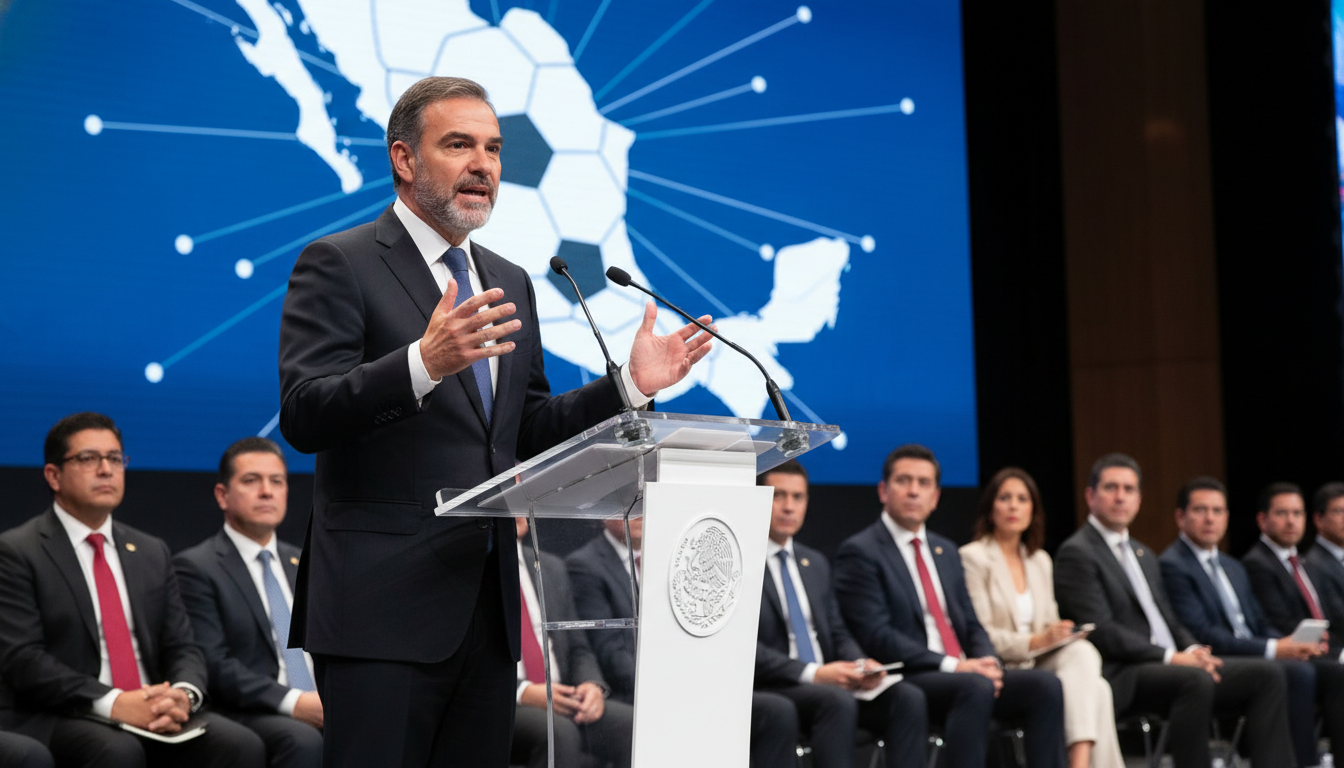
Tebas Urges Mexican League to Centralize Broadcasting Rights to Build a Stronger Brand
Javier Tebas called on Mexican football leaders in Mexico City to centralize broadcasting rights, arguing that a unified audiovisual strategy is essential to strengthen the league’s brand and commercial position. The LaLiga president made the remarks during the launch of the "Legends" exhibition alongside Hugo Sánchez and directly referenced Spain’s centralized model as a driver of growth and international recognition. Tebas emphasized that collective control over TV and streaming rights, along with a clear international strategy, is a prerequisite for Mexico to elevate its domestic competition on the global stage.


Tebas Urges Mexican League to Centralize Broadcasting Rights
Javier Tebas told Mexican football stakeholders that centralizing broadcasting rights is the single most important step for the domestic league to grow its profile. He argued that when a competition owns and markets its audiovisual package collectively it gains a consistent public image and greater negotiating power. Tebas warned that reluctance and fear among some clubs and investors are natural, but said resisting centralization will limit long-term brand building.
He framed the proposal as a strategic imperative rather than a punitive reform, noting that a unified rights policy can increase revenue and enable coordinated marketing. The call came during public remarks in Mexico City, where Tebas linked the audiovisual strategy to broader efforts to professionalize league management. He urged Mexican clubs and league officials to consider a collective model to compete more effectively at regional and global levels.
LaLiga’s Centralized Model and Premier Influence
Tebas pointed to LaLiga’s own shift toward centralization as evidence of the model’s efficacy, noting that Spain moved to unified rights sales in the mid-2010s. He also referenced the Premier League’s long-standing practice of collective rights distribution as an instructive precedent. Both leagues, Tebas said, have leveraged centralized sales to create stable, recognizable competitions that attract fans and investors alike.
According to Tebas, LaLiga’s central approach allowed it to professionalize commercial operations and present a single brand identity to international audiences. He framed centralization as a tool for leveling the playing field commercially and for making club brands part of a larger competition narrative. The comparison to the Premier League was intended to show how consistent presentation and distribution can amplify the value of individual clubs.
Brand Identity and Collective Marketing
A central theme in Tebas’s remarks was the importance of a common brand identity for the league as a whole. When rights are sold collectively the competition can invest in shared marketing, production standards, and global storytelling that benefit every club. Tebas suggested that a strong league brand makes clubs more recognizable, which in turn helps sell sponsorship, media rights, and international tours.
He said that clubs operating in isolation often undercut one another’s commercial potential by fragmenting broadcast windows and presentation quality. By contrast, a coordinated audiovisual strategy creates predictable viewing experiences and enables the league to negotiate higher fees with broadcasters and platforms. Tebas argued that the cumulative effect of collective marketing outweighs short-term losses some clubs might fear.
International Matches and FIFA Negotiations
Tebas also discussed LaLiga’s pursuit of international fixtures and the ongoing dialogue with FIFA on rules governing matches played outside the home country. He noted that LaLiga continues to explore staging games abroad following high-profile experiments such as the proposed Miami match, and that Mexico is a candidate market for future overseas fixtures. Tebas said clarifying FIFA’s regulatory framework is critical before more regular international fixtures are scheduled.
The LaLiga president highlighted that a clear regulatory regime would help leagues plan logistics, protect competitive integrity, and secure commercial returns. He urged FIFA to provide transparent guidelines for exceptional overseas matches so federations and leagues can evaluate the risks and benefits. Tebas presented international fixtures as a complement to broadcasting centralization, amplifying the league’s brand in target markets.
Event in Mexico City and Hugo Sánchez Appearance
Tebas delivered his comments in Mexico City at the inauguration of the "Legends" exhibition, where he appeared alongside Hugo Sánchez. The event celebrated Sánchez’s legacy as one of the most prolific Spanish league scorers of the 1980s and a prominent Mexican figure in European football. Tebas used the platform to underscore shared histories between Spanish and Mexican football while promoting structural reforms.
Hugo Sánchez’s presence reinforced the cultural link the two football ecosystems enjoy, with Sánchez’s career at clubs such as Real Madrid making him a natural ambassador for the exhibition. Tebas referenced Sánchez’s achievements to illustrate how Mexican talent has long been part of LaLiga’s story. The public setting gave Tebas an opportunity to press Mexican stakeholders directly on governance and commercial strategy.
Implications for Mexican Football and Next Steps
Centralizing broadcasting rights would require significant institutional changes within Mexican football, including legal agreements, revenue-sharing formulas, and governance mechanisms. Clubs and league authorities would need to negotiate how income is distributed, how production standards are enforced, and how existing contracts are reconciled. Tebas’s appeal places pressure on Mexican stakeholders to assess whether short-term trade-offs could yield long-term commercial and sporting gains.
Potential benefits include higher aggregate media revenue, stronger sponsorship packages, and a more cohesive international profile for the league. However, obstacles are real: clubs accustomed to selling rights independently may resist ceding control, and domestic broadcasters could oppose a shift that alters established agreements. Implementing a central model often requires a transitional plan that balances club autonomy with collective goals, and that work would likely involve legal advisers, federations, and commercial partners.
Practical Steps and Governance Considerations
If Mexican football decides to pursue centralization, clear steps can help manage the transition and reduce disruption. First, stakeholders should commission a transparent audit of current contracts and revenue flows to understand the baseline. Second, a phased approach to central sales can allow clubs to adapt while testing market appetite for a unified product. Third, establishing an independent commercial entity with representation from clubs and the league can provide the governance structure needed to manage rights sales and marketing.
Tebas’s comments implicitly recommended that Mexican football align its commercial strategy with international best practices while tailoring reforms to local legal and market conditions. He noted that fear of change is natural but suggested that careful planning and collective leadership can unlock greater stability and growth. The proposition also raises regulatory questions that national federations and FIFA guidance will need to address.
Mexico as a host for international fixtures presents an additional commercial opportunity but demands regulatory clarity and logistical planning. Tebas recommended continued talks with FIFA to secure a framework for overseas games so that any expansion of the league’s footprint does not undermine competition integrity. For Mexican football, pairing a centralized rights model with targeted international exposure could accelerate brand development if executed responsibly.
Final paragraph
The public appeal from LaLiga’s president places a spotlight on an enduring debate about control, revenue, and brand-building in football, and it challenges Mexican football to weigh collective benefits against entrenched interests.