Soccer Tournament Against Xenophobia Draws 18 Inner‑City Teams in Johannesburg
Anti‑xenophobia soccer tournament in Johannesburg unites 18 teams of children and community groups at Bez Valley Park to push back against hate and division.

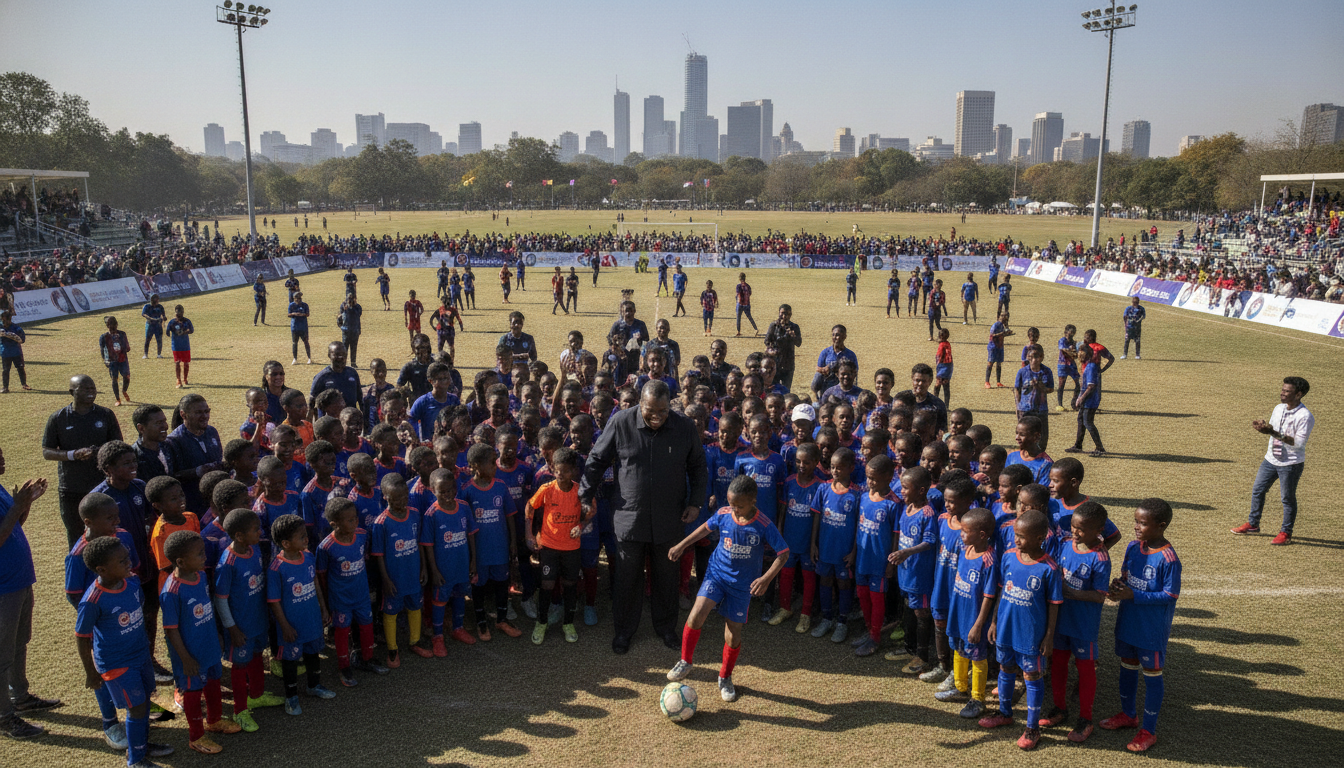
The tournament brought children and residents from inner‑city Johannesburg together for a soccer tournament against xenophobia at Bez Valley Park, combining sport and community arts to challenge anti‑immigrant rhetoric. The event, organised by Jozi Parliament with the Siyafana Sonke Campaign and Kopanang Africa Against Xenophobia, aimed to show solidarity between South Africans and immigrant communities. Organisers said the tournament was both a grassroots response to rising hate speech and a practical effort to create safe spaces for young players. Activities extended beyond football to include art, face painting and drumming that amplified messages of unity.
Community turnout and matchday at Bez Valley Park
The Saturday event attracted families, local volunteers and dozens of young players to Bez Valley Park for a day of fixtures and community programming. Organisers estimated participation from 18 teams representing a broad swathe of inner‑city neighbourhoods. The atmosphere blended competitive spirit with a clear social purpose, as referees, coaches and parents emphasised respect on and off the pitch. Spectators gathered to watch short matches that prioritised inclusion and development over results.
Attendance reflected a cross‑section of the inner city, with banners and chants that underscored the tournament’s political intent. Community leaders used the event to model non‑violent responses to recent anti‑immigrant campaigns and planned protests. Local vendors and volunteers helped keep the event running, offering refreshments and logistical support throughout the day. The visible turnout was intended to send a message to groups seeking to stoke division in Johannesburg’s central districts.
Teams, players and representation across inner‑city neighborhoods
Eighteen teams took part, with squads drawn from Hillbrow, Doornfontein, Jeppestown, Joubert Park, Marshalltown, Berea, Newtown, Yeoville, Observatory and Kensington. Players ranged from 11 to 17 years old and included children of Ghanaian, Nigerian, Basotho, Mozambican, Zimbabwean, Congolese and South African backgrounds. Coaches and team managers said mixing teams from different communities encouraged friendships that cut across nationality and ethnicity. Tournament organisers designed the fixtures to maximize interaction and shared play between groups that might not ordinarily meet on a football field.
Youth participation was central to the event’s strategy, with organisers arguing that early exposure to diverse peers reduces prejudice over time. Several local mentors used halftime discussions to talk about teamwork, respect and community responsibility. Parents reported that children left with new contacts and a stronger sense of belonging in the inner city. The diversity on display was intended to counter narratives that portray immigrants as outsiders rather than neighbours.
Organisers and campaign partners mobilise against hate speech
Jozi Parliament led the sporting element while the Siyafana Sonke Campaign and Kopanang Africa Against Xenophobia provided broader coordination and outreach. Siyafana Sonke, formed by several civic groups, has worked to broadcast messages of love and unity in response to recent calls for mass shutdowns and rallies. Organisers described the tournament as a deliberate, civic alternative to actions they say could inflame xenophobic sentiment. The collaboration drew activists, volunteers and civic organisations committed to peaceful, community‑based solutions.
Community Arts Mobilisation Project (CAMP) contributed messaging materials distributed at the park, while local groups supplied drummers and activity leaders. Keep Left and the Kensington Siyafana group were among those visible on the day, mobilising resources and volunteers. Organisers said the coalition model was chosen to amplify shared values and pool limited resources for greater impact. The event was framed as a practical demonstration that coalitions of local groups can shape public debate through positive community engagement.
Arts, messaging and youth‑focused outreach during the tournament
Beyond the matches, the tournament featured face painting, arts and crafts, and live drumming to create a festival‑like environment that appealed to children and families. CAMP handed out stickers and posters bearing phrases intended to affirm belonging, including slogans translated across languages spoken in the inner city. Visual materials displayed messages such as “South Africa belongs to all who live in it,” “Down with borders,” and “Ubuntu,” aiming to make inclusivity visible. Organisers used art as a non‑confrontational medium to spark conversation and build solidarity.
Events for younger children were deliberately playful to ensure participation felt safe and accessible. Volunteers ran arts stations where children could create banners or paint boards that celebrated cooperation and community. The combination of sport and creative work sought to reinforce the tournament’s lessons in a memorable way. These activities were also designed to offer psychosocial relief for youth exposed to tension in their neighbourhoods.
Organisers’ statements on political scapegoating and community harm
Prince Mthetwa, founder of Jozi Parliament, accused groups such as March and March of stoking divisions between South Africans and immigrants who coexist in the inner city. Mthetwa said the tournament offered a tangible alternative to political scapegoating, calling on leaders to turn attention toward concrete solutions for the country’s challenges. “As Africans we are brothers and sisters,” he said, urging politicians to stop blaming immigrants and to focus on governance and service delivery. His remarks were echoed by other organisers who highlighted the social cost of divisive rhetoric.
Claire Ceruti of Keep Left emphasised the role of counter‑speech and community programming in combating hate. She argued that events like the tournament are essential because prejudice is learned in fractured societies rather than innate. Ceruti said the coalition planned further youth‑centred events to build momentum and sustain outreach on the ground. Those plans, she added, aim to connect sport with civic education and long‑term relationship‑building across communities.
Trauma, family separation and the tournament’s restorative aims
Organisers and local activists raised concern over the emotional toll that xenophobic tension has had on children and families in the inner city. Dean Hutton of the Kensington Siyafana group said some children have experienced trauma related to ongoing tensions and repatriations. Hutton highlighted cases where children born to South African mothers were separated from fathers who are foreign nationals during repatriation efforts. He urged public officials and civic leaders to consider the human cost of xenophobic responses and to prioritise policies that protect children and preserve family stability.
The tournament was framed in part as a healing initiative, creating a space where children could feel safe and valued. Coaches and mentors used the matches to model respectful behavior and to provide emotional support to young players. Organisers noted that collective play and inclusive rituals such as shared chants and team photos can help mitigate the psychological effects of exclusion. They argued that such community interventions are a necessary complement to policy advocacy.
Plans to continue the tournament and measure impact
Because of the number of teams and the scope of activities, organisers said the tournament would continue the following Saturday to complete fixtures and community programming. The planned follow‑up aims to maintain the connections formed on the first day and to deepen engagement with schools, clinics and neighbourhood committees. Organisers also signalled interest in tracking outcomes such as cross‑community friendships and reductions in reported incidents in the neighbourhoods involved. Sustained monitoring, they said, would help translate a single event into a longer‑term effort against xenophobia.
Organisers are exploring partnerships with local NGOs and municipal authorities to widen the tournament’s reach and to secure venues for future editions. They hope to replicate the format in other parts of Johannesburg and to use sport as an entry point for civic education. Funding and volunteer capacity remain constraints, but organisers expressed confidence that visible community support will attract further backing. The coalition’s immediate priority is to finish the fixtures and to consolidate the relationships that were formed on the pitch.
The tournament at Bez Valley Park demonstrated how sport and creative programming can be mobilised to counter hate speech and build community resilience. Organisers and participants left the park with new contacts, painted faces and a shared commitment to inclusion. Plans are in place to reconvene for remaining matches and to expand the initiative in the weeks ahead, using grassroots mobilisation to challenge division and promote unity across Johannesburg’s inner city.