Lennart Karl to Make First Germany Start as Hosts Face Finland
Lennart Karl earns his first Germany start in the friendly against Finland as Nagelsmann tests World Cup options; lineup choices, tactics and squad implications for 2026.

Nagelsmann hands Lennart Karl first Germany start
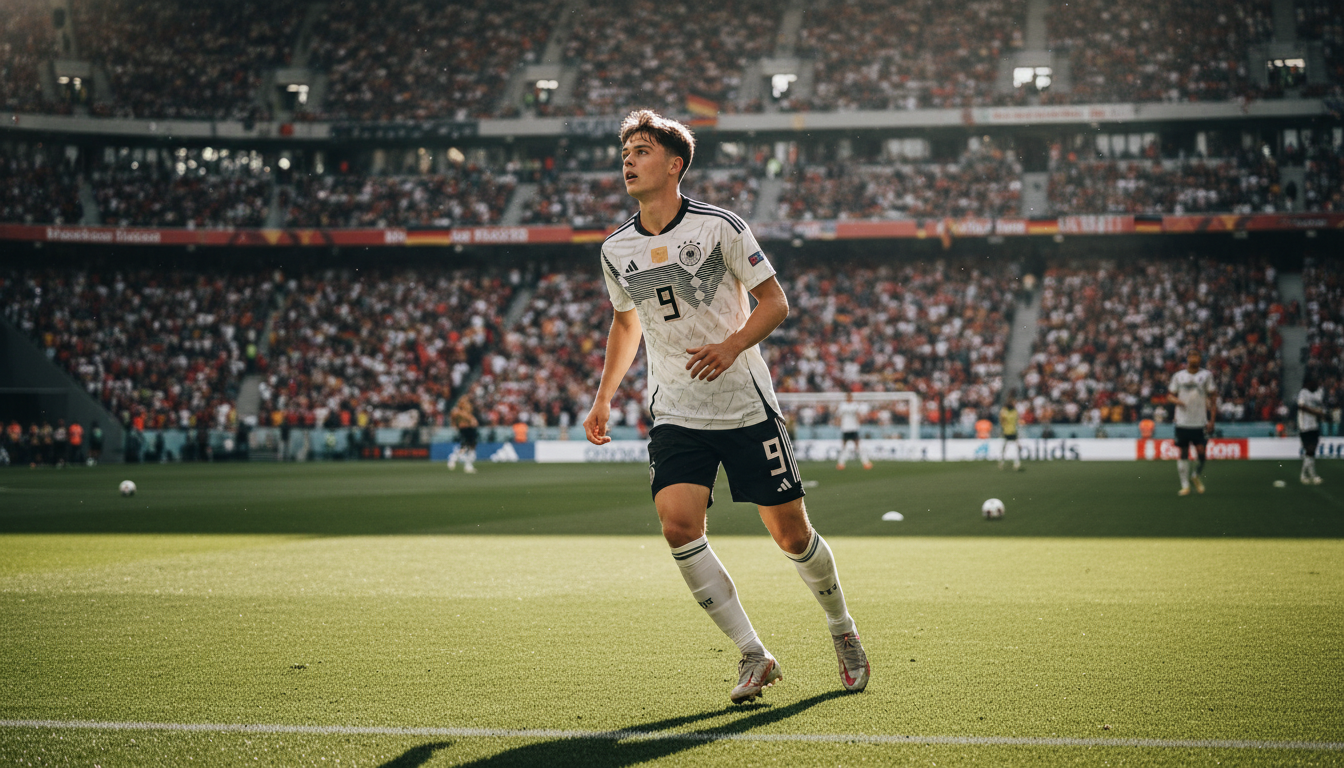
Julian Nagelsmann has selected Lennart Karl to make his first start for Germany in the friendly against Finland, a notable vote of confidence ahead of the 2026 World Cup cycle. Karl’s inclusion in the starting XI is designed to evaluate the teenager in a full international match environment and to see how his club form translates to the national team. Nagelsmann highlighted Karl’s strong training performances in the days leading up to the fixture, signaling that the coaching staff want to broaden attacking options before final squad decisions. The decision to start Karl also underlines a willingness from the coach to accelerate the integration of in-form young players into senior roles.
Karl’s 2025/26 breakthrough at Bayern Munich
Lennart Karl enjoyed a breakout 2025/26 campaign for Bayern Munich, registering a significant contribution across all competitions that earned him national team attention. He finished the season with nine goals and eight assists in 40 appearances, and notably found the net in three consecutive UEFA Champions League matches, including a strike against Arsenal. That sequence of performances at the highest club level has convinced Germany’s staff that Karl merits an extended look in competitive settings. His blend of finishing, movement and willingness to press made him one of Bayern’s more productive attacking players last season.
Starting XI decisions: Nmecha, Pavlovic and Undav confirmed
Alongside Karl, Nagelsmann has confirmed starts for Felix Nmecha and Aleksandar Pavlovic, giving the coaching staff an opportunity to assess combinations and balance in midfield and wide areas. The lineup also includes Deniz Undav leading the attack, a selection that removes any lingering doubts about whether the VfB Stuttgart forward would be given an immediate role. Those choices reflect an approach focused on both testing emerging talent and maintaining continuity with established contributors. By deploying a mix of youth and proven performers, Nagelsmann is trying to calibrate form, fitness and tactical fit ahead of more consequential fixtures.
Deniz Undav’s form and the Stuttgart influence
Deniz Undav enters the match off an outstanding club season that forced his way into World Cup consideration and into Nagelsmann’s starting plans for this friendly. The 29-year-old scored 25 goals and supplied 14 assists in 46 appearances for VfB Stuttgart across all competitions, figures that underline his consistent finishing and chance-creation at club level. Internationally, Undav has shown promise as well, having scored four goals in seven appearances for Germany, which boosts his credibility as a reliable option in attack. His presence on the field offers a different profile to Karl’s, providing a combination of experience and goal threat that can anchor the forward line.
Tactical setup and how Karl fits into Nagelsmann’s plans
Karl is likely to be deployed in a role that leverages his mobility and finishing instincts, with the intention of seeing whether he can consistently affect international matches the way he did for Bayern. Nagelsmann will be watching how Karl links with midfield runners, how he presses opponents in transition and how he copes with the physicality of senior international defenses. The selection of Nmecha and Pavlovic alongside Karl suggests a midfield designed to supply quick, penetrating passes and rotations that create space for forward runs. If Karl adapts quickly to the team’s pressing triggers and positional rotations, he could fast-track into competitive selections for later fixtures.
What this friendly reveals about Germany’s World Cup plans
This pair of warm-up matches before the 2026 World Cup offers Nagelsmann a controlled environment to test personnel and tactical concepts with minimal long-term risk. Starting Karl sends a clear signal that recent club form will be weighed heavily when finalizing the World Cup roster, and that younger players are being seriously considered for substantive roles. The inclusion of established scorers like Undav alongside emerging talents also points to a strategy that values both immediate goal production and the cultivation of future depth. Observers will read these lineup choices as part of a larger evaluation process that balances experience, current form and positional versatility.
Potential scenarios after the Finland friendly
If Karl delivers a composed, effective performance, he could force his way into the conversation for competitive matches beyond these friendlies and strengthen his case for a World Cup place. A standout showing would also complicate selection dilemmas in attack, potentially prompting Nagelsmann to reconfigure rotations to keep form players on the field. Conversely, if Karl struggles to impose himself, the coaching staff will gain useful information about the adjustments he needs when stepping up to senior international fixtures. For players such as Nmecha, Pavlovic and Undav, this match is equally important as it will affect minutes and roles in the run-up to the summer tournament.
This friendly against Finland will serve as an important barometer for Germany’s squad depth, tactical flexibility and readiness for the 2026 World Cup, with Lennart Karl’s first start offering the most immediate storyline. With Nagelsmann balancing the demands of immediate results and long-term squad building, performances on the night will influence selection debates and tactical planning in the weeks ahead before final roster decisions are made.