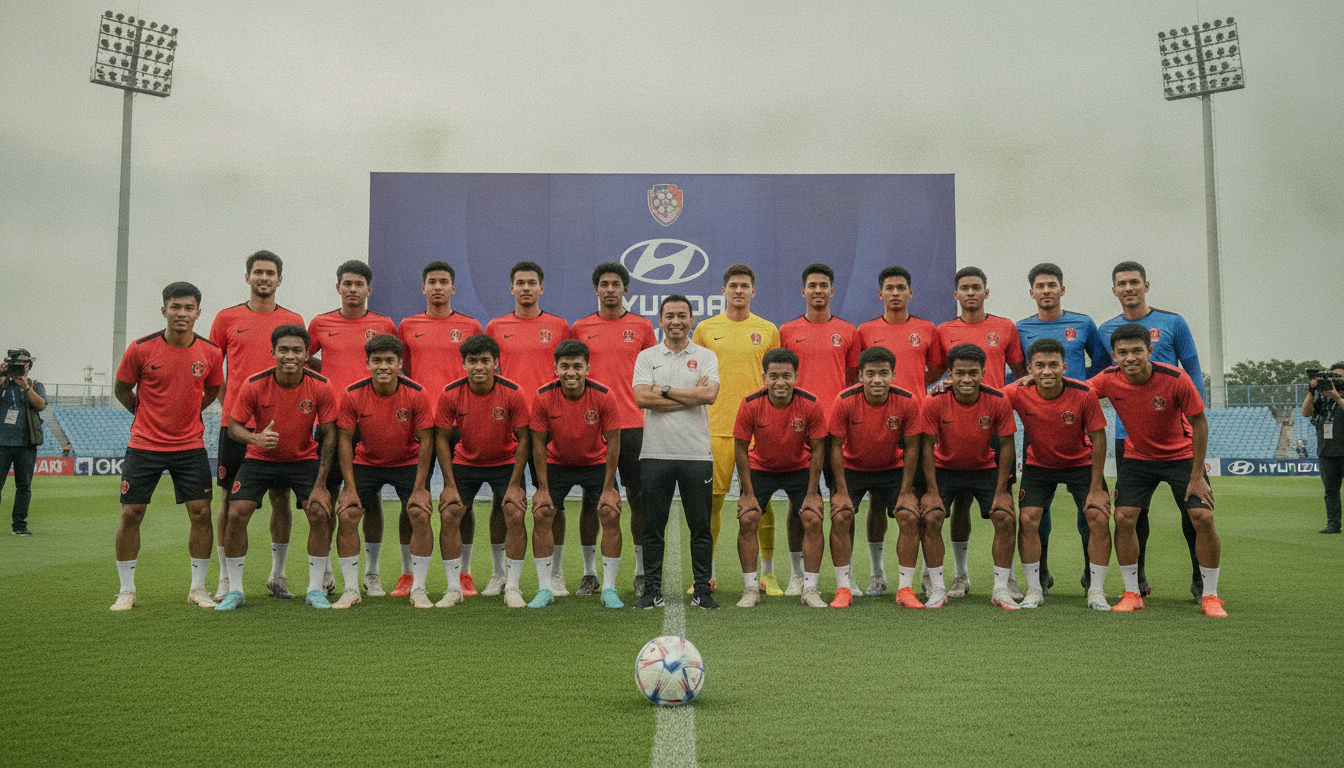
Tan Cheng Hoe names 26-man Malaysia squad for ASEAN Hyundai Cup 2026
Malaysia interim coach Tan Cheng Hoe has called up a 26-man Malaysia squad for a centralised training camp beginning 15 July as the team prepares for the ASEAN Hyundai Cup 2026. The tournament runs 24 July–26 August 2026, and Malaysia will face Myanmar in their opening fixture on 23 July. The selection and camp aim to sharpen tactics and fitness ahead of a congested Group B schedule that includes Thailand, the Philippines, and Laos.

Tan Cheng Hoe names 26-man training squad
Tan Cheng Hoe’s decision to assemble a 26-player training group reflects a compact selection policy intended to accelerate preparation ahead of the ASEAN Hyundai Cup 2026. The interim coach opted for a manageable squad size that allows more minutes in training and clearer tactical work for each player. The list blends established internationals with younger candidates who have impressed in domestic competitions this season.
The Football Association of Malaysia coordinated the announcement and logistical arrangements for the squad, with the centralised camp set to begin in Petaling Jaya on 15 July. That timing gives the team a narrow window to cohere before the regional tournament, which will demand immediate sharpness given Malaysia’s tough Group B draw. Officials expect intense daily sessions and a pair of final practice matches before the tournament opener.
Centralised training camp to start on 15 July in Petaling Jaya
The camp will focus on physical conditioning, set-piece routines, and embedding Tan Cheng Hoe’s preferred tactical framework across the group. Coaching staff have scheduled fitness testing and video analysis to identify the best combinations for the opening rounds. Medical teams will also monitor workload carefully, given the quick turnaround between camp and the first competitive fixture.
Staffing for the camp includes the interim coaching team, fitness and medical personnel, and technical analysts tasked with scouting Group B opponents. The centralised approach is designed to reduce travel stress and ensure consistent training surfaces and recovery facilities. Team management has signalled support for a high-intensity program aimed at matching regional rivals’ physical standards.
Group B composition and tournament context
Malaysia has been drawn into Group B alongside Thailand, the Philippines, Myanmar, and Laos, a section that mixes traditional powers with improving challengers. Thailand remain perennial favourites in Southeast Asian competitions and will provide a stern test of Malaysia’s plans. The Philippines and Myanmar bring physicality and tactical variation, while Laos are capable of upsetting the status quo when well organised.
The ASEAN Hyundai Cup 2026 will run from 24 July to 26 August, presenting a compressed international window that tests squad depth and adaptability. Malaysia’s schedule will require rotation and contingency planning for injuries or suspensions. Progression from the group stage will hinge on consistency across multiple matches spaced closely together.
Regional rivalries and recent form will shape expectations inside Group B and influence how Tan Cheng Hoe selects and manages his squad. Each opponent arrives with its own tactical identity, and Malaysia’s preparation will need to reflect those differences without losing the team’s core playing principles. Matchplanning will therefore emphasise both opponent-specific strategies and the maintenance of a coherent national identity on the pitch.
Tactical objectives and squad balance
Tan Cheng Hoe’s immediate tactical task is to establish a balance between defensive stability and attacking fluidity, given the short preparation period. The coaching staff will likely prioritise a compact defensive structure that can transition quickly into wide attacks. Set pieces and transitional moments are expected to feature prominently in training as potentially decisive factors in tight matches.
Squad balance will be assessed across midfield control, wing play, and the management of goal-scoring opportunities. With only a limited timeframe to instil complex patterns, coaches will aim for clarity of roles and simple, repeatable attacking sequences. Defensive organisation, pressing triggers, and the responsibilities of full-backs in both defence and support of attacks will be key discussion points throughout the camp.
Bench strength will also be a crucial consideration as the tournament’s schedule may demand tactical substitutions and specialist roles. The 26-player grouping allows for a degree of flexibility while still keeping the group small enough for intensive preparation. The coaching staff will watch for players who can offer multiple positional solutions, giving Tan Cheng Hoe options without disrupting overall cohesion.
Selection dilemmas and players to watch
Selecting 26 players inevitably creates tough choices, particularly where experienced veterans compete with promising youngsters for limited places. The interim coach must weigh international experience against current form, and the coaching staff will monitor fitness levels closely before finalising matchday squads. The pressure of regional competition often rewards players who combine composure with consistency.
Several members of the wider national pool are expected to compete for starting roles based on recent domestic performances and prior international exposure. Versatility will be prized, with multi-role midfielders and adaptable defenders offering the most tactical flexibility. Emerging talents from the Malaysian league system also have the chance to stake a claim during the centralised camp if they respond quickly to the coaching demands.
Recovery and injury prevention will be another factor affecting who makes the matchday selection. With the first competitive fixtures arriving soon after camp begins, players must demonstrate readiness in a compressed timeframe. Management has indicated that late changes remain possible up until squad registration deadlines if fitness concerns arise.
Fixture specifics and Malaysia’s opening match against Myanmar
Organisers have scheduled Malaysia’s first match against Myanmar for 23 July 2026, a day before the general tournament window of 24 July–26 August begins. That sequence means Malaysia will effectively start competitive action immediately after the camp, increasing the importance of having a settled game plan. The initial fixture will set the tone for Malaysia’s campaign in Group B.
The narrow gap between camp start and the opening match increases the premium on quick tactical assimilation and match fitness. Coaches will calibrate training intensity to avoid fatigue and aim for peak sharpness on matchday. The opening match presents an early opportunity to secure momentum, which can be decisive in a tightly contested group stage.
Match preparation will include opponent-specific scouting and simulated match situations designed to replicate Myanmar’s likely approach. While the team must prepare broadly for all Group B opponents, the immediate focus in the coming days will be on the first game’s personnel decisions and tactical nuances. A positive result in the opening fixture would provide breathing room as the tournament progresses.
Malaysia will need to manage player workloads carefully across the tournament window to maintain form through the later rounds. Rotating the squad while preserving strategic consistency will be central to the coaching plan. The combination of a short preparation period and a compact fixture list places a premium on smart, evidence-based management.
Malaysia’s interim coaching set-up will be judged on both short-term performance in the ASEAN Hyundai Cup and the team’s development under a constrained timeline. The 26-man Malaysia squad and the Petaling Jaya training camp represent the first clear steps in a campaign that carries regional significance. The next few weeks will test the squad’s cohesion, tactical clarity, and resilience ahead of a challenging Group B schedule.