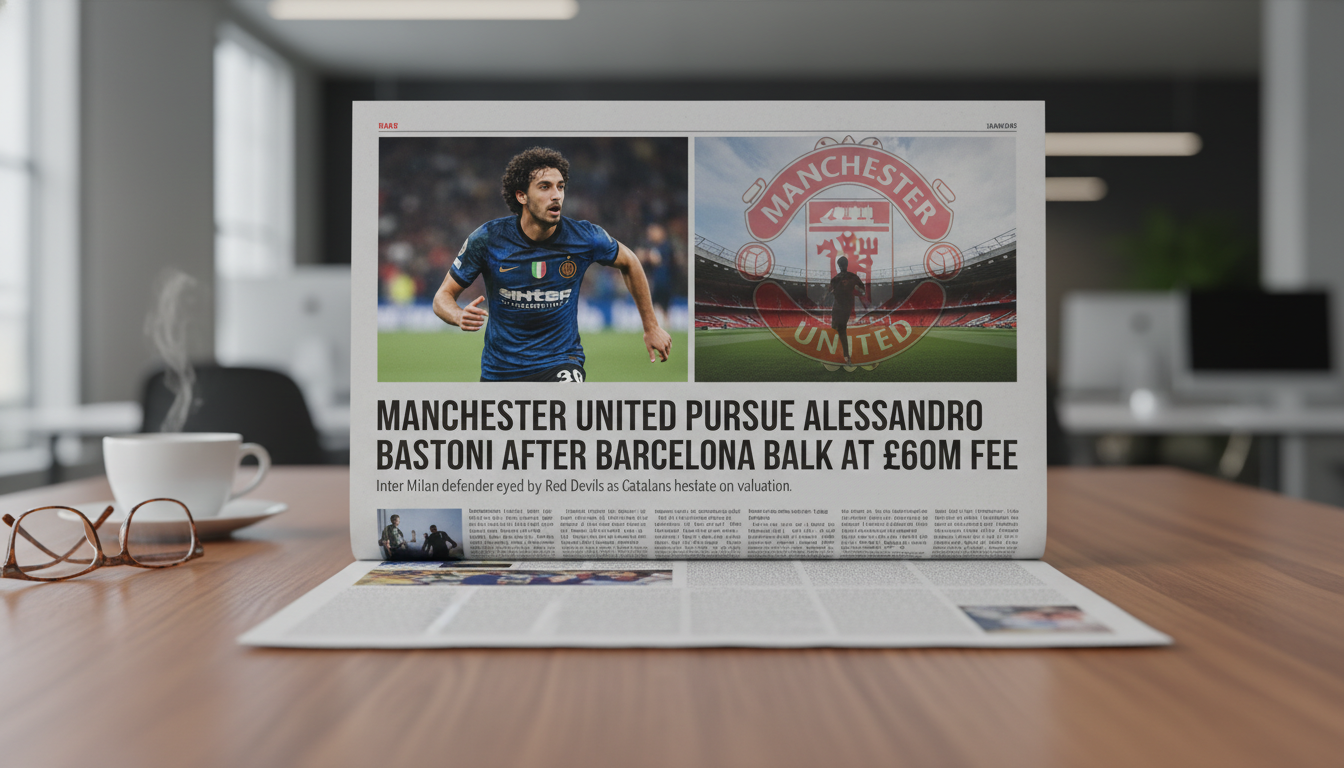
Alessandro Bastoni emerges as Manchester United summer target as Barca balk at £60m fee
Manchester United are reportedly interested in signing Alessandro Bastoni this summer, according to transfer reports, as the club looks to bolster a defence repeatedly hit by injury. The Inter Milan centre-back is understood to carry a valuation near £60 million and has attracted interest from Barcelona, who are said to be hesitant about meeting the asking price. United view Bastoni as a player who could both shore up aerial and defensive duties and improve the team’s ability to play out from the back.


United weigh Bastoni amid centre-back injury woes
Manchester United have suffered an unsettled season in central defence, with prolonged absences disrupting selection and continuity. Key figures have missed extended periods and the club is preparing to add a dependable option in the summer window to protect against further disruption. The reported interest in Alessandro Bastoni is therefore tied directly to a clear need to reinforce the spine of the team.
Harry Maguire’s short-term contract extension gives the club breathing space in recruitment, but United’s recruitment strategy is understood to favour a high-quality signing rather than a stop-gap. That calculation has put a ball-playing centre-back with experience in top European competitions on the club’s shopping list. Bastoni fits that profile and is now linked as a primary candidate.
Fichajes reports place a £60m valuation on Bastoni
Spanish outlet Fichajes reported that Inter Milan have set a valuation of around £60 million for Alessandro Bastoni, making him a premium target for clubs in search of a left-sided centre-back. That figure has shaped the emerging market for the defender and informs which suitors are likely to push hardest. Barcelona are believed to monitor the situation but are cautious about committing the sum required.
Inter’s stance establishes a clear negotiating baseline and gives the Italian club leverage, particularly if multiple bidders emerge. Manchester United would therefore be expected to assess both the fee and the wider package — wages, sell-on clauses and timing — before engaging in serious negotiations. The dynamics suggest any deal would require careful planning and clear prioritisation by United’s sporting directors.
Bastoni’s playing profile aligns with modern ball-playing demands
Alessandro Bastoni is widely recognised for blending defensive solidity with composure on the ball, a rare combination that suits teams that prefer to build from the back. He demonstrates a broad passing range, including progressive and line-breaking passing that can undo opposition presses and switch play effectively. That skill set is particularly valuable in the Premier League, where quick circulation and the ability to evade high pressing structures are increasingly prized.
Defensively he pairs anticipation with timely challenges, often reading opponents’ build-up to make interceptions and close down avenues into the penalty area. Bastoni’s timing in tackles and his presence in aerial duels add another layer to his profile, making him a candidate to handle both ground and aerial threats. At 27, he is at an age where a transfer would be expected to yield several prime years for a new club.
Tactical fit and what United would gain from signing him
On the ball Bastoni would offer Manchester United an option to progress play from deep while maintaining a left-sided presence in central defence, which could change how the team structures build-up on the left flank. His comfort in possession would allow fuller backs and midfielders more freedom to advance, reducing the frequency of risky clearances under pressure. That could help United maintain control against high-pressing opponents and open new channels in transitional phases.
Without the ball his reading of play and capacity to organise the backline would address some of the positional lapses the team has experienced during injury periods. Adding a technically capable defender who is also defensively reliable would increase tactical flexibility for whoever oversees the squad next season. The acquisition would therefore be both a short-term reinforcement and a long-term piece in the club’s defensive architecture.
Barcelona interest complicates the transfer race
Barcelona’s monitoring of Bastoni adds competition and a complicating factor, even if the Catalan club is currently tentative about meeting Inter’s valuation. Their reluctance to push to the reported £60 million price could leave room for United to intervene if they prioritise the transfer. The presence of another major suitor typically raises the stakes, forcing both player and seller to weigh sporting and financial considerations.
For Inter the calculus is straightforward: extract fair market value for a player approaching his late twenties and secure an outcome that aligns with the club’s sporting plans. For United the decision hinges on how urgently they want to close the defensive gap and whether they prefer to outbid rivals or explore alternative targets. The competition therefore sets a probable timeline and price trajectory for any potential negotiations.
Transfer timing, fees and negotiation variables
A summer transfer window approach allows Manchester United to plan comprehensively, but timing remains crucial given other clubs’ budgets and Champions League positions. United will need to coordinate budgets, wage structures and any potential player sales to accommodate a large fee while maintaining squad balance. Negotiations could also involve add-ons, performance-related bonuses and clauses designed to bridge valuation gaps.
Market conditions, including bid deadlines and Inter’s own recruitment aims, will influence how quickly a deal can progress. United’s recruitment team must also factor in medical, adaptation period and registration timelines to ensure the player is available and fit for the new season. All of these variables make a Bastoni pursuit a complex but manageable operation if it is prioritised.
Potential short- and long-term impact for Manchester United
If Manchester United secure Alessandro Bastoni, the immediate effect would be a clearer defensive rotation and more security at centre-back when injuries occur. The club would gain a left-footed, ball-playing option who can complement existing personnel and offer tactical variety across competitions. Over the longer term, Bastoni’s combination of experience and technical ability could underpin the defensive unit for several seasons.
Beyond on-field matters, a high-profile signing can influence dressing-room dynamics, recruitment perception and supporter confidence heading into a new campaign. It would mark a statement of intent on the transfer market and signal the club’s willingness to invest in a modern centre-back profile. How Bastoni integrates with team culture and coaching will ultimately determine the success of such an investment.
A final decision on Alessandro Bastoni’s future is likely to depend on multiple parties aligning — Inter’s asking price, Barcelona’s appetite to bid, and Manchester United’s willingness to prioritise and fund the deal — with the summer window set to provide the clearest timeline for any move.