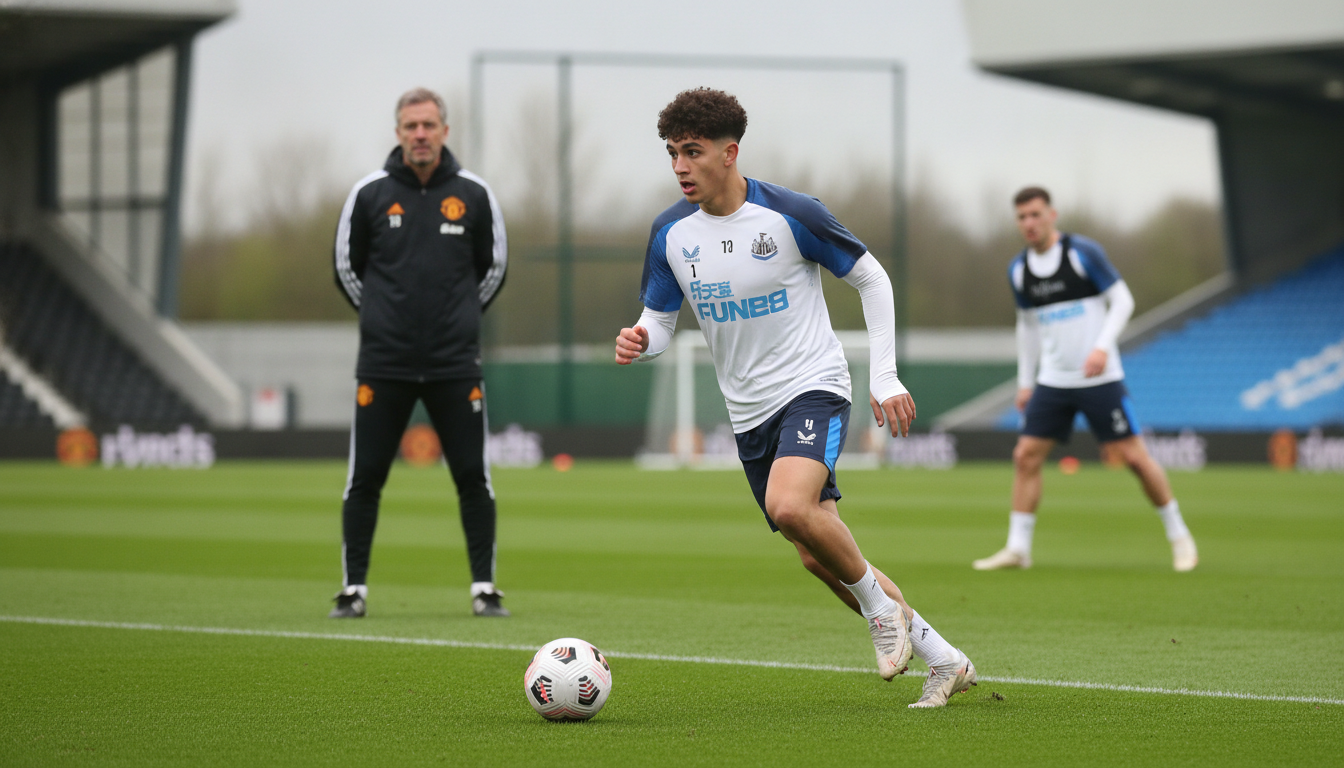
Manchester United Eye Lewis Hall Transfer as Long-Term Left-Back Solution
Manchester United are reportedly exploring a Lewis Hall transfer from Newcastle United as they search for a long-term replacement at left-back this summer.


Immediate transfer interest
Manchester United have emerged as potential suitors for Lewis Hall, with talks expected to intensify in the coming weeks as the club assesses its left-back options. The Lewis Hall transfer has been linked to United’s broader plan to refresh their defensive flanks and secure a younger, durable presence at fullback. Sources close to the negotiations say the club is weighing the balance between an ambitious bid and the financial realities of dealing with Newcastle’s valuation. Any move will be influenced by contract length, the player’s own preference, and the role United can promise him under their coaching staff.
The reported interest comes amid growing speculation about Luke Shaw’s future and the Red Devils’ desire to add reliable cover and competition on the left side. United’s recruitment team is understood to favour players who can contribute defensively and provide width in attack, qualities Hall has displayed since his move to St James’ Park. The club will also consider internal candidates and academy prospects before committing significant funds. Ultimately, the decision will hinge on whether United view Hall as an immediate starter or as a long-term successor.
Early development at Chelsea’s academy
Lewis Hall emerged from Chelsea’s Cobham Academy, a pathway that has produced a number of first-team players in recent seasons. He made an early first-team impression at Chelsea, debuting in a senior competitive fixture as a teenager and registering an assist that highlighted his composure and delivery from wide areas. That formative period established his technical foundations, with coaches praising his crossing, positioning and capacity to carry the ball forward from deep. Academy tutors frequently noted his tactical intelligence and adaptability, traits that have underpinned his rapid rise.
Chelsea’s environment provided Hall with exposure to elite coaching and a competitive youth setup that accelerated his transition to senior football. The training emphasis on overlapping fullbacks and attacking support helped shape his playing profile into one that suits modern systems. Despite leaving Cobham for Newcastle, those early years remain a defining influence on his style and decision-making. Observers point to his Chelsea education as a key reason top clubs are now tracking his development.
Progress and performances at Newcastle
After joining Newcastle United in 2024, Hall established himself as a consistent option at left-back and accumulated significant minutes across competitions. He played in nearly fifty matches for the club last season, registering 30 Premier League appearances and contributing to the team’s defensive solidity and forward transitions. Statistical measures show he frequently wins a high number of duels and is active in both defensive and attacking phases, offering balance down the flank. Newcastle’s use of wing-backs and fullbacks in dynamic patterns allowed Hall to refine both his defensive awareness and his attacking instincts.
His displays at St James’ Park also attracted international attention, resulting in senior England call-ups and caps that underscore his growing reputation. Coaches and pundits have noted his composure on the ball, readiness to overlap and ability to recover defensively when required. Those traits have increased his appeal to clubs seeking a modern fullback capable of influencing both ends of the pitch. Newcastle, aware of his contribution, are expected to set a premium price for any potential suitors.
Manchester United’s left-back situation
United enter the summer with a need to clarify the future of their left-back department, where experience and youth coexist but long-term certainty remains absent. Luke Shaw has been the preferred starter when fit, while other options such as Tyrell Malacia and Patrick Dorgu were used intermittently last season. Young prospects within the club’s ranks are considered promising but are not yet regarded as ready to assume a full-time starting role in the immediate term. That context has left United open to recruiting an established young alternative who can both compete with Shaw and eventually transition into a starting position.
The club’s coaching staff will deliberate carefully on whether to invest in a replacement now or trust in the development of academy players and existing squad members. Any transfer pursuit must account for playing style compatibility, wage structure and the timeline for succession planning. United’s recruitment strategy appears to prioritise versatile fullbacks who can contribute across a range of tactical setups. The potential addition of Hall would reflect a preference for a player with Premier League experience, international recognition and upside for further growth.
Valuation, contract and transfer obstacles
Financial considerations are likely to dominate any negotiation around a Lewis Hall transfer, with Newcastle expected to demand a fee above market estimates given his contract length. With several years remaining on his deal at St James’ Park, Newcastle hold leverage to insist on a premium price for a player who is seen as integral to their defensive line. United will need to balance the cost against their budget, potential resale value and the strategic benefit of securing a young, high-ceiling fullback. The presence of interest from other clubs could further complicate talks and drive the price upward.
Beyond the headline fee, discussions will encompass wages, performance-related add-ons and potential sell-on clauses that reflect Hall’s age and trajectory. Clubs typically factor in agent fees and signing-on costs when structuring a complete offer, and those elements can influence whether a deal progresses. Timing is another hurdle; Newcastle may be reluctant to part with a key player mid-window unless a suitable replacement is secured. United will therefore need to present a coherent package that satisfies Newcastle’s demands while aligning with their own financial framework and squad plans.
Player perspective and international implications
From Lewis Hall’s standpoint, the prospect of moving to Manchester United presents both an opportunity and a risk, with considerations around playing time and positional role central to his decision. Reports indicate the player is open to a departure from Newcastle, partly influenced by disappointment at missing out on a recent major tournament selection and tactical shifts that affected his role. A move to Old Trafford could offer greater visibility and a platform for continued international development if he secures regular minutes. However, the player must weigh the immediate chance to start against the competition he would face at United.
Internationally, consistent club performances will be crucial for Hall to maintain and expand his England involvement. The national setup values fullbacks who combine defensive reliability with attacking thrust, a description that broadly fits his profile. Moving to a club with United’s stature could accelerate his exposure to high-pressure fixtures and continental competition, furthering his case for regular international selection. Conversely, lack of game time or a positional mismatch could hinder progress, so the specifics of any transfer—role, assurances and coaching—will matter greatly.
Tactical fit and contribution to Manchester United
Tactically, Hall’s blend of defensive discipline and forward movement aligns with systems that rely on fullbacks to provide width and balance. At United, where fullbacks are expected to support buildup play and deliver quality crosses, he would be assessed on his ability to link with midfielders and attackers while maintaining defensive solidity. Coaches will examine his recovery speed, decision-making in one-on-one situations and capacity to invert or overlap depending on match plans. If integrated effectively, Hall could offer United a more consistent left-sided option and the flexibility to rotate without a significant drop in quality.
Training ground work and the coaching team’s plans will determine how quickly he adapts and whether he can replicate his Newcastle form in a different tactical environment. United’s emphasis on attacking width complements a fullback who can time forward runs and provide accurate service into the box. Defensive coordination with the centre-backs and midfield shielding will be essential to prevent lapses during transitions. Properly managed, the move could enhance United’s balance and offer a long-term solution at a position where continuity has been elusive.
Newcastle’s stance will be pivotal, with the club keen to protect their competitive depth while extracting maximum value for a young asset.
United must determine whether to pursue an immediate transfer or to plan for succession more gradually by promoting from within and supplementing the squad elsewhere.
If negotiations progress, both clubs will need to agree on valuation, payment structure and assurances around the player’s role to reach a deal that satisfies sporting and financial objectives.