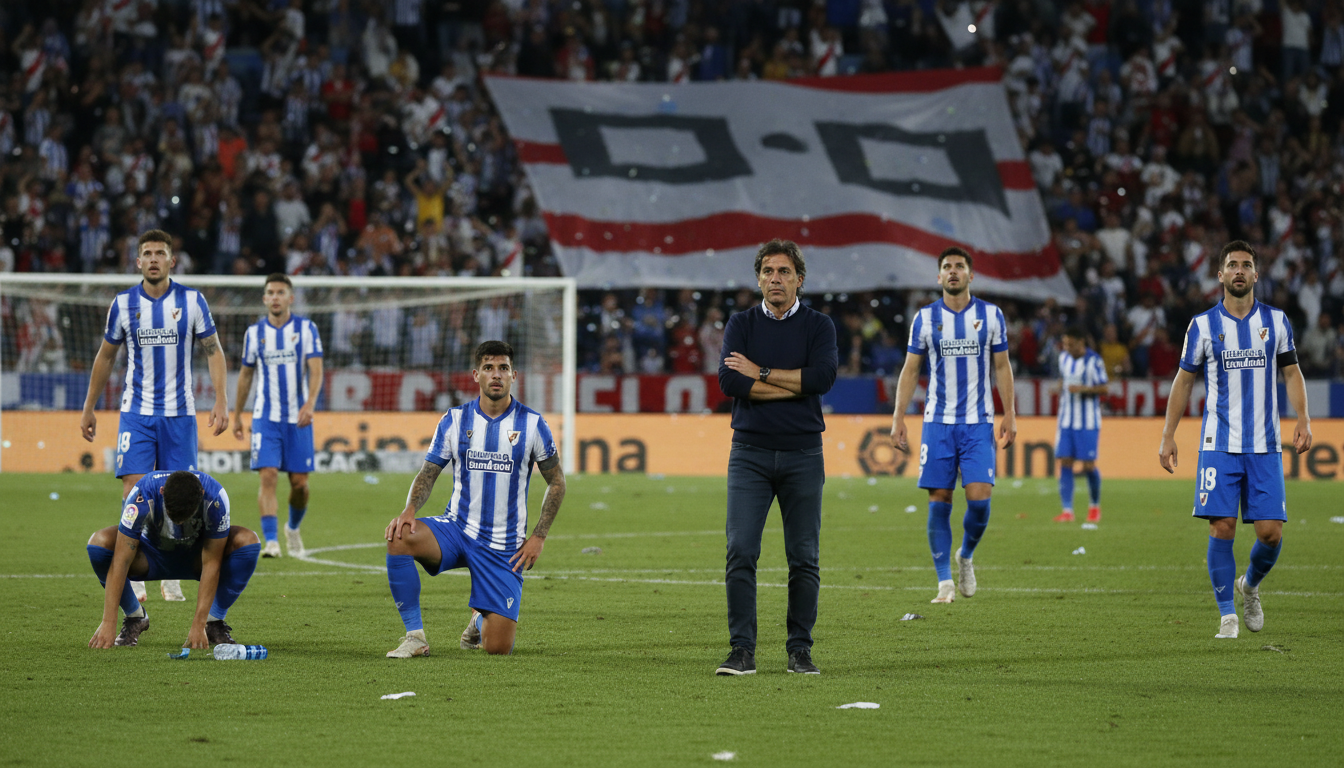
Espanyol slump deepens after 1-0 loss at Vallecas, plunging club into relegation fight
Espanyol’s slump deepened with a 1-0 defeat at Vallecas, leaving the club in a relegation fight and recording one of Europe’s worst top-flight runs in 2026.


Vallecas defeat leaves Espanyol in survival fight
The 1-0 loss to Rayo Vallecano at Vallecas marked another setback for Espanyol and intensified an already alarming downturn in form. The result means the Catalan side remains winless in LaLiga in 2026 and has slipped back into a crowded relegation battleground. The narrow defeat, decided by fine margins, underlined both the team’s recent inability to convert chances and the growing pressure around the club.
Fans left the stadium frustrated as Espanyol failed to arrest a run that has fundamentally changed the tone of their season. The defeat also reinforced a stark statistical comparison: only Metz among major European leagues has performed worse so far in 2026. The immediate consequence is a season that has turned from promising to precarious in a matter of months.
From European hopes to a midtable peril
Espanyol’s campaign showed genuine promise across the first 19 rounds, when the team collected 10 wins, four draws and five defeats. That form propelled Manolo González’s side into contention for European places, briefly climbing as high as fifth in the table and sitting within striking distance of Champions League positions. The optimism that accompanied those results has since evaporated as the second half of the season has produced a near-complete reversal.
The contrast between the opening and current segments of the campaign is stark: what was an upward trajectory has become an alarming slide. After the encouraging first half, Espanyol now faces the prospect of devoting the final weeks of the season to securing safety rather than chasing continental qualification. That shift in objectives has forced a recalibration inside the club and among its supporters.
Winless 2026 and historical precedents
Since the turn of the year, Espanyol has failed to win a single league game, compiling five draws and ten defeats across the calendar year to date. That sequence places the club among the worst-performing sides in Europe’s top divisions for 2026 and highlights a rare collapse in consistency. The magnitude of the slump has also produced unfortunate historical footnotes for the LaLiga club.
Espanyol became the first team in LaLiga history to follow a run of five consecutive wins with a sequence of 15 matches without a victory. The club is also only the second side in the modern top flight to fail to win in its first 15 fixtures of a calendar year, a dubious comparison that previously applied to Zaragoza in 2012–13, a campaign that ended in relegation. Those parallels underline both the severity of the current situation and the importance of an immediate response.
Standings show a congested relegation zone
With six rounds remaining, the league table reflects a tight and unforgiving bottom half where small margins carry major consequences. Espanyol sits 12th on 38 points, level with Rayo Vallecano but behind on goal difference, and just a handful of points separate the Catalans from lower-ranked rivals. Girona also share 38 points, while Valencia sit on 36 and Mallorca and Elche are close behind, making the fight to avoid the drop extremely close.
Below that cluster, Sevilla are hovering on 34 points with Alavés, Levante and other struggling sides only a few points adrift. Even teams placed in the relegation spots carry totals that could be overcome with a short run of positive results, which raises the stakes for each remaining fixture. The compressed nature of the standings means Espanyol cannot afford further complacency if it aims to secure safety before the closing whistle of the season.
Fixture list compounds the challenge for Espanyol
The remaining schedule gives little respite and promises a stern examination of Espanyol’s resolve. The team’s next fixture is a crucial home clash against Levante at the RCDE Stadium, a direct contest between sides with survival on their minds. That match will be followed by a trip to the Bernabéu to face Real Madrid, then a high-pressure encounter at the Sánchez-Pizjuán against Sevilla, which has potential to swing momentum in either direction.
Following those fixtures, Espanyol hosts Athletic Club, travels to El Sadar to play Osasuna and finishes the season at home against Real Sociedad. The mix of domestic heavyweights and fellow strugglers in the run-in creates a calendar that rewards consistent performance and punishes error. Over the final six matches, Espanyol will need both tactical discipline and mental resilience to emerge unscathed.
Manager Manolo González keeps a public show of confidence
Despite the deteriorating results, head coach Manolo González has maintained an optimistic tone in public comments, underlining his belief in the squad’s capacity to recover. He insisted he feels strong and committed to guiding the team to safety, promising to “grit their teeth” and fight in the remaining fixtures. González framed the next six games as critical and urged players, staff and supporters to treat each match as a final.
The manager’s stance is both a call for unity and a signal to the dressing room that responsibility lies with the squad to translate talk into results. Staff inside the club will now be as focused on psychology and small margins as they are on tactics and training, aware that the coming weeks will define the season. Whether González’s approach will produce the immediate uplift required remains the central question for Espanyol’s campaign.
Tactical issues and squad considerations
Espanyol’s recent downturn has exposed tactical vulnerabilities that opponents have exploited with increasing frequency. Defensive lapses and an inability to sustain offensive pressure have been recurrent themes, with goal difference reflecting the difficulties the side now faces. The team’s inability to convert promising sequences into decisive outcomes has undermined confidence and altered match plans.
Squad rotation, fitness levels and potential personnel changes will be under scrutiny as the coaching staff seek answers. The manager may be forced to balance short-term pragmatism with longer-term squad management, weighing whether to prioritize immediate survival or preserve player fitness beyond the final whistle of the season. Those decisions will shape not only the run-in but the club’s planning for the summer.
Espanyol’s leadership must also consider the psychological toll of the slump, as prolonged poor form can compound mistakes and erode belief. Sports psychologists, senior players and backroom staff will likely play a greater role in the coming weeks as the team seeks to arrest the slide. The complex mix of tactical, physical and mental factors will determine whether the club can salvage a positive outcome.
The final stretch of LaLiga will test Espanyol’s character and resolve more than any other period this season, as the club transitions from ambitious European candidates to desperate survivors. Each match now carries the weight of the campaign, requiring focus, discipline and a measure of fortune. How Espanyol responds will define its trajectory for the immediate future and set the tone for the club’s next chapter.