Mexico End 40-Year World Cup Knockout Hoodoo with 2-0 Win Over Ecuador at Azteca
Mexico beat Ecuador 2-0 at Estadio Azteca, ending a 40-year World Cup knockout drought as Julián Quiñones and Raúl Jiménez secured the round-of-32 win.

Mexico’s co-hosts delivered a long-awaited knockout victory at Estadio Azteca on Tuesday, defeating Ecuador 2-0 in a rain-delayed round-of-32 clash that snapped a four-decade streak without a World Cup knockout win. The tie, postponed for an hour by severe weather, ignited once play resumed as the home side dominated possession and tempo. Julián Quiñones opened the scoring with a powerful strike midway through the first half and later provided the decisive assist for Raúl Jiménez. The result propelled Mexico into the tournament’s next phase and ended a run of knockout disappointments stretching back to the 1986 World Cup.
Storm delay and electric atmosphere at Estadio Azteca
A heavy storm forced match officials to halt play for roughly an hour before conditions allowed the contest to start, testing the patience of a packed Azteca crowd. Fans remained in place and the atmosphere surged when the game finally kicked off, with Mexican supporters turning the stadium into a relentless cauldron of noise. That intensity fed into Mexico’s early approach as the hosts immediately pressed and sought to take advantage of the momentum. The environment underlined both the pressure and expectation on the co-hosts to deliver a decisive result on home soil.
The delay briefly disrupted preparations for both teams, but Mexico adapted quickly once action resumed, converting the added time into focus rather than frustration. Ecuador, meanwhile, appeared affected by the pause and struggled to find a rhythm during the opening exchanges. The storm and stoppage became a footnote as the match’s decisive moments arrived in the first half, under the full glare of the stadium lights and the fervent home support. Conditions shifted from uncertainty to near-celebration within a short span after Mexico’s breakthrough.
Quiñones thunderbolt breaks the deadlock
Julián Quiñones produced the match’s defining moment with a thunderous finish midway through the first half, giving Mexico a deserved lead that set the tone for the remainder of the game. The strike was emphatic, a statement finish that rewarded Mexico’s sustained early pressure and tactical intent in the attacking third. That opening goal forced Ecuador to alter their approach, attempting to chase the game rather than build on control. Quiñones’ contribution underscored the threat he posed all night, both as a finisher and as a creator.
The timing of the goal was significant, arriving at a moment when the hosts were pressing for an advantage and needed a clear breakthrough to calm nerves at the Azteca. After taking the lead, Mexico did not retreat; instead they continued to probe and exploit spaces, confident in their ability to manage the match. The nature of the finish — powerful and direct — illustrated Mexico’s willingness to resolve the contest without relying on late drama. That early strike shifted momentum firmly in favor of the co-hosts.
Jiménez finish and Mexico’s sustained control
Raúl Jiménez extended Mexico’s advantage later in the match after Quiñones turned provider, converting a move that effectively sealed the result and capped a disciplined performance by the hosts. Jiménez’s finish came from intelligent positioning and composed execution, and it provided a clear margin that allowed Mexico to control the closing stages with greater caution. Ecuador pushed to respond after the break but were unable to break through a compact Mexican defensive structure. The second goal removed any lingering doubt and allowed the home side to manage tempo and time without unnecessary risk.
Mexico’s control after the second goal was marked by conservative yet purposeful possession and good defensive organization, a pragmatic approach suited to the higher stakes of knockout football. Ecuador’s attempts to wrest back momentum were met with steady resistance and were hampered by inconsistent service into attacking areas. The match’s outcome felt increasingly inevitable as Mexico balanced continuing offensive threats with safe game management. That dual focus — to threaten and protect — was central to turning early dominance into a historic result.
Tactical balance and match management under Aguirre
Head coach Javier Aguirre’s setup combined aggressive forward intent with a structured defensive shape, allowing Mexico to press intelligently and recover position when possession was lost. The team’s ability to maintain waves of attack early on created the openings that led to the decisive goal, while midfielders and defenders worked to limit Ecuador’s transitional chances. Aguirre’s tactical choices emphasized discipline in wide areas and compactness between the lines, forcing opponents into low-percentage opportunities. The approach delivered both attacking impetus and defensive clarity.
Aguirre, who is overseeing his third World Cup campaign across separate spells with the national team, leaned on experience and game management to guide Mexico through a tense knockout encounter. His team showed a blend of youth and seasoned performers capable of executing a straightforward plan without overcomplicating possession. By prioritizing decisive moments — pressing collectively, finishing chances, and then slowing the game — Mexico followed a classic knockout blueprint. The choices made on the touchline translated into on-field cohesion that Ecuador struggled to overcome.
Historical weight: first World Cup knockout win since 1986
The victory ended an infamous streak for Mexico, marking the country’s first World Cup knockout win since 1986, the last time Mexico hosted the tournament. For decades, the national team had been unable to progress beyond the opening knockout hurdle, a pattern that became part of the tournament’s narrative around the squad. Breaking that sequence carried symbolic and practical significance, relieving a recurring source of pressure and providing a momentum shift inside the tournament. The win resurrects hopes that Mexico can build a deeper run on home soil.
Aguirre acknowledged the relief that accompanied the result, saying afterwards that he intended to celebrate the moment. The coach’s reaction reflected an awareness of the long shadow such a streak cast over Mexico’s World Cup ambitions. For players and supporters, the triumph will be remembered not only for the goals but for finally overcoming a barrier that had defined past campaigns. The psychological benefit of clearing that hurdle may influence Mexico’s confidence and approach as the tournament progresses.
Path forward and implications for the tournament
By advancing from the round-of-32, Mexico moves into the next stage with renewed belief and a clearer tactical identity forged in front of a passionate home crowd. The victory provides breathing room for the coaching staff to refine selection and strategy, while giving players the platform to carry momentum into more demanding opponents. Mexico’s blend of resilience and attacking capacity will be tested further, but the result at the Azteca offers tangible evidence that the team can respond under pressure. Expectations will rise, but so too will scrutiny in the weeks ahead.
Ecuador depart the tournament with a performance that fell short of their aspirations, having been unable to overturn Mexico’s early control and second-half poise. The result will prompt reassessment for their coaching staff and federation as they examine what went wrong in a tightly contested knockout setting. For Mexico, the focus shifts quickly to preparation for the round-of-16 and the challenge of translating this day’s success into consistent outcomes. The win at Estadio Azteca will be a reference point as the co-hosts seek to capitalize on home advantage and a renewed sense of possibility.
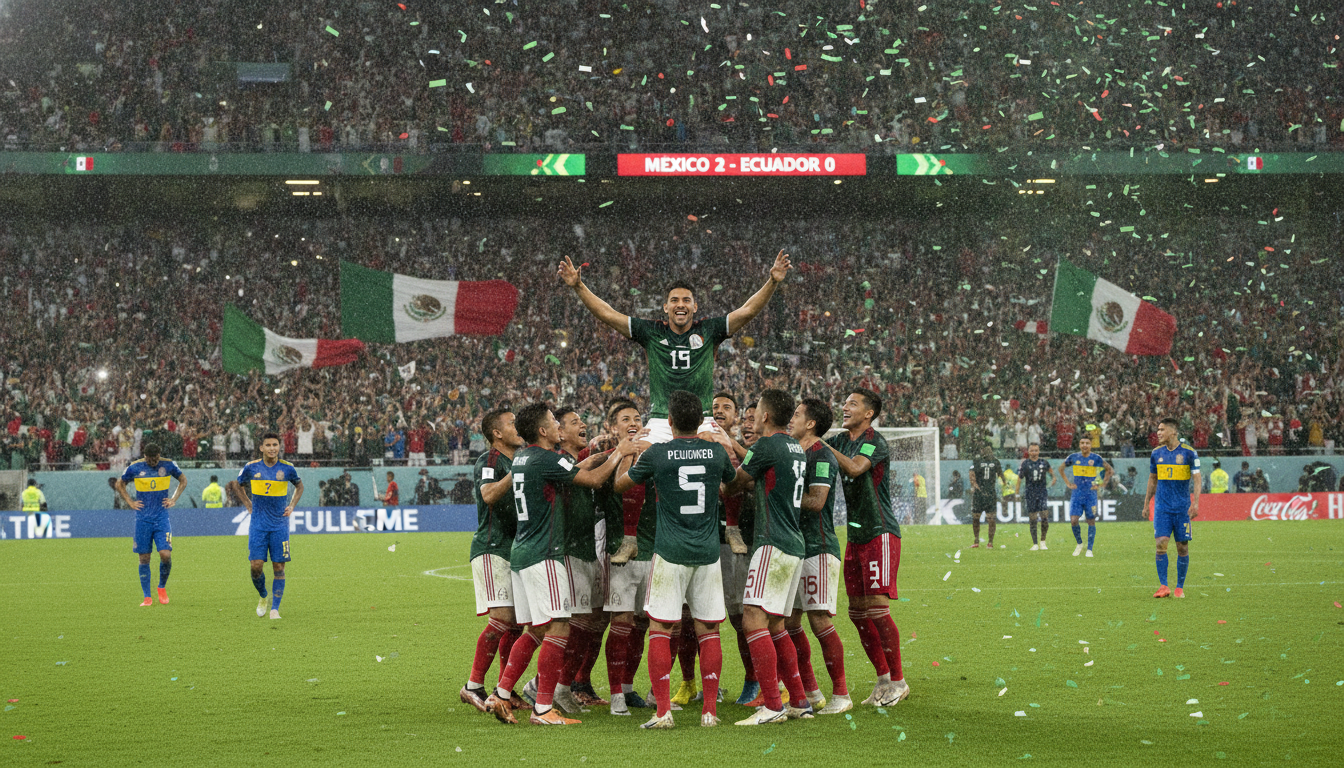
The sight of Mexico players and fans celebrating at the Azteca after a decisive 2-0 win will linger as a defining image from this stage of the competition, a moment when home soil finally produced the knockout victory long expected. The combination of Julián Quiñones’ attacking spark and Raúl Jiménez’s finishing provided the decisive margin, while Javier Aguirre’s tactical management delivered the control needed to see the game out. As the tournament advances, Mexico will carry both the relief of this breakthrough and the responsibility of proving this result was a launchpad rather than an endpoint.