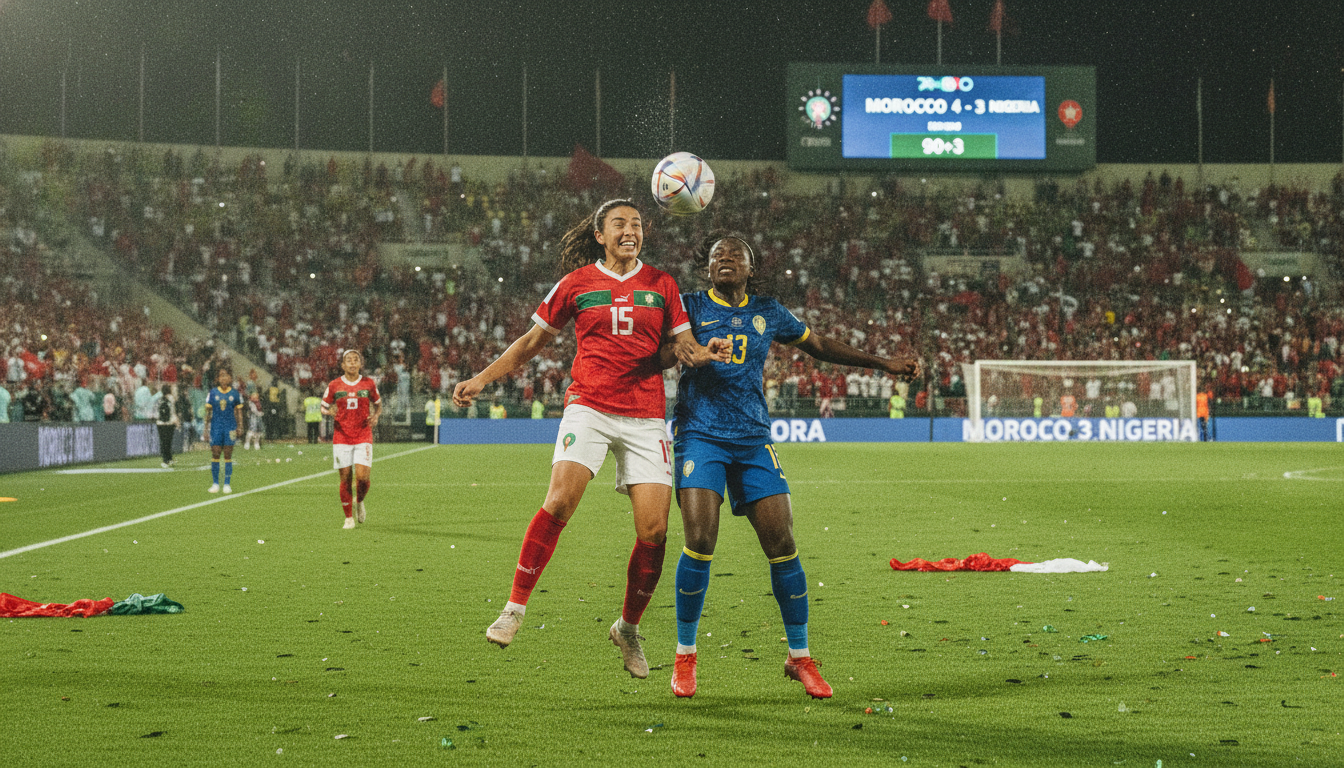
High scoring spectacle continues at CAF Women’s Africa Cup of Nations Morocco 2026
High-scoring action defines the CAF Women’s Africa Cup of Nations Morocco 2026 with hosts and continental powers producing emphatic wins and historic margins in the tournament’s early days.


Strong opening sets tone for Morocco 2026
Morocco have announced themselves in force at the CAF Women’s Africa Cup of Nations Morocco 2026 with an emphatic 4 0 win over Kenya that captured headlines across the region. The Atlas Lionesses combined clinical finishing and high tempo in attack to secure one of the tournament’s most convincing early results. Côte d’Ivoire also produced a statement performance with a 4 1 victory against Burkina Faso, underscoring that the opening rounds are defined by attacking football. These results have heightened expectations for a tournament where goals are already becoming a defining storyline.
Historic big wins remain part of tournament lore
The Women’s Africa Cup of Nations has a long history of large winning margins that continue to shape perceptions of the event. The most extreme scorelines are woven into the competition’s record books and are frequently cited when analysing competitive balance across editions. Several teams have produced dominant performances that still stand out decades later and serve as benchmarks for attacking excellence. Those historic scorelines provide context for the recent flurry of goals witnessed in Morocco.
Nigeria 1998 remains the benchmark of dominance
The Super Falcons delivered an extraordinary offensive display in 1998 that still sets the standard at the CAF Women’s Africa Cup of Nations. Across the 1998 group stage and knockout rounds the Nigerian squad produced multiple multi goal victories and finished that phase with an unmatched goals tally. That campaign included several lopsided wins which together created a record margin that has not been equalled. Nigeria’s 1998 success is frequently referenced as the blueprint for overwhelming attacking superiority at the tournament.
Equatorial Guinea and other landmark victories since 1998
Equatorial Guinea matched some of the tournament’s biggest winning margins in the early 2010s when they recorded a six goal victory while playing at home. That performance helped them cement a strong campaign and ultimately secure continental silverware. More recent editions have also seen large scorelines from established powers with decisive knockout wins reshaping tournament narratives. Those results show that dominant victories are not confined to a single era but recur when preparation, talent and circumstances align.
Recent tournaments underline attacking emphasis
The 2024 edition delivered its own memorable blowout when a continental heavyweight produced a five goal margin in a knockout match in Casablanca. That result highlighted how top teams can control games from the outset and convert territorial advantage into a lopsided scoreboard. Across successive Cups of Nations there has been a clear trend toward teams favouring proactive, attack minded systems. This emphasis on forward play helps explain why high scoring displays continue to punctuate the competition.
Tactical and structural reasons for the scoring surge
Several tactical and wider structural factors help explain recurring high scoring matches at the CAF Women’s Africa Cup of Nations. Disparities in investment, player development and international experience can produce mismatches between established programs and emerging sides early in the competition. On the pitch, modern pressing schemes and rapid transitional play tend to expose defensive frailties and create goal scoring opportunities in clusters. Coaching choices and squad depth also determine whether a team can sustain defensive discipline when opponents press relentlessly.
Impacts on group standings and knockout scenarios
Large winning margins have immediate implications for group tables where goal difference can decide progression and seeding in the knockout phase. Teams that secure emphatic victories in early matches gain both confidence and a practical advantage when permutations are tight. Conversely, heavy defeats force managers to reassess tactics and personnel to arrest momentum and preserve tournament hopes. The psychological swing of a big win or a heavy loss influences selection and strategy heading into the crucial later rounds.
What hosts and contenders must adjust now
Hosts Morocco and other title contenders will need to balance attacking ambition with defensive resilience as the competition progresses. Opponents will study the most convincing performances and attempt to counter the tactical patterns that produced them. Coaches who can adjust shape, shore up transitions and manage game tempo will be better positioned to prevent repeat blowouts. The next phase of matches will test whether early goal glut translates into sustained dominance or whether tighter contests emerge as teams adapt.
Morocco’s early victories and other emphatic results have reaffirmed that the CAF Women’s Africa Cup of Nations remains a stage for attacking football and decisive scorelines. As the tournament moves forward, goal difference and momentum will be central to which teams emerge as genuine contenders. Fans can expect an intense mix of high energy attacking displays and strategic adjustments from teams seeking to convert strong openings into titles.