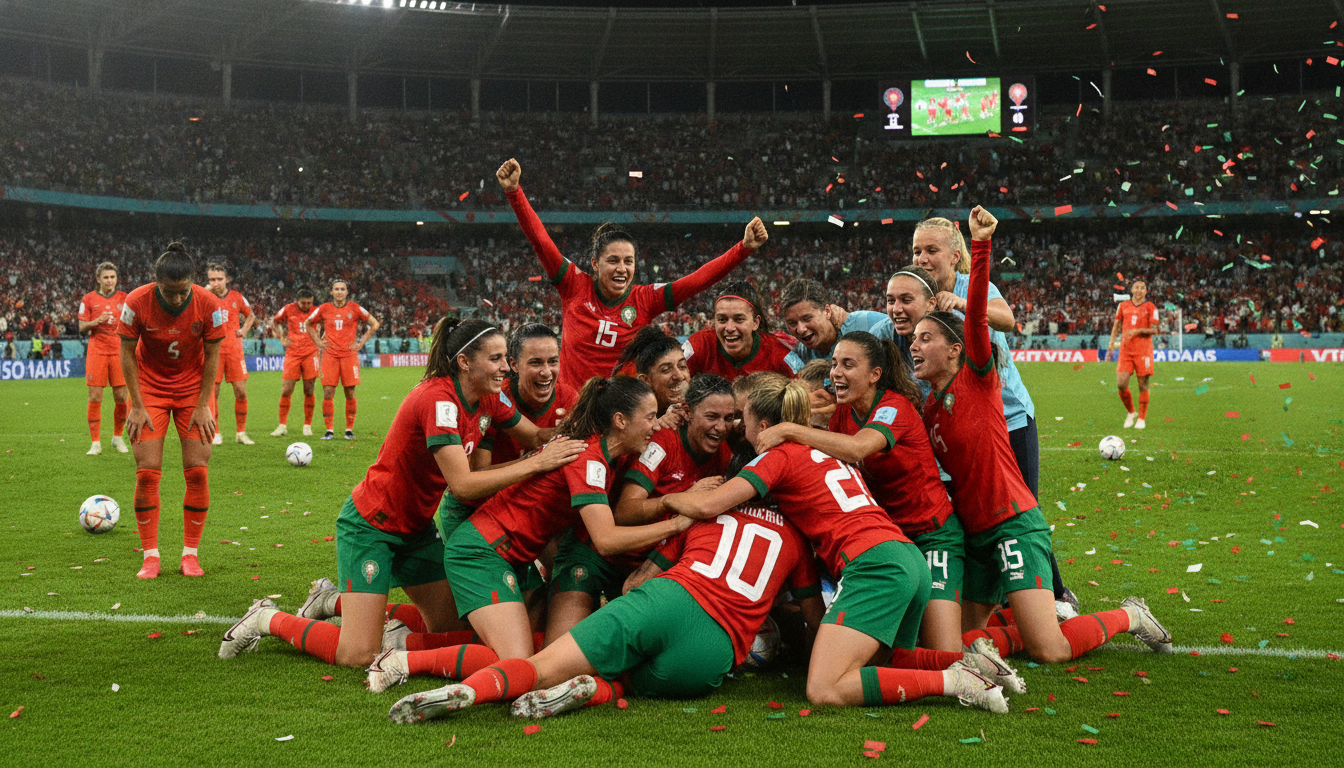
Morocco reach World Cup round of 16 after dramatic shootout win over Netherlands
Morocco beat the Netherlands on penalties to reach the 2026 World Cup round of 16 in Monterrey, Yassine Bounou the decisive hero as Atlas Lions advance.


Morocco advanced to the round of 16 at the 2026 FIFA World Cup after a tense 1-1 draw with the Netherlands in Monterrey that was settled by a 3-2 penalty shootout victory. Yassine Bounou emerged as the match-winner with a decisive save in the shootout, while Issa Diop’s stoppage-time header forced extra time. The Atlas Lions will now face tournament co-host Canada in the next round after a performance that combined persistent attacking pressure with late-game resilience.
Bounou delivers again on the biggest stage
Yassine Bounou once more proved his importance to Morocco, producing a crucial save to clinch the tie in the shootout. The goalkeeper denied Crysencio Summerville’s spot kick to hand Morocco the momentum before Ismail Saibari stepped up to convert the winning penalty. Bounou’s composure under pressure repeatedly kept Morocco in the match, notably in the second half and through extra time.
Across the 120 minutes the Moroccan goalkeeper made several high-quality interventions, underpinning a defensive display that allowed his side to sustain pressure without conceding early. His performance in the shootout echoed previous big-game moments, reinforcing his status as a match-deciding figure for the Atlas Lions. That single save ultimately separated the teams and sent Morocco into the last 16.
Diop’s stoppage-time equaliser forces extra time
Morocco’s late comeback pivoted on Issa Diop’s towering header deep in stoppage time, a finish born from sustained pressure and a well-delivered cross. Chemseddine Talbi supplied the cross into the box, and Diop rose above Virgil van Dijk to steer the ball past Bart Verbruggen and level the match. The goal altered the tie’s momentum and allowed Morocco to carry belief into extra time.
The timing of Diop’s strike intensified the emotional swing at the stadium, shifting a game that had been trending in the Netherlands’ favour back towards Morocco. That intervention prevented what would have been a narrow Dutch victory and rewarded Morocco’s tactical persistence, especially in the closing phases of normal time.
Gakpo’s yardstick goal as Netherlands break the deadlock
Cody Gakpo broke the deadlock in the 72nd minute when a long ball unsettled the Moroccan defence and Crysencio Summerville kept the move alive under pressure. Gakpo’s first-time finish beat Bounou and looked to have handed the Netherlands control after a period when Morocco had largely dominated possession. The goal arrived against the run of play and illustrated how a single moment of incisiveness can define knockout football.
For the Netherlands, the strike was a timely reward for a team that had struggled to create clear openings for long stretches. It also forced Morocco to respond tactically, prompting substitutions and a more aggressive posture as the Atlas Lions chased an equaliser.
Hakimi spearheads sustained Moroccan pressure but misses haunt side
Achraf Hakimi orchestrated much of Morocco’s attacking threat, delivering dangerous set-pieces and driving forward from the right flank to unsettle the Dutch backline. A through ball from Azzedine Ounahi released Hakimi in the second half and his powerful effort crashed against the crossbar, denying Morocco an earlier lead. That chance, and several others, underlined Morocco’s dominance in wide areas and their ability to create openings from set plays.
Despite continuous pressure, Morocco were unable to convert sustained possession into a lead during regular time, a theme that has challenged attacking sides in tight tournament matches. Coach Mohamed Ouahbi’s substitutions—introducing fresh attackers such as Soufiane Rahimi and Chemseddine Talbi—reinvigorated the side and ultimately helped manufacture the late equaliser.
Extra time sees Moroccan momentum, but chances remain unconverted
The first period of extra time belonged largely to Morocco, who continued to press for a winner and produced a clear opportunity when Rahimi found space inside the area. Rahimi’s composed control and subsequent shot forced another excellent save from Verbruggen, keeping the score level and prolonging the drama. As fatigue set in, clear-cut chances grew scarce and both teams showed signs of physical wear.
The Netherlands adopted a more conservative posture in the latter stages of extra time, aiming to survive and take the contest to penalties. Morocco maintained territorial advantage but could not find a decisive finish, and the match progressed to a shootout where composure and precision would determine the victor.
Penalty shootout drama decided by misses and Bounou’s reflexes
The penalty sequence was tense and saw misses from both sides that shifted pressure throughout the run. Neil El Aynaoui and Achraf Hakimi failed to convert for Morocco, while Justin Kluivert, Jurrien Timber and Crysencio Summerville were unable to find the net for the Netherlands. Soufiane Rahimi and Chemseddine Talbi had converted for Morocco earlier in the shootout, building a narrow advantage before the decisive moments.
Bounou’s save from Summerville proved the turning point, allowing Ismail Saibari to step up and dispatch the final kick that sealed Morocco’s 3-2 shootout win. The sequence underlined the fine margins of knockout football, where composure in the moments after 120 minutes often outweighs earlier dominance.
Morocco to meet Canada as African hopes endure
With victory secured, Morocco will meet Canada in the round of 16 after the hosts beat South Africa 1-0 in their last-16 decider. The Atlas Lions advance buoyed by resilience and tactical discipline, carrying forward the belief earned during their historic 2022 run and through a group stage that saw them finish with seven points in Group C. Their progress keeps African hopes alive and positions Morocco as one of the region’s strongest challengers at this tournament.
The matchup with Canada presents a fresh test against a co-host nation playing in familiar conditions, a fixture that will demand attention to transition moments and set-piece organisation from both sides. Morocco enters that clash with momentum from a dramatic win, yet will also need to address the finishing inefficiency that left the tie unresolved through 120 minutes.
The match in Monterrey reflected the peaks and pitfalls of tournament football: Morocco dominated large portions yet had to weather a late scare, while the Netherlands were clinical when chances arose but could not withstand Moroccan pressure and the psychological pivot of a stoppage-time equaliser. Yassine Bounou’s late heroics will be remembered as the decisive intervention that propelled the Atlas Lions into the round of 16 and extended their World Cup story.