Nigeria World Cup absence exposes systemic failures and economic costs for a footballing giant
Nigeria World Cup absence underlines institutional gaps in talent development and national branding, forcing a reappraisal of sports policy and long term planning for football success


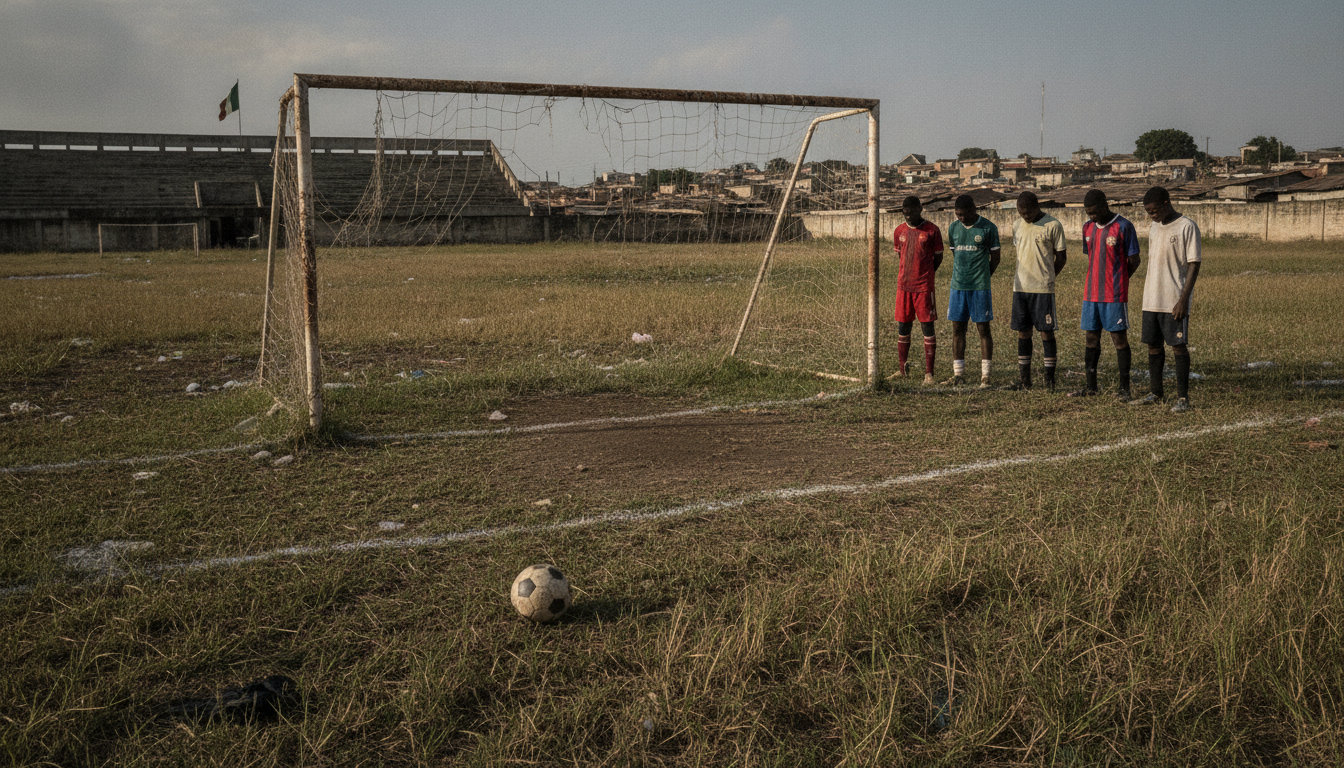
Spain lifted the World Cup trophy as millions watched worldwide while Nigeria remained conspicuously absent from the tournament spectacle. The Nigeria World Cup absence is now a subject of urgent debate because it is less a single sporting setback than a symptom of wider institutional weaknesses. This absence asks hard questions about how a nation abundant in talent continues to miss opportunities on the global stage.
Spain crowned as champions while Nigeria watches
Spain completed a campaign that delivered silverware and global attention as their players combined technical quality with organized systems. Their triumph reinforced a familiar pattern where sustained investment and continuity on and off the pitch produce predictable success. For Nigeria the sight of its best footballers contributing to other nations underlined a painful contrast between individual brilliance and collective delivery.
The Nigeria World Cup absence is not only measured by match results but by the forfeited moments of pride that unite societies. When a national team performs at a World Cup, television audiences, corporate partners and diasporas focus on the country. Missing that platform reduces immediate visibility and long term opportunities to showcase national strengths. The consequence is both symbolic and tangible for commerce and reputation.
Observers noted that nations delivering consistent World Cup performances pair homegrown talent with rigorous youth pathways and stable coaching frameworks. Spain exemplified a full value chain from academy to senior level that is sustained by policy and finance. That structural advantage turned individual skill into trophies and commercial benefits that flow back into the domestic game.
Administrative instability has undermined performance
Coaching changes and boardroom upheaval have become recurrent features of Nigeria’s football environment. Frequent turnover breaks continuity in tactics, scouting priorities and long range planning that players and clubs need to flourish. Administrations too often react to short term results rather than building resilient institutions that can outlast political cycles.
Financial opacity and inconsistent funding further weaken long term projects. Programs that require sustained budgets for coaching education, sports science and youth scouting are difficult to maintain when revenue streams are unpredictable. Without consistent investment, even promising initiatives start and stall, leaving players and coaches without reliable development pathways.
This instability reverberates through the talent pipeline. Young athletes and their families see uncertainty and may gravitate to systems that offer dependable support. That dynamic helps explain why many players of Nigerian heritage elect to represent other countries, where clearer professional routes make their careers more secure. The loss of such players is a symptom of governance choices rather than a shortage of ability.
Economic ripple effects of tournament absence
Participation in a World Cup brings direct payments from prize money and federation compensation, but the broader economic returns are far larger. Sponsorship deals, merchandising, broadcasting opportunities and tourism interest multiply with each high profile appearance. These flows create jobs across supply chains and boost the domestic sports economy beyond the immediate team.
When Nigeria is absent, those multiplier effects are muted. Brands and broadcasters have fewer incentives to invest in a national narrative that lacks continuity on the global stage. Domestic clubs, leagues and affiliated businesses miss out on visibility that can trigger partnerships, stadium upgrades and commercial deals. Over time, the accumulated lost opportunity becomes an economic handicap.
National image and soft power should also be considered in economic terms. A World Cup run can build goodwill, attract investors and strengthen tourism interest. For a country seeking to expand trade and diversify its economy, those benefits contribute to national strategy. The Nigeria World Cup absence therefore carries costs that exceed the scoreboard.
Talent migration reveals external systems at work
A striking feature of recent tournaments has been the prominence of players with Nigerian roots wearing other nations’ colors. Names such as Bukayo Saka, Folarin Balogun and Jamal Musiala exemplify how heritage and migration intersect with opportunity. These players highlight the depth of talent available while also showing that other systems often provide better development conditions.
Their international choices are typically pragmatic rather than purely emotional. Athletes assess where they will receive high quality coaching, stable administration and clear pathways to professional exposure. Competing federations that offer predictable structures and transparent governance become attractive destinations for talented juveniles and their families.
The pattern is comparable to economic examples where raw materials are exported while value addition happens elsewhere. Nigeria still produces exceptional footballers but increasingly sees the highest value stages of their careers unfold under different flags. That trend underscores the need to convert raw talent into national success through deliberate policy and durable institutions.
Grassroots fragmentation and weakening pipelines
School competitions and local leagues used to be dependable routes to identify and nurture young players. In many areas those structures have weakened or become irregular. The result is a fragmented grassroots landscape where academies operate in isolation and many promising players lack access to sustained coaching, nutrition and medical support.
Scouting networks and local federation support are uneven across regions, leaving talent in some communities unseen. Where private academies plug gaps they often do so on thin resources and without integrated links to national development plans. This creates an uneven ladder to professional ranks that favors those with access rather than those with the most potential.
Reviving school sports and strengthening local leagues would expand the talent pool and generate economic activity. Better organized grassroots competitions create roles for coaches, physiotherapists, referees and administrators while providing young people with constructive pathways. Such investments also reduce social risk by channeling youth energy into structured programs that teach discipline and teamwork.
A practical blueprint for rebuilding football systems
Reform is not mysterious and begins with predictable policy choices applied consistently over the long term. Priorities include reinstating school sport as a national pipeline and funding coaching education with measurable outputs. Integrating sports science and medical support into youth academies is essential to sustain player development and reduce injuries.
Administration must embrace transparency and contractual clarity to attract private investors and commercial partners. Professional management of media and sponsorship rights will create revenue that can be reinvested into youth and infrastructure. Performance metrics and independent audits can help hold stakeholders to account and create incentives for continuity across political cycles.
Public policy should also create incentives for domestic clubs to develop players not simply to sell abroad but to build competitive domestic competitions. Partnerships with international clubs can transfer best practices while preserving national benefit. Above all, leadership must prioritize systems over personalities and legislate to protect long range programs from abrupt political changes.
Nigeria’s football landscape requires cultural change as well as technical reform. Recognizing that talent alone is insufficient must translate into daily practice at every level of the game. Parents, schools, local governments and national federations all have roles in creating environments where potential becomes sustained achievement.
The Nigeria World Cup absence offers a clarifying moment rather than only a lament. It exposes gaps but also indicates where concrete interventions will make a difference. The task ahead requires patience, accountability and a willingness to treat sport as both a cultural good and an economic sector worthy of strategic investment.
Success will not arrive overnight but a sustained program that aligns grassroots revival, professional administration and commercial sophistication can restore Nigeria’s place at the World Cup table. The country has the raw talent, the population and the passion required to compete. What remains needed is the steady construction of institutions that protect and magnify that promise.