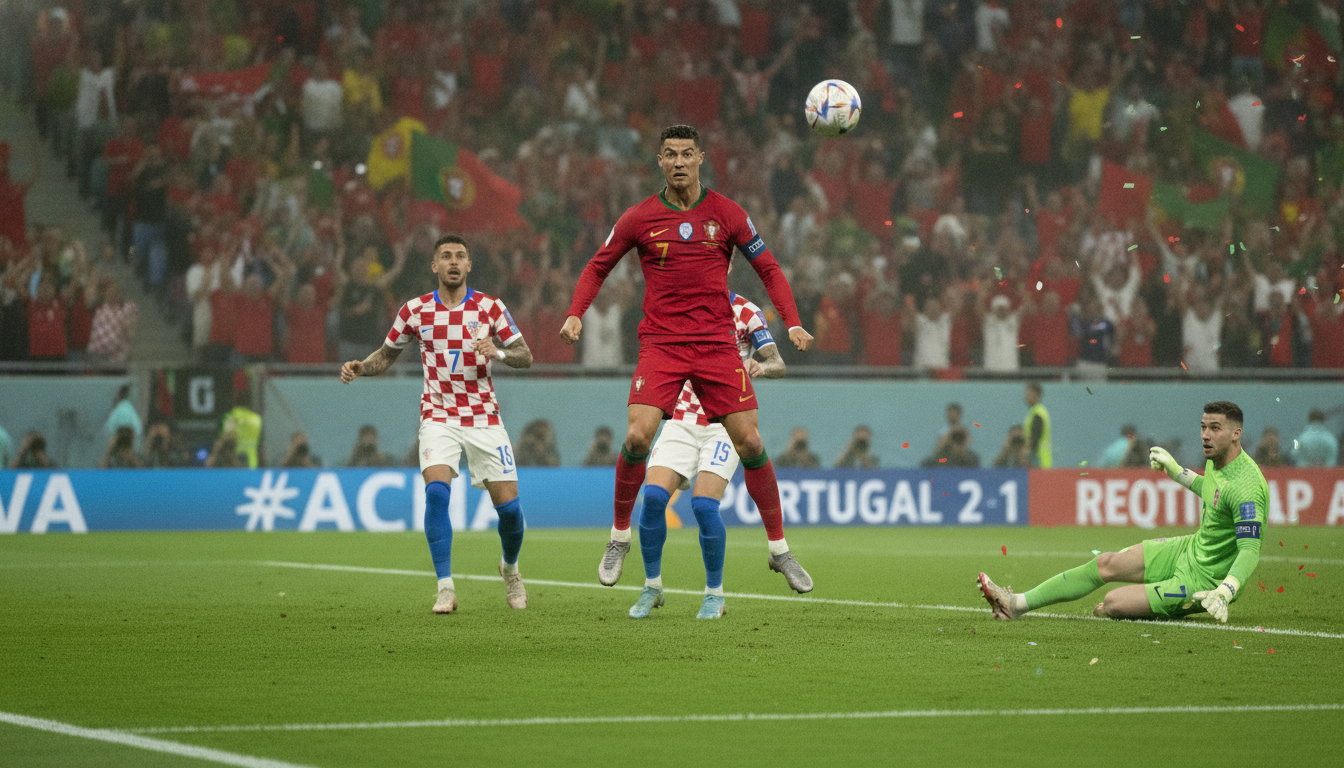
Portugal beat Croatia 2-1 as Ronaldo scores and Ramos seals stoppage-time win
Portugal beat Croatia 2-1 in Toronto as Ronaldo converted a penalty and Goncalo Ramos headed a stoppage-time winner; VAR later ruled out Croatia’s late leveller.

Cristiano Ronaldo converted a penalty and Goncalo Ramos scored a stoppage-time header as Portugal beat Croatia 2-1 in a dramatic World Cup knockout match in Toronto. The win gave Portugal their place in the last 16 and set up an all-Iberian tie with Spain, while a VAR review denied Croatia a last-gasp equaliser that would have sent the game to penalties. Ronaldo’s penalty was the first knockout-stage World Cup goal of his career and the decisive moments unfolded amid tense scenes at Toronto Stadium.
Ronaldo converts from the spot to level the tie
Portugal’s captain stepped up from the penalty spot in the 68th minute to draw his side level after an intense opening hour of play. The conversion made history as Ronaldo, 41, became the oldest player to score in a World Cup knockout match. His finish rekindled Portugal’s momentum and forced Croatia to chase a response as the match entered the final quarter.
The penalty followed sustained Portuguese pressure and a period when both teams had created promising chances. Ronaldo’s composed strike shifted the narrative of a tight contest and ensured Portugal remained very much in the hunt as the game moved into added time.
Ramos rises to net stoppage-time header
With the clock winding down and the match poised for extra time, Goncalo Ramos rose above Croatia’s defence to power a header home in the fourth minute of stoppage time. The finish was the decisive blow, turning what had been a goalless draw into a heart-stopping Portuguese victory. Ramos celebrated a dramatic late winner that will be remembered for its timing as much as its execution.
Ramos reflected on the intensity of the moment, saying that he relishes big occasions and thrives under pressure. His intervention off the bench proved decisive, delivering Portugal the breakthrough when the tie had appeared destined to be settled by penalties or extra time.
VAR intervention overturns Croatia’s late equaliser
Croatia appeared to have snatched an equaliser in the 103rd minute when Josko Gvardiol rose to head a leveller that initially drew gasps from the crowd and left Ronaldo visibly distraught on the bench. However, a lengthy video assistant referee review determined that the ball had made contact with Igor Matanovic immediately beforehand, rendering Gvardiol offside. The goal was subsequently disallowed.
The VAR decision sparked furious reaction among Croatian players and fans alike, with coach Zlatko Dalic critical of how the match concluded. Dalic said his team deserved a different ending, reflecting the belief that Croatia had been competitive throughout and unlucky to lose in such dramatic fashion.
Tension spills into the stands at Toronto Stadium
The late twists provoked a volatile reaction among supporters in the south end of Toronto Stadium, where frustrated fans threw debris onto the pitch after the disallowed goal. The incident marked a chaotic scene at full time as officials tried to restore order and clear the playing surface. Stadium stewards and match officials managed the situation before the final whistle confirmed Portugal’s victory.
Such scenes underlined the emotional stakes of World Cup knockout football, where a single decision can upend months of preparation and trigger impassioned responses from travelling supporters. Tournament organisers will review the disturbances as part of the post-match report.
Portugal now set to face Spain in the last 16
The result sets up a high-profile last-16 meeting between Portugal and Spain, a contest that promises tactical intrigue and superstar matchups. Portugal will carry the confidence of a dramatic comeback into the next round, while Spain will prepare to counter a side buoyed by late-game resilience. For Portugal, the fixture represents both an opportunity and a stern examination of their credentials in the tournament.
Croatia, meanwhile, exit the World Cup at the knockout stage, reflecting a campaign that produced moments of quality but fell short when it mattered most. Their exit will prompt reflection on both the squad’s depth and the marginal moments that decided the tie.
Tactical shape and key performers
Portugal’s approach blended veteran leadership with emerging attacking options, a balance that was crucial in the closing stages. Ronaldo’s role remained focal, not just for his scoring touch but for the positional threat he poses that can create space for team-mates. Ramos’ contribution showed the value of a hungry, aerially strong forward from the bench to change the dynamic late on.
Croatia relied on its experience and midfield control to manage phases of the match, creating opportunities through probing passes and overlaps. Defensively they held firm for long spells, but the lapse that allowed Ramos to rise in stoppage time proved costly. The disallowed equaliser highlighted the fine margins involved in VAR-era decisions and how small touches can decide the outcome.
Coaching decisions and substitutes that shaped the match
Both managers made substitutions that influenced the rhythm and tempo of the game. Portugal’s deployment of Ramos as an impact substitute paid immediate dividends, while other changes aimed to preserve structure and chase the extra goal. Croatia’s moves sought to refresh attacking options and find a winner without exposing defensive vulnerabilities.
The timing and nature of substitutions became central in a match resolved by narrow margins, with the final phases influenced by fresh legs and tactical tweaks. Coaches on both sides will face scrutiny over decisions made under intense pressure, but in a single-elimination match, one decisive moment often eclipses the broader tactical debate.
The late drama in Toronto underscored the unpredictability of knockout football, where a converted penalty and a stoppage-time header can determine the course of a team’s tournament. Portugal advance to face Spain in the last 16, while Croatia depart with the consolation of a hard-fought performance that fell just short.