Ralf Rangnick Commits to Austria Until 2028, Ending AC Milan Speculation
Austria coach Ralf Rangnick signed an extension through June 14, 2028, ending AC Milan speculation and cementing his leadership through Euro 2028 and the upcoming tournaments.


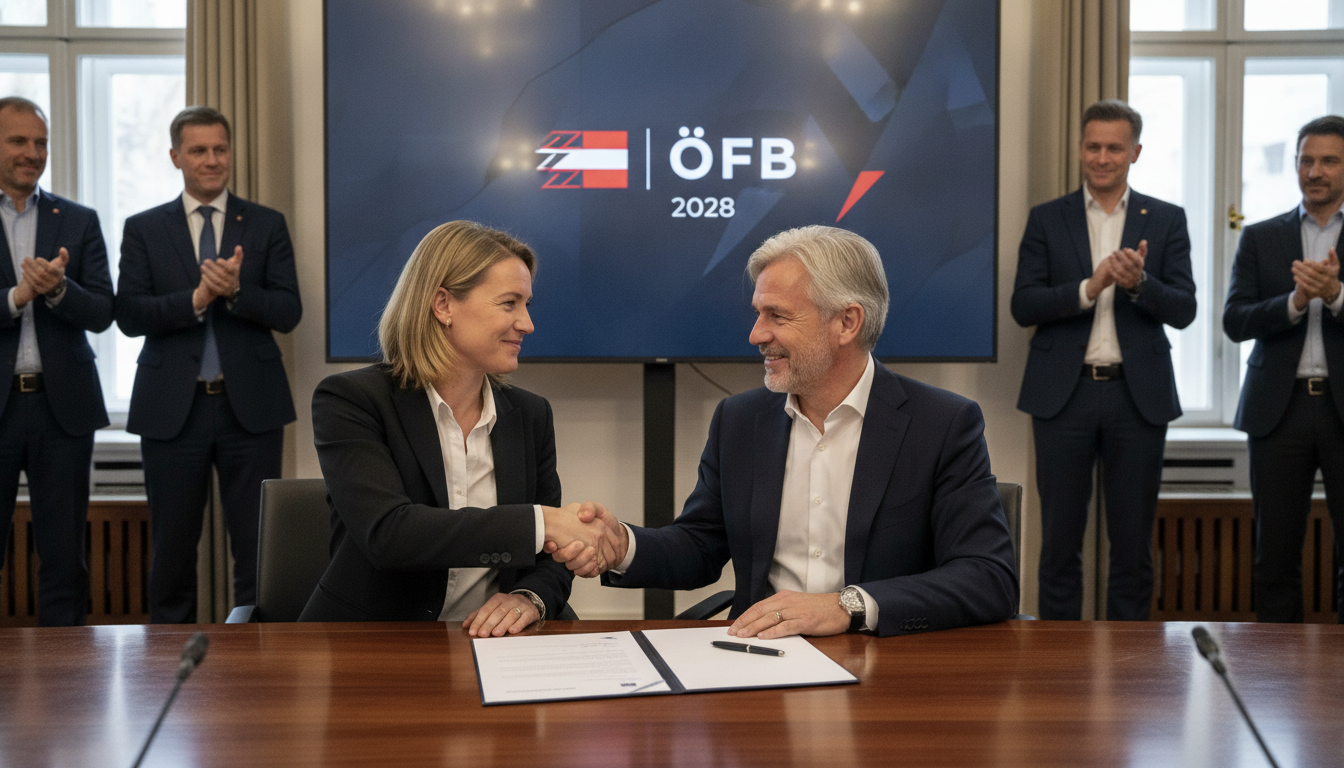
Ralf Rangnick confirmed his future with the Austrian national team on June 14, 2026, when the Austrian Football Association announced a contract extension that keeps the 67-year-old in charge through UEFA Euro 2028. The move removes Rangnick from the shortlists circulating around AC Milan’s search for a technical director and establishes continuity for Austria ahead of major competitions. Rangnick’s agreement reflects the ÖFB’s determination to maintain the tactical and organizational direction the coach introduced since taking the job in 2022. The extension was framed by the association as a commitment to sustain Austria’s recent upward trajectory on the international stage.
Contract details and ÖFB statement
The Austrian Football Association issued a formal statement on June 14, 2026, confirming that Rangnick’s contract has been renewed and will extend at least through the next European Championship cycle. The ÖFB noted that the agreement aims to secure the progress achieved under Rangnick and to provide stability across qualification and tournament periods. While the association did not disclose full financial terms, the announcement emphasized sporting continuity rather than commercial arrangements. Officials framed the extension as a strategic decision to preserve the technical framework Rangnick developed since his appointment.
How the move quashes AC Milan links
Speculation linking Ralf Rangnick to AC Milan had intensified in recent days, with Italian media naming him among candidates for a senior technical role at the San Siro. The ÖFB renewal makes any immediate move to Milan unlikely by binding Rangnick to Austria through a multi-year commitment, removing him from the candidate pool. Sources close to the federation said the timing of the announcement was deliberate, intended to close off external approaches as national team commitments grew. For AC Milan, the development signals a continued search for other experienced executives to oversee sporting strategy.
Sporting context: World Cup and Euro ambitions
Rangnick’s extension comes as Austria prepares for a World Cup campaign that follows a landmark qualification, the nation’s first appearance at the tournament in 28 years. Under Rangnick’s management, Austria consolidated a stronger international presence and developed a clearer tactical identity centered on pressing, structured build-up and rotation across key positions. The extension ensures that the staff and broader project will navigate the immediate World Cup challenge with the same leadership and strategic priorities. Looking further ahead, the contract ties Rangnick to preparations for Euro 2028, giving the federation a long-term planning horizon for player development and squad cohesion.
Rangnick’s tenure and tactical imprint
Since assuming the national team role in 2022, Ralf Rangnick has reshaped Austria’s approach to both training and matchday preparation, introducing methods honed across a long coaching and sporting director career. His emphasis on collective pressing, transitional speed and tactical flexibility has been visible in qualifying campaigns and friendly fixtures, where Austria balanced domestic talent with players flourishing abroad. Rangnick’s broader influence extended to staff appointments and a more analytical, data-informed approach to scouting and match preparation. The extension therefore signals endorsement of those methods and a mandate to deepen the tactical systems already in place.
Implications for player selection and youth pathway
A multiyear deal gives Rangnick and his technical team latitude to integrate younger prospects into the senior setup and to pursue a consistent selection policy across qualification cycles. The ÖFB highlighted player development as a priority in its announcement, and continuity at the top of the sporting structure will help coordinate underage programs with the senior squad’s tactical demands. For players on the fringe, the extension means a clearer line of communication about expectations and a defined timeline for earning sustained roles. For Austria’s youth and academy coaches, stability at the national level should simplify planning for talent identification and transitional coaching benchmarks.
Reactions inside Austria and abroad
Responses from within the Austrian football community were broadly positive, with supporters and federation figures welcoming the end to uncertainty around the national team’s leadership. Analysts in Austria framed the extension as sensible risk management, arguing that replacing a coach who helped secure long-awaited tournament qualification would have disrupted momentum. International observers noted how the decision removes a high-profile name from the pool of candidates for club executive jobs, reshaping conversations at Milan and elsewhere. The renewed commitment is likely to influence scheduling, friendly fixtures and collaborative projects aimed at strengthening the national program.
What this means for AC Milan and executive searches
AC Milan’s recruitment of a technical director now proceeds without Rangnick as an immediate option, prompting the club to accelerate talks with alternate candidates who can implement a long-term sporting vision. Milan will continue seeking figures with both coaching insight and experience building institutional structures, attributes that had made Rangnick an attractive candidate. The club’s priorities—coherent player pathways, scouting networks and clear alignment between sporting and coaching departments—remain unchanged, but the departure of Rangnick from contention narrows the shortlist. Observers expect Milan to explore both internal promotions and external hires to fill the strategic vacancy.
Scheduling and Austria’s immediate fixtures
Austria’s World Cup group stage schedule places them against debutants Jordan and traditional heavyweight Argentina, along with Algeria, presenting a varied set of tactical tests. Rangnick’s staff will have to prepare for contrasting styles, from Jordan’s likely compact defensive approach to Argentina’s high-end attacking threats and Algeria’s blend of technical skill and physicality. The extension ensures the same coaching principles will be used to map out specific plans for each opponent, with training camps and scouting windows executed under familiar leadership. The continuity may prove important in matchday decisions and in-game adjustments where established patterns and previously rehearsed solutions reduce uncertainty.
The ÖFB’s decision to lock in Rangnick through 2028 removes an immediate variable from Austria’s sporting equation and allows the federation to plan a multi-tournament arc that includes World Cup competition and Euro 2028 preparation. The extension endorses Rangnick’s impact since 2022 and gives the national team a firm timetable for implementing his sporting vision. For clubs and national federations watching closely, the move underscores the premium placed on managerial continuity when a coach is linked to measurable progress. The coming months will test whether the longer-term commitment translates into deeper tournament runs and sustained growth for Austrian football.