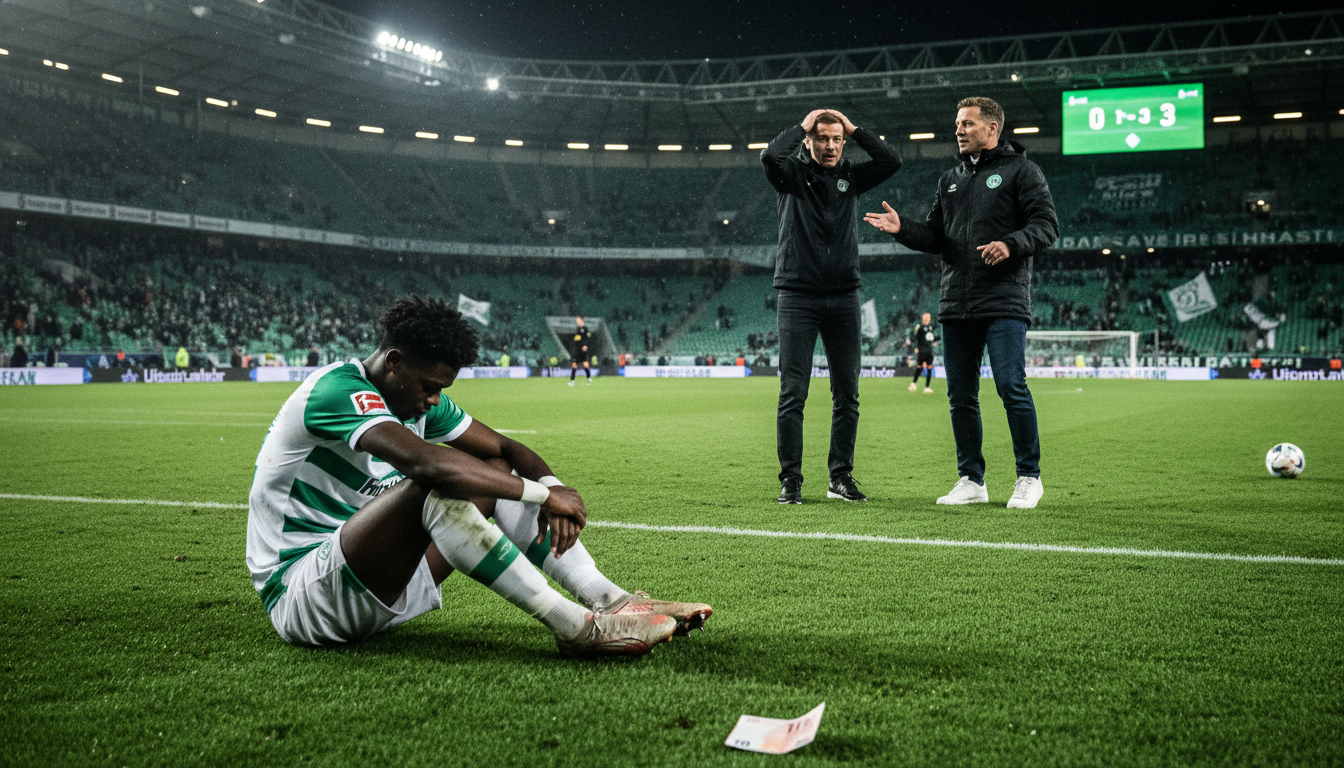
Samuel Mbangula under scrutiny after mixed debut season at Werder Bremen
Samuel Mbangula’s debut season at Werder Bremen has drawn scrutiny after a €10m summer move, with club leaders outlining a development plan following inconsistent performances. The 22-year-old Belgian forward made 29 Bundesliga appearances but started only 12 matches, finishing the campaign with three goals and four assists. Werder Bremen’s management says they still back Mbangula while acknowledging that his first year did not meet expectations, leaving questions about how best to accelerate his progression.


Werder Bremen assessment of Mbangula’s first season
Werder Bremen’s board admits the club invested heavily in Mbangula and that the results on the pitch fell short of the club’s ambitions. Chairman Klaus Filbry described the transfer as a significant financial commitment and said the club still believes the player can develop positively, even if his inaugural season did not live up to projections. That public acknowledgment frames Mbangula’s campaign as a work in progress rather than an outright failure, but it also raises pressure for tangible improvement.
The club’s tone combines realism with cautious optimism as Bremen prepares for the next campaign. Officials have emphasized a structured approach to player development, noting that initial adaptation periods are common for young players arriving from abroad. That stance preserves managerial credibility while keeping expectations manageable for supporters and stakeholders.
Statistical review of Mbangula’s Bundesliga campaign
On paper, Mbangula’s raw numbers underline a mixed impact: 29 appearances across the season, only 12 of them from the start, with three goals and four assists recorded. His goals arrived early — he scored in each of the first three matchdays — and two of his four assists came in a single September game against Borussia Mönchengladbach. Those flashes of productivity suggested potential, but his influence waned as the season progressed.
The 2026 calendar year was particularly lean for goal contributions, with Mbangula registering only one direct attacking return in that period. Limited starts and intermittent minutes curtailed his ability to build rhythm, and the statistics reflect a player yet to translate promise into consistent outcomes. Analysts will point to minutes-per-goal and minutes-per-assist metrics to evaluate whether the underlying productivity warrants continued investment.
Sporting director addresses adaptation and potential
Sporting director Clemens Fritz offered context for the uneven campaign, noting the wider challenges that accompany moving to a new league and country. Fritz stressed that such transitions often require time for a young player to adapt tactically, physically and culturally, and that Werder remains convinced of Mbangula’s potential. The club has presented development as a long-term objective rather than a binary assessment based solely on year-one returns.
That expressed confidence is significant because Mbangula was among the club’s largest summer signings and remains an asset around which future planning may hinge. Fritz’s comments signal that Werder will prioritize coaching support, tailored training and gradual integration rather than a rapid judgement. The implication is a patient pathway to increased responsibility, provided the player responds to targeted interventions.
Team context: Werder’s struggle and relegation fight
Werder Bremen’s overall campaign added pressure on individual assessment, as the team finished 15th and narrowly avoided the relegation play-off by a slim margin. The club’s defensive and collective struggles meant managers often prioritized stability and immediate results, which can reduce opportunities for young attackers to find consistent minutes. In such environments, development plans can be compromised by short-term survival imperatives.
The precarious league position also shaped public and media scrutiny of signings, elevating expectations for newcomers to make quick impacts. For Mbangula, that dynamic created a difficult backdrop: a young attacker arriving with transfer fee scrutiny and limited scope to fail. The team’s results therefore compound the evaluation of his season, since underperformance is read through both individual and systemic lenses.
Outlook: Pathways for improvement and next-season scenarios
Looking ahead, Werder Bremen faces several realistic options to unlock Mbangula’s potential, ranging from increased playing time to tactical adjustments or a temporary loan for consistent minutes. A structured plan could focus on role clarity, targeted technical work and incremental exposure in competitive matches to rebuild confidence and match sharpness. The club’s leadership has signaled a willingness to invest in that process rather than seek an immediate sale.
Any decision will weigh sporting benefits against financial considerations, since Mbangula represented one of the club’s highest transfers by outlay. A loan to a club where he can start regularly would reduce pressure while preserving Werder’s long-term asset value, whereas integrating him more consistently into Bremen’s squad would require a tactical fit and managerial patience. Whichever route the club adopts, it will be judged by measurable progress in minutes, goal contributions and adaptability to the Bundesliga’s demands.
Werder’s management has framed next steps around development, continuity and realistic timelines, and supporters will be looking for clearer indicators of growth when preseason preparations begin. The club’s approach — balancing competitive urgency with a nurturing plan for a young, widely scouted talent — will shape both Mbangula’s career trajectory and Bremen’s prospects in the coming season.